
Category: Events
02 October 2026
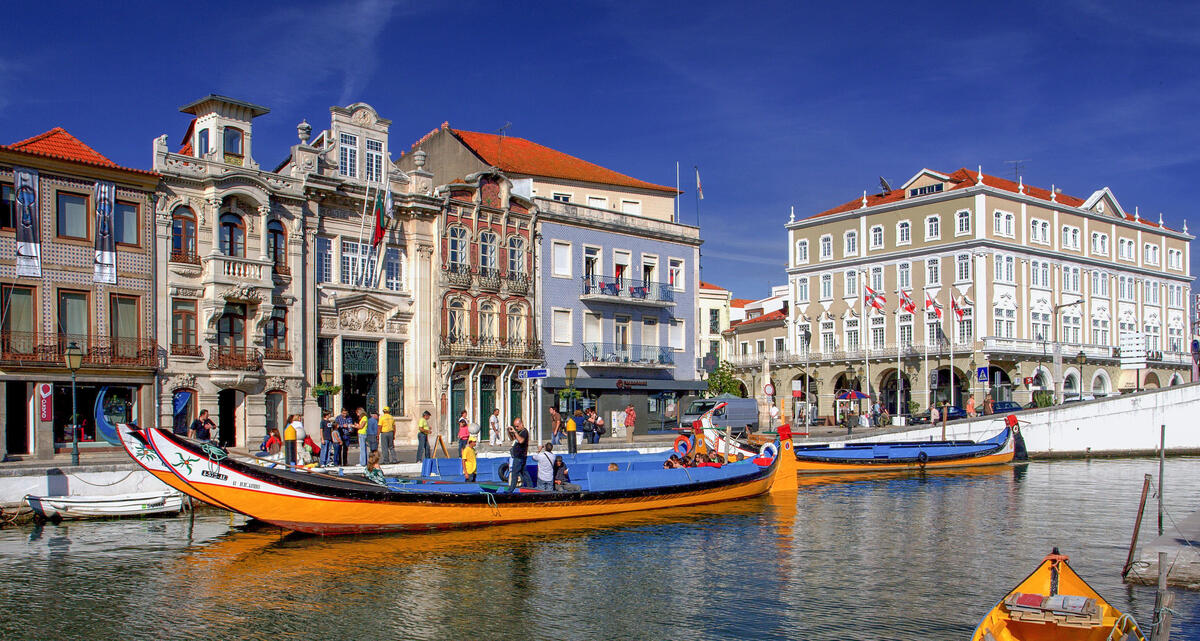
The City of Aveiro invites two artists of younger generation to engage in creative work as part of the “Boas Festas” cultural programme. The residency, scheduled for 23th November to 11th December, 2026, is being held as part of the cultural programme for the Christmas and New Year in Aveiro, that includes concerts, performances and installations and that engage all cultural spaces in Aveiro and mainly the public space.
RESIDENCY DURATION: 19 days
RESIDENCY DATES: 23th November – 11th December 2026
APPLICATION DEADLINE: 4th of November
SELECTION RESULTS ANNOUNCEMENT: 11th November
WHO CAN APPLY?
The open call is open to:
- Artists of the younger generation born or residing in one of the cities within the CreArt network: Kaunas (Lithuania), Liepāja (Latvia), Skopje (North Macedonia), Aveiro (Portugal), Valladolid (Spain), Venice (Italy), Clermont-Ferrand and Rouen (France), Regensburg (Germany), České Budějovice (Czech Republic) or Oulu (Finland).
- Artists-members of HDLU (Croatian Association of Fine Artists).
- Ukrainian artists through the collaboration with public organization Lviv Artistic Council “Dialog”.
We invite artists working in the field of visual arts – with a particular focus on practices involving public space, art light and sound installations and performance art. We are interested in projects that emerge at the intersection of disciplines, combining various media, techniques, and perspectives.
We are looking for individuals who engage in a dialogue with their surroundings, work with sensitivity to the Aveiro historical centre and local traditions, and are open to collaborating with the local community. The works may take the form of interventions or ephemeral actions, with their specific form and location to be determined jointly through curatorial discussions. The installations set-up would take place during the last days of the residency and in case of performative art until the 17th of December.
TERMS AND CONDITIONS
- The city of Aveiro will pay a grant of 2 500 euros, to each artist, related to travel, subsistence and other expenses, with the transference taking place until the terminus of the residency;
- Renting of sound and light equipment, if needed, to be supplied by the Municipality of Aveiro;
- Studio and accommodation will be provided by the city of Aveiro in the city centre;
- Applicants must hold a valid European Health Insurance Card or an equivalent document.
DOCUMENTS
All documents listed below must be submitted in English in a single PDF file:
- A scan of your ID card or passport.
- A document confirming a connection to a city within the CreArt 3.0 network.
- A CV (max. one A4 page).
- An artistic portfolio containing examples of your work (max. 10 pages and 10 images; links may be included).
- A project proposal (max one A4 page) explaining why you would like to participated in the residency in Lublin. Please include estimated material requirements, a list of technical needs and any other relevant technical details regarding the execution of the work that might help the Organizer understand the project.
APPLICATION
To apply, please register on the CreArt website https://creart2-eu.org/open-calls/, upload your portfolio and attach the documents listed above (all in a single PDF file).
Application deadline: 4th November 2026
Only complete applications containing all the information mentioned above will be considered. Submissions will be evaluated and selected by the internal jury. The jury is under no obligation to provide reasons for its decisions. Participants will be informed of the selection results by 11th November. The list of selected artists will be published on the CreArt website. Participation in the open call implies acceptance of these terms and conditions; selected artists are required to acknowledge in their CVs and all future communications (press, digital media) their selection for the CreArt Artists Residency Program in Aveiro, part of the CreArt 3.0 #stringing_together project, co-financed by the European Union.
In case of any questions, please contact us at: museusdeaveiro@cm-aveiro.pt
About Aveiro
Located in the center of Portugal [halfway of Porto and Coimbra], by the sea, Aveiro is one of the major cities of the country. Nowadays its relevance and increasing number of inhabitants comes from the presence of the University [founded in 1973] and from the industries and companies operating, mainly, in the technological areas and ceramics, as well as from the improvement of the harbour facilities, seen as an important gateway to Europe and a strategic point to international trade.
Aveiro is also placed by the central national railway which contributes to the easy traveling to everywhere in the country. All types of services are available as well as sports and cultural facilities to serve the population and the visitors. Museums, a municipal theater, a congress center and a large number of culture associations and culture agents [CCI] create the pleasant and dynamic cultural atmosphere of the city, highlighted by the canals festival and, mainly, the International Biennale of Artistic Ceramics [since 1989]. Encompassing the cultural dynamics, Aveiro was the first Portuguese Capital of Culture, in 2024.
A city full of history, of several former monasteries, baroque churches, Art Nouveau facades, colored tile panels and with a long tradition in ceramics, fishing [including the famous codfish] and salt production. Side by side with the city’s remote history, is the university campus, a complete catalogue of the Portuguese contemporary architecture design by renowned architects such as the Pritzker’s awarded Álvaro Siza Vieira and Eduardo Souto Moura.
The weather conditions are pleasant, on both summer and winter, and the brightness provided by the large lagoon and the ocean brings a special glow to the city and the buildings colors.
The beaches around Aveiro [Barra, Costa Nova and São Jacinto] are a main holiday center for people from center Portugal and Spain [Galicia and Castilla y León]. Barra’ beach is also a significant spots for surfing all entire year. Besides that, the lagoon [European protected area – Natura 2000 network] attracts a large number of visitors and researchers to appreciate and study the landscape and the biodiversity [mainly the birds]. The saltpans still producing according to artisanal methods are one of the major local touristic spots. Art Nouveau heritage is a significant cultural attraction too [it is part of the Art Nouveau European Cultural Route], side-by-side with the moliceiro’ boats and the street art produced by local, national and international artists.
Within the project:

Partners:

Supported by:

Co-funded by the European Union – CREA-CULT-2023-COOP. The views and opinions expressed are solely those of the authors and do not necessarily reflect the official views of the European Union or the European Education and Culture Executive Agency (EACEA). Neither the European Union nor the European Commission can be held responsible for them.
[Project number: 101128499]
The views expressed in this announcement are the sole responsibility of HDLU and do not necessarily reflect the opinion of the Government Office for Cooperation with NGOs
02 October 2026
As part of the CreArt 3.0 project, the City of Lublin and Warsztaty Kultury invite applications for an artist residency for two individuals of younger generation: one from Lublin and one from a partner city within the CreArt network. Participating artists will receive support from a curator and a coordinator, who will supervise and assist with the creative process. The residency will culminate on November 27 with a public presentation of the work.
RESIDENCY DURATION: 17 days
RESIDENCY DATES: November 12–28, 2026
APPLICATION DEADLINE: October 23, 2026
SELECTION RESULTS ANNOUNCEMENT: by October 30, 2026
THE GLOBE
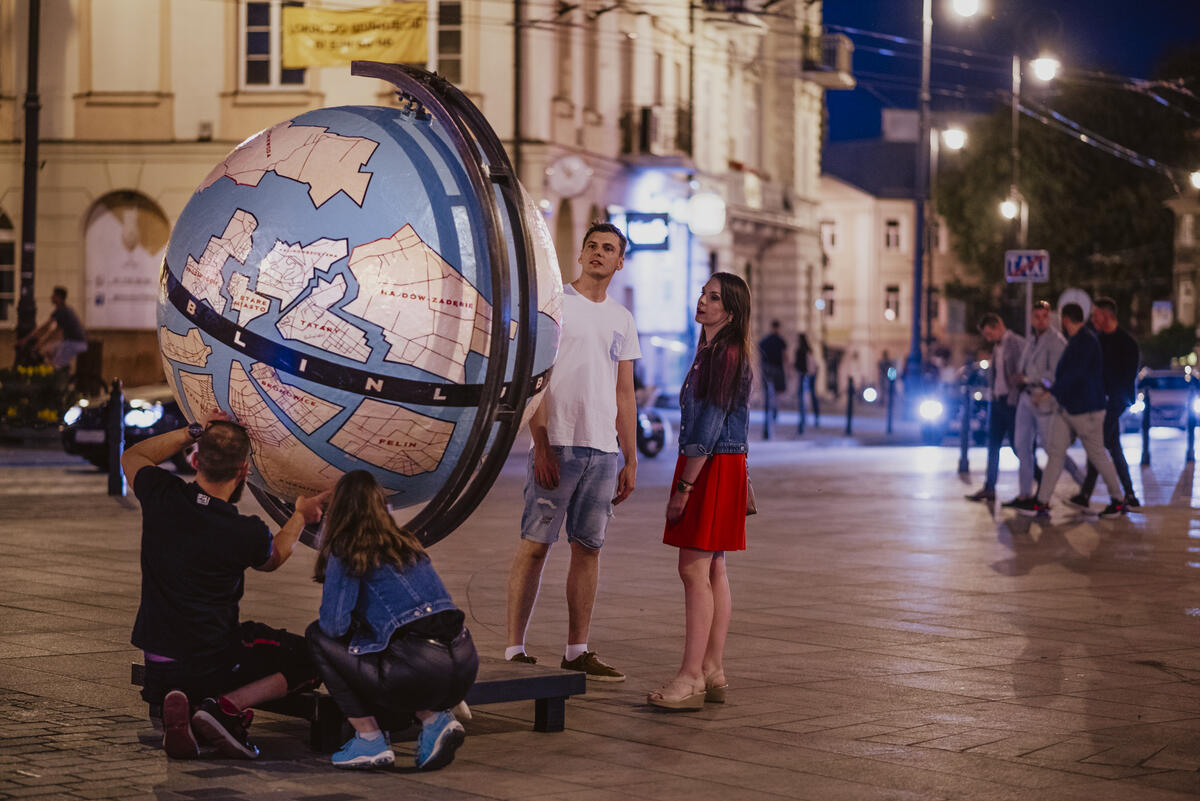
The starting point for the residency is an existing object – a movable globe with a diameter of 1.5 meters, created for the “Planet Lublin” installation, which was exhibited in the centre of Lublin several years ago. Designed and built for a specific public space project, the object now serves as material for a new artistic undertaking.
We invite two artists of the younger generation to participate in the residency; their task will be to collaboratively develop a project that takes the existing globe – its form, scale, structure, function, previous use, or history – as its point of reference.
We do not prescribe how artists should approach the object. The globe may be treated as a substrate, a medium, an element of a larger concept, or a ready-made object incorporated into a new work. Approaches ranging from altering its surface and transforming its original character to changing its existing form and function without fundamental modification are all possible. What matters is that the proposed work stems from an artistic engagement with the object as found.
The form and execution technique remain open, subject to the globe’s technical properties and the conditions of its subsequent public display. As the object is movable and rotatable, any interventions directly on its surface must take into account the fact that it will be touched and handled. Solutions involving additional structural elements will require approval during the project preparation stage.
The residency entails a collaborative working process between two artists. We do not expect two independent works placed on a single object, but rather a concept developed jointly, while preserving the autonomy of each artist’s practice.
The outcome of the residency will be a new artwork using the existing globe, to be presented in the public space of Lublin.
WHO CAN APPLY?
The open call is open to:
- Artists of younger generation born or residing in one of the cities in the project network: Kaunas (Lithuania), Liepaja (Latvia), Skopje (North Macedonia), Aveiro (Portugal), Valladolid (Spain), Lublin (Poland), Venice (Italy), Clermont-Ferrand and Rouen (France), Regensburg (Germany), České Budějovice (Czech Republic) and Oulu (Finland).
- Artists-members of HDLU (Croatian Association of Fine Artists).
- Ukrainian artists through the collaboration with public organization Lviv Artistic Council «Dialogue».
Applicants must hold a university degree in the arts or possess a documented artistic track record demonstrating equivalent qualifications.
Applications are accepted from individual artists only; applications submitted by artist groups or collectives will not be considered.
TERMS AND CONDITIONS
- A grant of EUR 800 gross for selected artists (a fixed exchange rate of PLN 4.3355 applies to the project); payment will be made within 21 days after the residency. For artists from abroad, the payment will be reduced by a 20% income tax deduction.
- Material/production costs per artist: up to EUR 460 gross.
- For an artist from CreArt city, the Organizer covers the cost of flight tickets (direct flights from the partner city or the nearest airport to Warsaw or Lublin; travel from Warsaw to Lublin is the artist’s responsibility), as well as accommodation and meals (two meals per day). In the event that an artist from Ukraine is selected, travel costs will be included in the contract for the performance of the work.
- Prior to the start of the residency, artists will sign contracts with the Municipality of Lublin.
- Applicants for the residency must hold a valid European Health Insurance Card or an equivalent document.
- By the final day of the residency, the artist undertakes to submit a final report in English, comprising the title, project description, objectives, and a visual dossier (minimum 6 pages).
DOCUMENTS
All documents listed below must be submitted in English. A single PDF file must contain:
• A scan of your ID card or passport.
• A document confirming a connection to a city within the CreArt 3.0 network.
• A CV (max. one A4 page).
• An artistic portfolio containing examples of your work artistic activities (max. 10 pages and 10 images; links may be included).
• A project proposal (max. one A4 page) explaining why you would like to participate in the residency in Lublin. Please include estimated material requirements, a list of technical needs, and any other relevant technical details regarding the execution of the work that might help the Organizer understand the project.
HOW TO APPLY?
- To apply, please register on the CreArt website (https://creart2-eu.org/open-calls/), upload your portfolio, and attach the documents listed above (all in a single PDF file).
• If you encounter any issues with the application process, you may submit your application via email to creart@fmcva.org, using the subject line: “open call Lublin”.
• Application deadline: October 23, 2026.
Only complete applications containing all the information mentioned above will be considered. Submissions will be evaluated and selected by an internal jury from Workshops of Culture (Warsztaty Kultury). The jury is under no obligation to justify its decisions. Applicants will be notified of the selection results by October 30, 2026. The names of the selected artists will be published on the CreArt homepage. Participation in the open call implies acceptance of these terms and conditions; the selected artist is required to acknowledge in their CV and all future communications (press, digital media) that they were selected for the CreArt Artist Residency Program in Lublin—part of the CreArt 3.0 #stringing_together project, co-funded by the European Union under the Creative Europe Programme.
Should you have any questions or doubts, please feel free to contact us at creart3.0@lublin.eu.
CITY OF LUBLIN
Lublin is a medium-sized city in eastern Poland. It is a thriving scientific and cultural center. Considered a city at the crossroads of Eastern and Western culture, in the past it had an international character, with a large Jewish population living here. Lublin is home to numerous cultural institutions, museums and galleries, as well as non-governmental organizations that animate cultural life. There are large festivals such as Carnaval Sztukmistrzów, Night of Culture, East Of Culture – Different Sounds and others. Lublin is competing for the title of European Capital of Culture 2029.
WARSZTATY KULTURY (WORKSHOPS OF CULTURE)
Warsztaty Kultury is a local government cultural institution of the city of Lublin, established in 2009. The institution conducts long-term development and education programs based on a community of Lublin cultural operators and recipients, working together and supporting each other. The institution is located at 5a Grodzka Street and 7 Grodzka Street in Lublin’s Old Town.
The mission of Warsztaty Kultury: “We are the heart and mind behind a variety of open and non-standard activities in Lublin. Our programming focuses on promoting the practice of “active culture”. We enthusiastically support and implement long-term development plans based on a sense of community among Lublin’s cultural operators and recipients, acting together and supporting one another. We create culture that is modern, interactive, interdisciplinary and innovative.
We cooperate with artists and institutions from Poland and abroad. We have developed highly efficient methods of cultural education, management and animation. The everyday application of modern technologies in cultural education and in the promotion of cultural heritage also form the core of our mission.
We also organise the four largest summer festivals in Lublin: Night of Culture, East of Culture – Different Sounds, Carnaval Sztukmistrzów and Re:tradition – The Jagiellonian Fair. All of them are rooted in Lublin’s history and traditions, have become an integral part of the city’s cultural landscape and activate the local community”.
More info:
https://warsztatykultury.pl/pl/
https://www.facebook.com/WarsztatyKultury/
Within the project:
Partners:
Supported by:
Co-funded by the European Union – CREA-CULT-2023-COOP. The views and opinions expressed are solely those of the authors and do not necessarily reflect the official views of the European Union or the European Education and Culture Executive Agency (EACEA). Neither the European Union nor the European Commission can be held responsible for them.
[Project number: 101128499]
The views expressed in this announcement are the sole responsibility of HDLU and do not necessarily reflect the opinion of the Government Office for Cooperation with NGOs
02 October 2026
Dr. art. Melinda Šefčić presented her ten-year artistic and research practice in the field of artistic interventions in hospital environments at international events in New York and Boston dedicated to the role of visual arts in healthcare and patient well-being. Her work encompasses continuous research into the possibilities of rehumanizing and re-aestheticizing healthcare environments, with an important part of this development comprising projects realized in collaboration with the Croatian Association of Fine Artists (HDLU), from her earliest interventions in hospital spaces to the international European project Healing Nature.
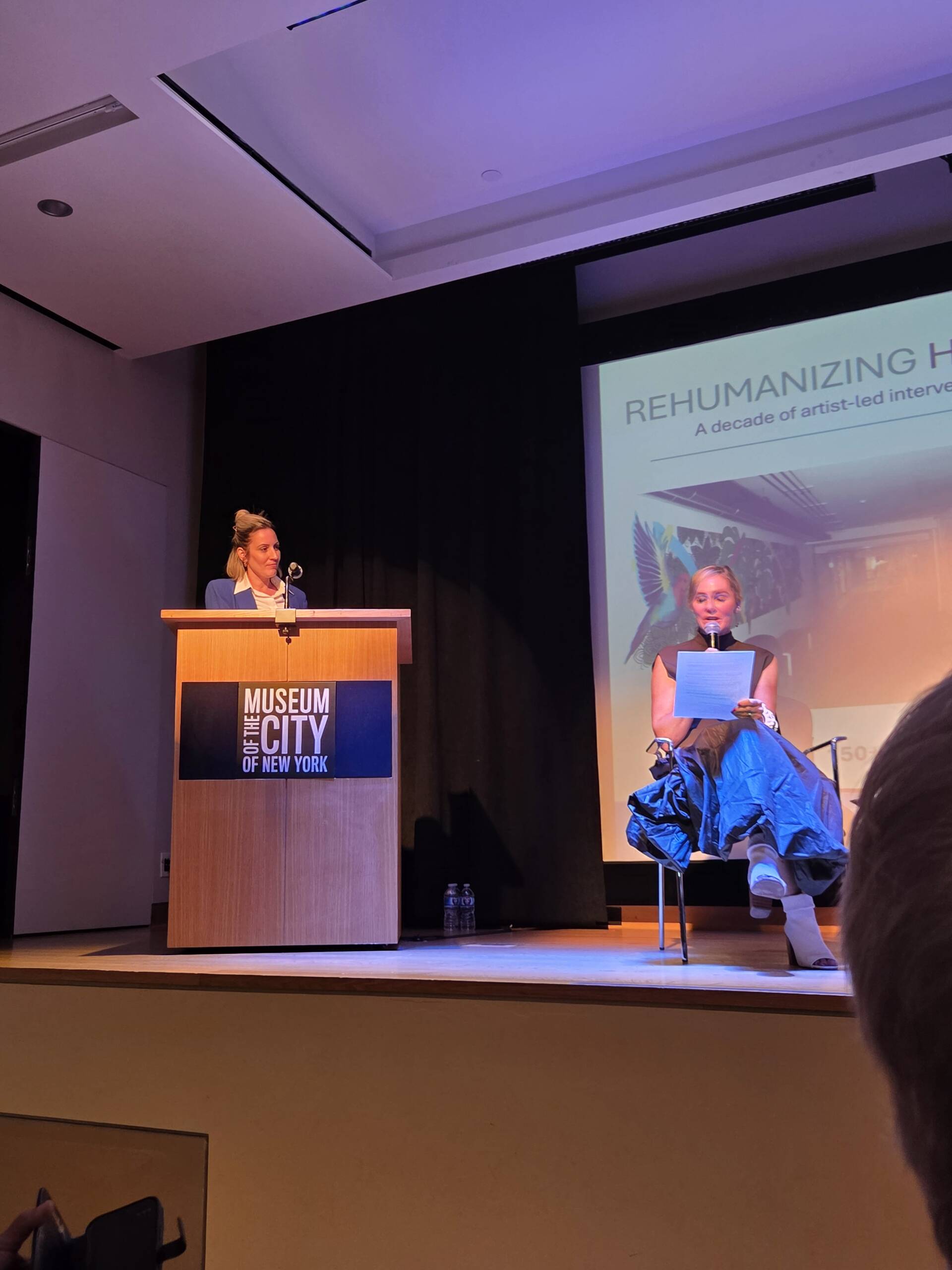
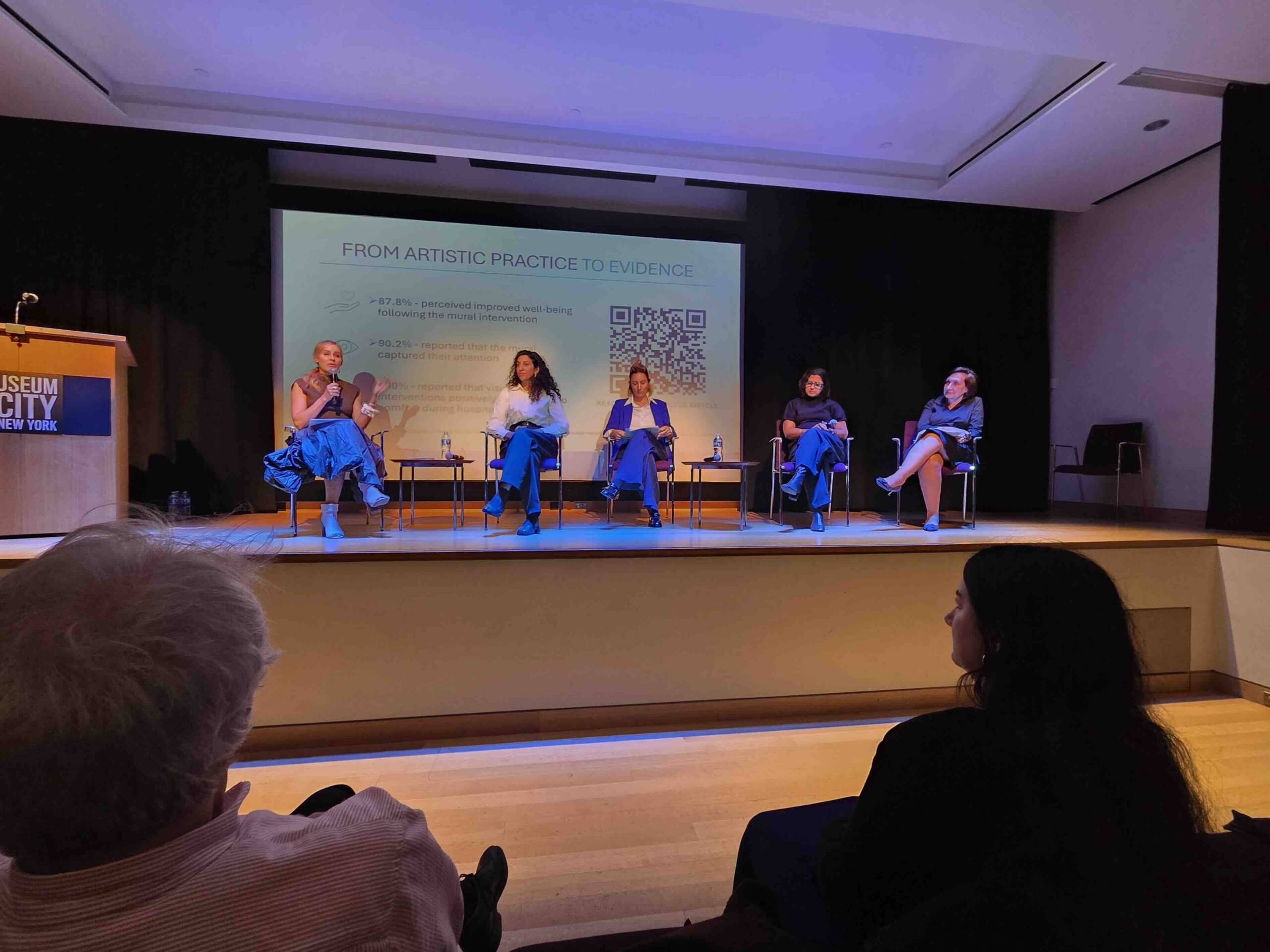
As part of UNGA Healing Arts Week 2026 in New York, organized by the Jameel Arts & Health Lab in collaboration with the World Health Organization (WHO), Šefčić participated in the panel Public Art as Public Health: The Role of Visual Art in Hospitals, held at the Museum of the City of New York. She presented ten years of artistic practice and research into murals and artistic interventions in hospital environments in Croatia, with a focus on the rehumanization of healthcare environments and the well-being of their users. The panel was organized by NYC Health + Hospitals Arts in Medicine and brought together artists, researchers, healthcare professionals and policymakers.
More information is available on the official UNGA Healing Arts Week website.
Following her presentation in New York, Šefčić also presented her work at the international symposium Bridging Visual Arts & Healthcare: Impact, Innovation, Research, held from 23 to 25 September 2026 at Brigham and Women’s Hospital in Boston. The symposium was organized by the Visual Arts in Healthcare Program at Brigham and Women’s Hospital, with the programme delivered by Brigham and Women’s Hospital, Harvard Medical School, Mass General Brigham and Dana-Farber Cancer Institute. The symposium focused on exploring the impact of visual arts in healthcare environments, innovative approaches, and the development of research at the intersection of arts and health. More information is available on the official symposium website.
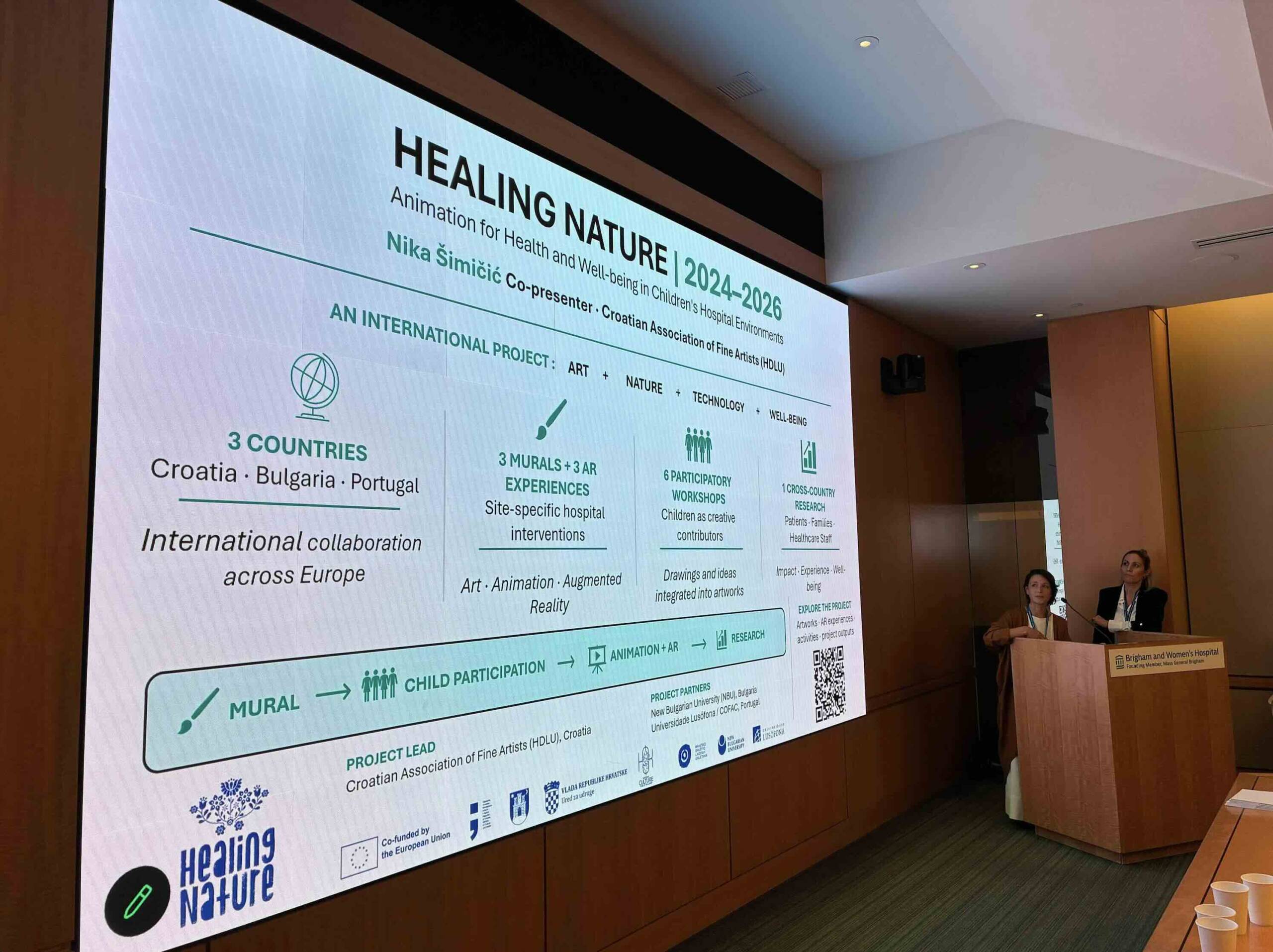
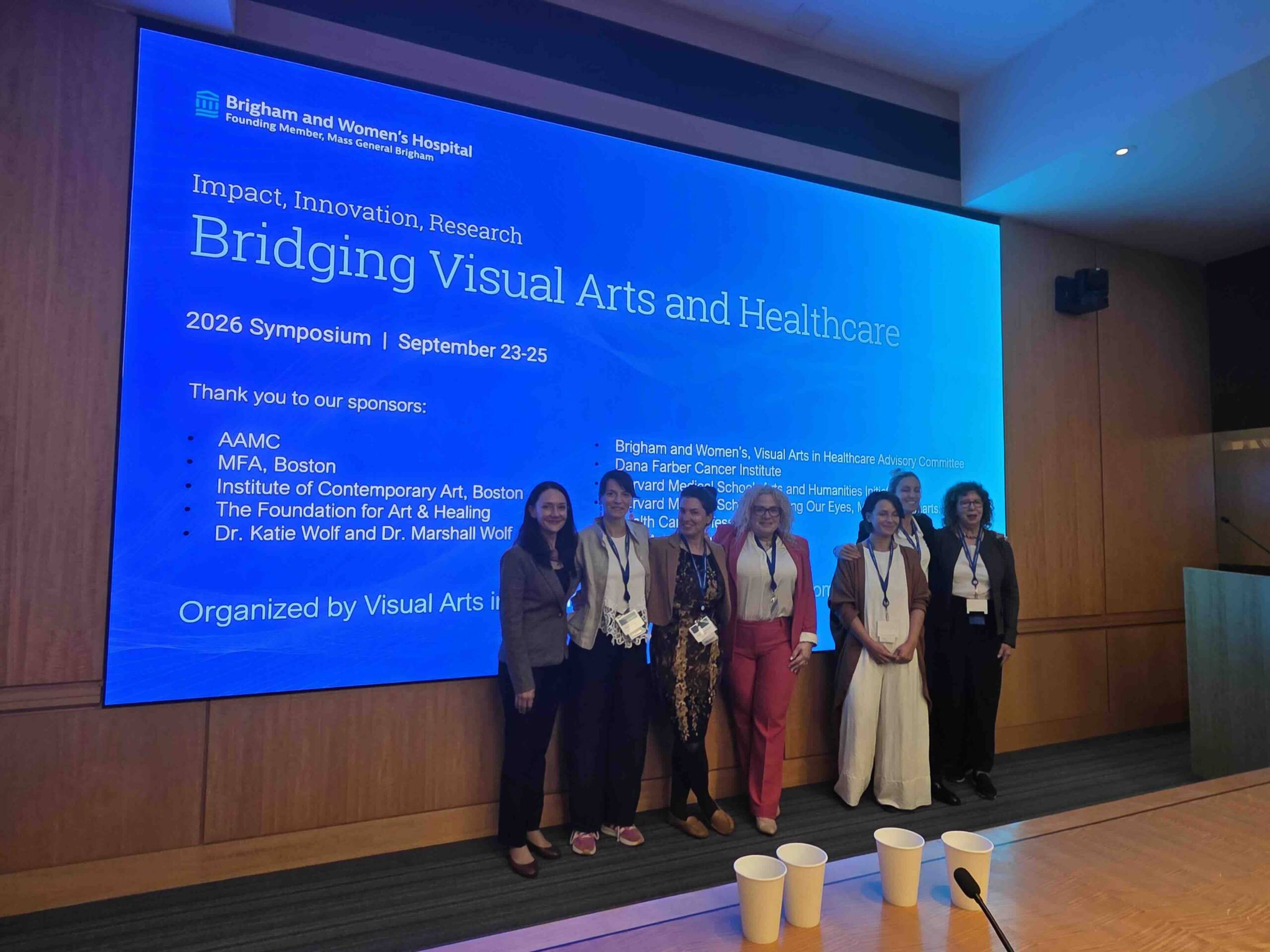
As part of the Boston presentation, Melinda Šefčić and Nika Šimičić, representing HDLU, also presented the European project Healing Nature – Animation for Health and Well-being in Children Hospital Environments, for which Šefčić is a co-author and artistic director. The project is implemented by the Croatian Association of Fine Artists in international partnership with Universidade Lusófona/COFAC in Portugal and New Bulgarian University in Bulgaria, with the cooperation of healthcare institutions in Croatia, Portugal and Bulgaria. Through murals, participatory processes, animation and augmented reality, the project explores the possibilities of connecting art and nature in the rehumanization of hospital environments and in improving the experience of patients, healthcare staff and other users. More information about the project is available on the official project website.
Ten Years of Artistic Interventions in Hospital Environments
Melinda Šefčić’s artistic and research practice in the field of rehumanizing hospital environments has developed over the past ten years through more than 15 artistic and research projects that have brought together contemporary art, healthcare institutions, research and education. At the time of the first initiatives, artistic interventions in Croatian hospitals were relatively rare, making her work one of the pioneering examples of systematic research into the possibilities of applying art in healthcare environments.
One of the first projects was Aestheticization and Rehumanization of Public Space: Art as Therapy (2017), implemented as part of the European CreArt project, in which HDLU participated as a partner. The project explored the possibilities of transforming hospital environments through art, with the aim of creating more welcoming spaces for patients, visitors and healthcare professionals.
This was followed by the project Aestheticization and Rehumanization of Hospital Space: Art for Health (2019), organized by HDLU, with Melinda Šefčić as its author and project leader. The project expanded artistic interventions to several healthcare institutions, including University Hospital Centre Zagreb, the Children’s Hospital Zagreb, and the Clinic for Women’s Diseases and Obstetrics. Through mural interventions and collaboration with hospital staff, it explored possibilities for improving patients’ experiences and rehumanizing the spaces in which they spend time. It also developed a model of collaboration between artists, healthcare professionals, patients and educational institutions, with the aim of establishing a long-term connection between art and healthcare.
The results of ten years of artistic and research practice were also consolidated and published in the academic paper Walls that Heal: A Decade of Murals and the Rehumanization of Hospital Space in Croatian Healthcare Environments (2025) https://hrcak.srce.hr/file/499682, which synthesizes the findings of research and artistic interventions carried out between 2016 and 2025. The foundations of this research direction were established in Melinda Šefčić’s doctoral dissertation Rehumanization and Re-aestheticization of Hospital Space – An Example of an Artistic Solution for a Hospital Department, defended in 2018 at the Academy of Fine Arts, University of Zagreb. The doctoral research developed an interdisciplinary model combining art theory, her own artistic practice, and empirical research into the effects of artistic interventions in hospital environments. Her artistic and research practice subsequently expanded to penitentiaries and prisons, while since 2020 she has been teaching the course Aestheticization of Public Space through Art at the Academy of Fine Arts, University of Zagreb, passing on the knowledge and methodology she has developed to new generations of artists.
Since 2019, Šefčić has been collaborating more intensively with Dr. phil. Lea Vidaković, expanding their research into mural art towards animation and moving image as new forms of artistic intervention in hospital environments.
The first pilot project of their collaboration, Digital Fauna (2021/2022), explored the possibilities of using animation in hospital environments. The results of the project were presented in 2022 at the symposium Animafest Scanner – Symposium of Contemporary Animation Studies. Their second pilot project, Animated Forest World in the Hospital Space (2023), further developed research into animated environments and the possibilities of integrating them into hospital spaces. These experiences provided the foundation for the development of the Healing Nature project, which combines mural art, animation, augmented reality and participatory processes.
The ten-year continuity of Melinda Šefčić’s work across numerous artistic, research and educational projects demonstrates how artistic interventions in hospital environments can evolve from individual mural projects into interdisciplinary research and international initiatives. Through collaboration with HDLU, healthcare institutions and educational organizations, art becomes part of a broader reflection on the quality of public spaces, the well-being of their users, and the possibilities of connecting culture and healthcare.
24 September 2026
GOBLIN FERMENTATIONS
GOBLIN SCAVENGING
6.-27.10.2026.
KARAS GALLERY
On Tuesday, 6th of October Goblin Fermentations collective opens their solo exhibition entitled Goblin Scavenging at 7 pm in Karas gallery (Ulica kralja Zvonimira 58).
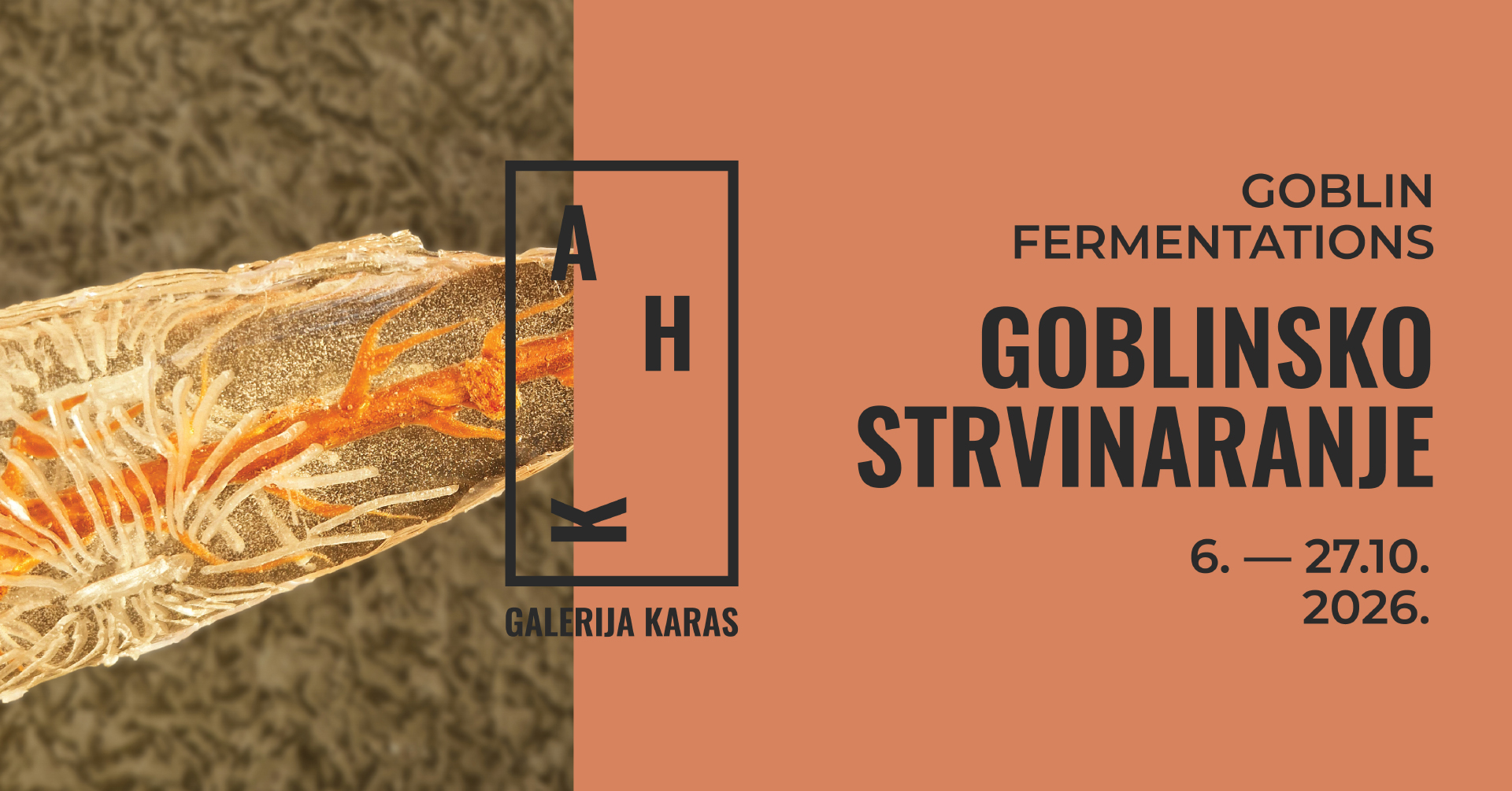
In her forward, Iva Jurić emphasizes:
“The work Goblin Scavenging, whose title is also a fairly precise description of the process through which the Goblin Fermentations collective has been diligently building its imaginary post-apocalyptic–mutated–speculative world of eco-horror for several years, continues their practice of collecting, reshaping, and connecting materials found in abandoned and devastated spaces. Zagreb is an important point of departure for their work, but they also bring back what they find from other places they pass through. Such spaces are not merely a backdrop, but a kind of field archive from which they extract textures, sounds, objects, and forms. What connects them is not location, but the condition of the space: what remains in it after human use, what has changed, and what can still emerge from these remnants.
Scavenging can therefore be understood as a way of working with what is already present. Found materials carry traces of the places they come from and of the processes to which they have previously been subjected, and when relocated into an artwork, these traces become part of new combinations. In a process of sorts of Frankensteinization, animal bones, wood, natural resin, and leather encounter synthetic resin, plastic, and latex, while bleaching, thermal treatment, sewing, soldering, woodworking, modelling, and binding give them new forms. This direct and experimental relationship with materials is also connected to the artists’ long-standing interest in DIY practices. It gives rise to objects that cannot always be clearly defined: they may appear as artefacts, sculptures, props, or remnants of a culture whose rules remain unknown.”
Biography:
The Goblin Fermentations collective was formed in early 2023 and consists of Vina Ćurčija and Mihael Čuček. The collective operates with the aim of building a world named GOBL1N_F3RM3N74T10NS – a hybrid posthumanist metaverse inspired by eco-horror and motifs from pre-industrial history, constructed using a combination of natural and artificially created materials. The collective operates between Berlin (Germany) and Zagreb (Croatia).
Associates: Kmet (music composer), Andy Aquarius (sound mastering)
The exhibition will be open during the period from 6. to 27.10.2026.
Working hours of Karas Gallery
Wednesday, Thursday, Friday 4pm – 8pm
Tuesday, Saturday 10am – 1pm
On Sundays and Mondays closed.
___
Organizer: HDLU
With the support of: Ministry of Culture and Media of the Republic of Croatia, City of Zagreb
16 September 2026
Participatory Public Artwork for the entrance of Children’s Museum at Tiima, Oulu, Finland
We are looking for an artist who is both a visual creator and a pedagogical facilitator: someone capable of transforming children’s ideas, imagination and creativity into a compelling public artwork for a new museum environment.
The City of Oulu invites one visual artist of the younger generation from the CreArt 3.0 network to take part in a two-week residency in Oulu, Finland, to create a participatory artwork together with children from the English Speaking Playschool of Oulu.
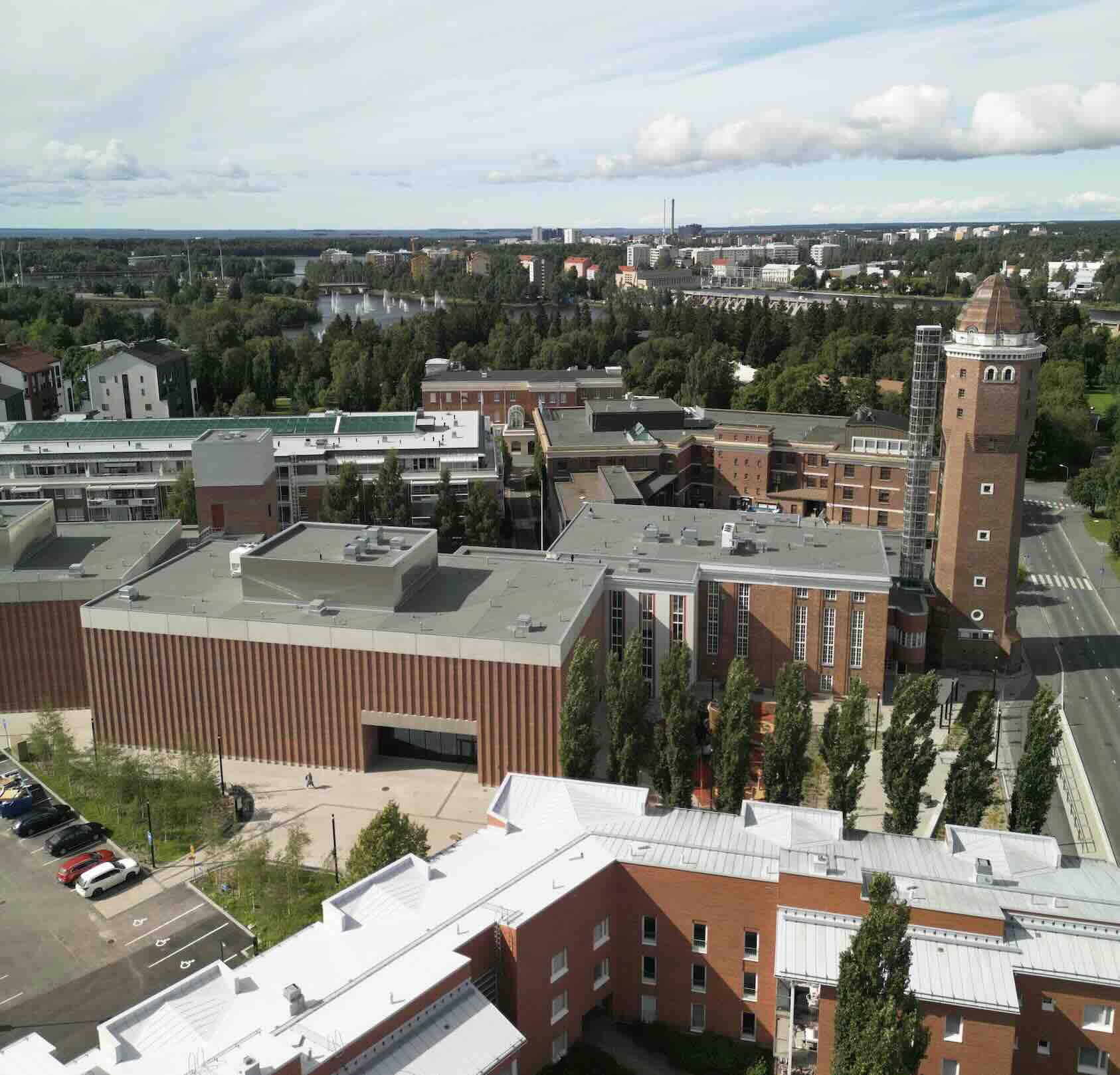
The resulting artwork will become part of the new Museum and Science Centre Tiima, opening in the European Capital of Culture Oulu in October 2026. The artwork will be installed in the entrance staircase and lobby area leading to the new Children’s museum, outdoor play area Adventure Factory and Makerspace, outdoocreating a welcoming and inspiring environment for young visitors and their families.
Tiima is a special and unique museum and science centre where science, art, and history meet. It brings together VISIO, Tietomaa, the Oulu Museum, and the Children’s Museum under one roof, offering exhibitions and events. https://www.tiima-oulu.fi/en/
The Residency Project
The selected artist will design and facilitate an artistic process involving children aged approximately 3-6 years from the English Speaking Playschool of Oulu.
The project aims to create a meaningful, playful and inclusive artistic experience in which children’s ideas, creativity and visible contribution become an integral part of the final artwork.
The residency combines artistic practice, participation and art education. Therefore, we are seeking an artist who is also comfortable working as a pedagogical facilitator and who has previous experience working with children.
The working language of the residency is English.
The kindergarten staff will participate in and support the workshops and creative activities.
Artistic Approach
Applicants are invited to propose their own methodology for working with children.
The proposal may be based on, for example:
Option A: Collaborative On-site Creation
The artist works directly with children in Tiima and day care center and creates the artwork together with them through workshops, creative sessions and hands-on making.
Option B: Artwork Developed from Children’s Contributions
The artist provides the children with themes, tasks or creative exercises before the residency workshops. The children produce drawings, stories, shapes, textures, ideas or other material that becomes part of the final artwork. The artist then develops and completes the final work based on these contributions.
In both approaches, the children’s contribution should remain clearly visible in the completed artwork.
Applicants are encouraged to include playful, imaginative and age-appropriate methods for engaging children of different ages and abilities.
The artist may also propose warm-up activities, introductory sessions or creative assignments that help establish contact with the children before the main workshops begin.
Site and Technical Requirements
The artwork will be installed in a public indoor museum environment. Due to the safety requirements of Museum and Science Centre Tiima, all materials used in the final artwork must comply with applicable fire safety regulations and be suitable for permanent or long-term installation in a public building.
Applicants are therefore expected to propose only non-flammable or appropriately fire-rated materials and methods. Preference will be given to solutions that can be directly implemented on existing wall surfaces or through approved museum-grade materials.
Possible approaches may include:
- Wall painting using approved paints and coatings
- Fire-rated vinyl graphics or adhesive wall installations
- Other non-flammable or fire-certified materials suitable for public interiors
Applicants should clearly identify the proposed materials and include an estimated material budget as part of their project proposal.
The artist may utilize all surfaces of the space as part of the artwork, including walls, floor and ceiling.
The artwork may form a single unified composition or extend across multiple surfaces, making use of the architectural features of the space. The work does not need to be limited to a two-dimensional wall piece; it may also take the form of a spatial installation that embraces the staircase and lobby as a three-dimensional environment. Any protruding elements of the artwork must not compromise the safety or accessibility of movement in the said spaces.
Artist Profile
The call is open to professional visual artists of younger generation who:
- Are born in or currently reside in one of the CreArt 3.0 network cities or are members of HDLU
- Have previous experience in participatory, community-based or educational art projects
- Have experience working with children
- Are interested in public space, participation and creative learning processes
- Are able to facilitate activities in English
We particularly welcome proposals that combine contemporary artistic practice with play, imagination, storytelling and collaborative creation.
Residency Period
Residency period: 16-29 November 2026
Opening event: 27 November 2026
The artist is expected to be present in Oulu throughout the residency period.
As participation depends on the artist’s proposed methodology, applicants are invited to suggest an appropriate number and size of workshop groups.
There are a total of 63 children in the daycare. According to the plan, 20+ children will participate in the activity. The children can be divided into small groups, and the work can be done over several days. The group’s own educators will also participate in the activity.
Financial Conditions
The selected artist will receive:
- Artist fee: €1,500
- Accommodation in Oulu
- Travel costs to and from Oulu
- Production support for approved material costs
Applicants should include an estimated materials budget as part of their proposal.
Application Documents
Applications must be submitted in English throught the link: https://l1nq.com/yio0ayx and include:
- CV (max. 2 pages)
- Portfolio (selected examples of previous work)
- Copy of passport or ID card
- Proof of residence or connection to a CreArt city
- Project proposal (max. 2 pages), including:
- Artistic concept
- Methodology for working with children
- Preliminary vision for the artwork
- Estimated workshop format and participant group size
- Technical requirements
- Estimated material budget
Selection Criteria
Applications will be evaluated on the basis of:
- Artistic quality
- Experience with participatory and educational practices
- Feasibility of the proposal
- Quality of engagement with children
- Suitability for the Children’s Museum environment
Application Deadline
11 October 2026
The selected artist will be notified after the evaluation process. Results will also be published through the CreArt 3.0 communication channels.
This residency brings together four partners with a shared interest in creativity, participation and learning: the European CreArt 3.0 network, the Children as Artists in Oulu initiative, the English Speaking Playschool of Oulu and the new Museum and Science Centre Tiima. Together, they invite an artist to create a public artwork that celebrates children’s imagination and makes their creative contribution visible in one of Oulu’s newest cultural spaces.
Within the project:
Partners:
Supported by:
Co-funded by the European Union – CREA-CULT-2023-COOP. The views and opinions expressed are solely those of the authors and do not necessarily reflect the official views of the European Union or the European Education and Culture Executive Agency (EACEA). Neither the European Union nor the European Commission can be held responsible for them.
[Project number: 101128499]
The views expressed in this announcement are the sole responsibility of HDLU and do not necessarily reflect the opinion of the Government Office for Cooperation with NGOs
01 September 2026
MARA BRATOŠ
HIDDEN PLACES OF THE CITY
9.-29.9.2026.
KARAS GALLERY
On Wednesday, 9th of September Mara Bratoš opens her solo exhibition entitled Hidden Places of the City at 7 pm in Karas Gallery (Ulica kralja Zvonimira 58).
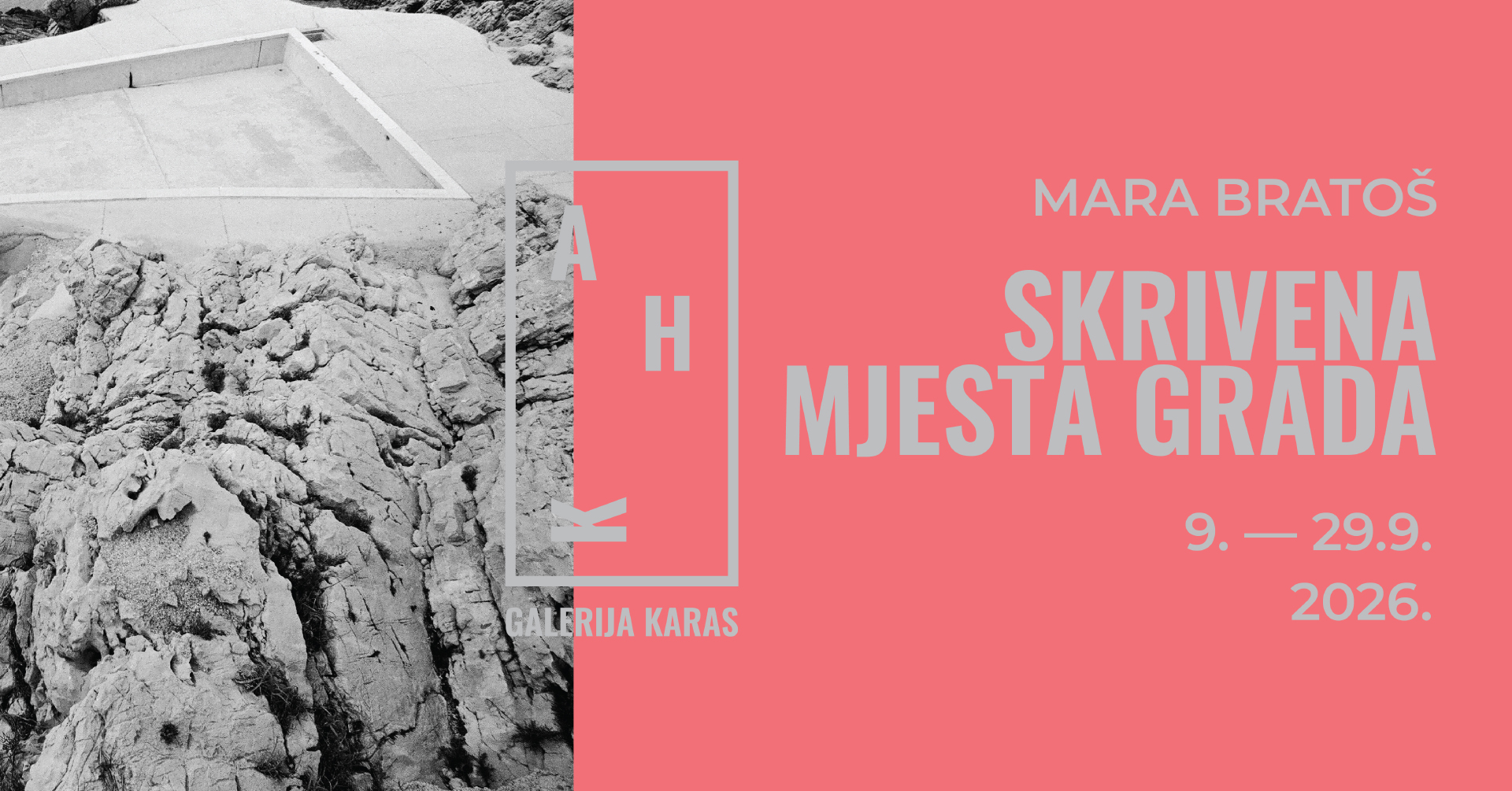
In her forward, Anite Ruso Brečić emphasizes:
“A dialogue about time, memory and space unfolds between the two series of photographs. What was a photograph of an abandoned city in 1995 is now a photograph of a city whose parts are hidden in a different way. Once they were marked by emptiness; today, by inaccessibility. Mara Bratoš’s photographs record not only changes in architecture or the landscape, but also changes in our relationship to public space and to our own memory.
This exhibition is therefore not only an encounter between two photographic series created thirty years apart; it is also an encounter with two Dubrovniks – one recovering, the other continually reshaping itself – and with a single artistic gaze that, in both periods, finds the same, almost cinematic, fissures in everyday life. Mara neither offers a nostalgic vision of a lost Dubrovnik nor attempts to compare what was better and what was worse. She observes how the City changes its face and how, with those changes, our experience of space changes too. Photography thus becomes a medium of memory and a witness to something difficult to record in any other way – the moment when spaces we remember as shared gradually enter a regime of controlled access, when the boundary between public and private is not always visible at first glance but is nevertheless keenly felt.”
Biography:
Mara Bratoš was born in Dubrovnik. She completed primary school in her hometown and graduated from Cherry Hill High School West in Philadelphia in 1992. That same year, she enrolled in the Department of Cinematography at the Academy of Dramatic Art in Zagreb, graduating in 1998. Bratoš is an award-winning photographer (Croatian Photography Award, 1995; AICA Award, 1999) and a member of the Croatian Association of Artists of Applied Arts (ULUPUH), the Croatian Freelance Artists’ Association (HZSU), the Filmmakers Association of Croatia (HDFD) and the Croatian Association of Fine Artists Dubrovnik (HDLU Dubrovnik). She has exhibited continuously since 1995 in solo and group exhibitions in Croatia and abroad.
The exhibition will be open during the period from 9. to 29.9.2026.
Working hours of Karas Gallery
Wednesday, Thursday, Friday 4pm – 8pm
Tuesday, Saturday 10am – 1pm
On Sundays and Mondays closed.
___
Organizer: HDLU
With the support of: Ministry of Culture and Media of the Republic of Croatia, City of Zagreb, City of Dubrovnik
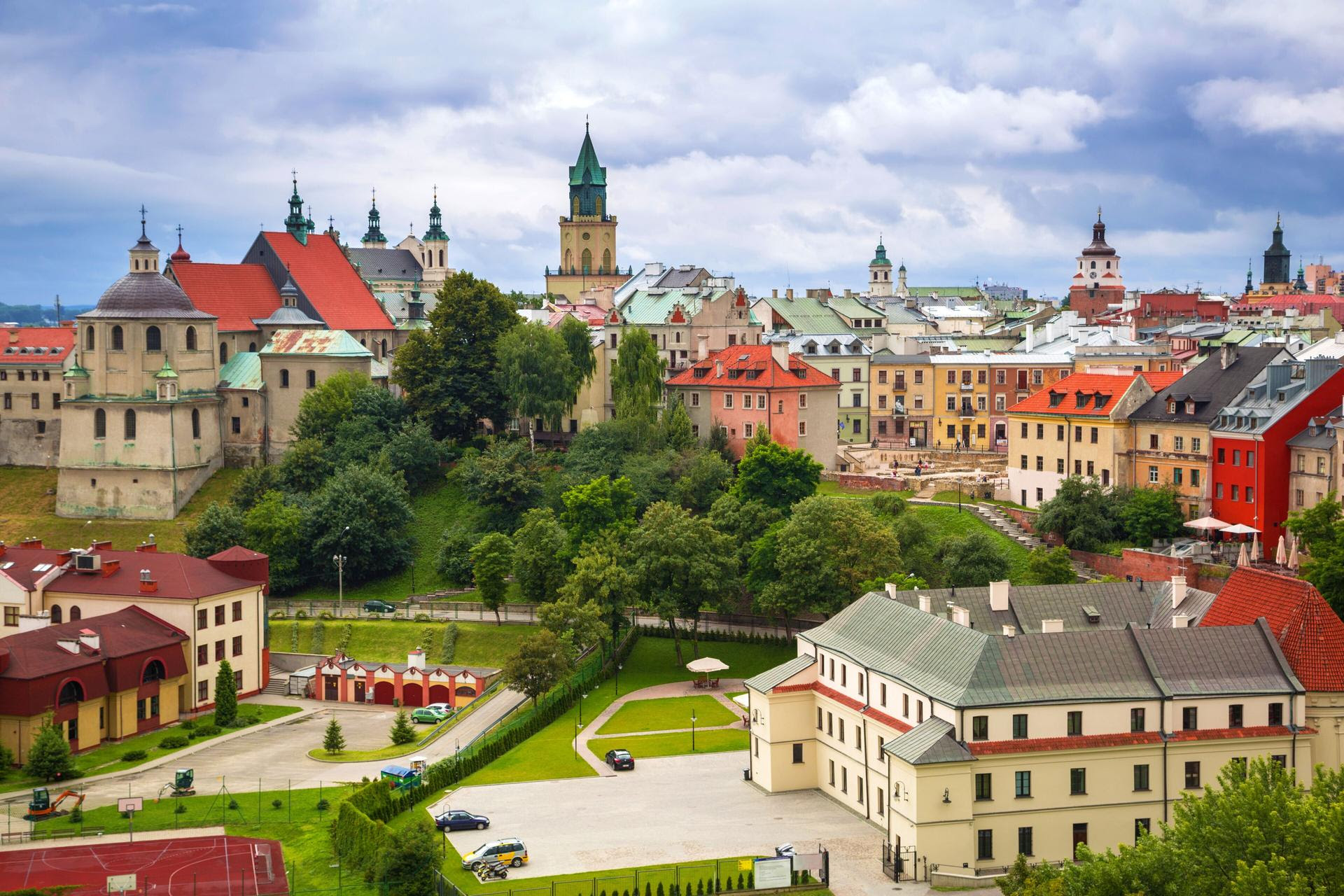
The City of Lublin invites two artists of the younger generation to engage in creative work as part of the „Festiwal na Złotej” (Festival on Złota Street). The residency, scheduled for September 13-21, 2026, is being held as part of the Annual Festival – an initiative of the CreArt 3.0 project, co-funded by the European Union’s Creative Europe programme. „Festiwal na Złotej” is a new addition to Lublin’s cultural landscape; it is an interdisciplinary festival promoting contemporary art and centered on the history and architecture of Złota Street, located in the heart of Lublin’s Old Town.
RESIDENCY DURATION: 9 days
RESIDENCY DATES: September 13-21, 2026
APPLICATION DEADLINE: July 27, 2026
SELECTION RESULTS ANNOUNCEMENT: by July 31, 2026
WHO CAN APPLY?
The open call is open to:
- Artists born or residing in one of the cities within the CreArt network: Kaunas (Lithuania), Liepāja (Latvia), Skopje (North Macedonia), Aveiro (Portugal), Valladolid (Spain), Venice (Italy), Clermont-Ferrand and Rouen (France), Regensburg (Germany), České Budějovice (Czech Republic) or Oulu (Finland).
- Artists-members of HDLU (Croatian Association of Fine Artists).
- Ukrainian artists through the collaboration with public organization Lviv Artistic Council “Dialog”.
We invite artists working in the field of visual arts – with a particular focus on practices involving public space, such as street art, art installations, performance art, and site-specific works. We are interested in projects that emerge at the intersection of disciplines, combining various media, techniques, and perspectives.
We are looking for individuals who engage in a dialogue with their surroundings, work with sensitivity to the site’s context, and are open to collaborating with the local community. The works may take the form of interventions or ephemeral actions, with their specific form and location along Złota Street to be determined jointly through curatorial discussions.
TERMS AND CONDITIONS
- €700 gross for selected artists – the remuneration, subject to a 20% income tax deduction, will be paid within 21 days after the residency.
- Material/production costs per artist: up to €460 gross.
- The City of Lublin also covers travel expenses – direct flights from the partner city or the nearest airport to Warsaw or Lublin (travel from Warsaw to Lublin is the artist’s responsibility), accommodation and meals (two meals per day). In the case of artists from Ukraine, travel costs will be included in the contract.
- Before the start of the residency, artists will sign contracts with the Municipality of Lublin.
- Applicants must hold a valid European Health Insurance Card or an equivalent document.
DOCUMENTS
All documents listed below must be submitted in English in a single PDF file:
- A scan of your ID card or passport.
- A document confirming a connection to a city within the CreArt 3.0 network.
- A CV (max. one A4 page).
- An artistic portfolio containing examples of your work (max. 10 pages and 10 images; links may be included).
- A project proposal (max one A4 page) explaining why you would like to participate in the residency in Lublin. Please include estimated material requirements, a list of technical needs and any other relevant technical details regarding the execution of the work that might help the Organizer understand the project.
APPLICATION
To apply, please register on the CreArt website https://creart2-eu.org/open-calls/, upload your portfolio and attach the documents listed above (all in a single PDF file).
Application deadline: July 27, 2026
Only complete applications containing all the information mentioned above will be considered. Submissions will be evaluated and selected by the internal jury. The jury is under no obligation to provide reasons for its decisions. Participants will be informed of the selection results by July 31, 2026. The list of selected artists will be published on the CreArt website. Participation in the open call implies acceptance of these terms and conditions; selected artists are required to acknowledge in their CVs and all future communications (press, digital media) their selection for the CreArt Artists Residency Program in Lublin, part of the CreArt 3.0 #stringing_together project, co-financed by the European Union.
In case of any questions, please contact us at: creart3.0@lublin.eu
THE CITY OF LUBLIN
Lublin is a medium-sized city in eastern Poland and a thriving academic and cultural hub. Regarded as a meeting point of Eastern and Western cultures, it historically possessed an international character and was home to a large Jewish population. The city is home to numerous cultural institutions, museums and galleries, as well as non-governmental organizations that drive cultural life. Major festivals are held here, such as the Carnaval Sztukmistrzów, The Night of Culture, and the East of Culture – Different Sounds. Lublin has been selected as the European Capital of Culture 2029.
ZŁOTA STREET IN LUBLIN
Złota Street is one of the most atmospheric and oldest streets in Lublin’s Old Town. Its unique buildings form one of the most valuable ensembles of Renaissance architecture in Poland. The first references to Złota Street – originally known as “Dominikańska” (Dominican Street) – date back to the early 16th century. The street’s current name is likely linked to the numerous goldsmiths’ workshops that operated in the area in the past.
The tenement house at 2 Złota Street is associated with the work of the renowned and esteemed poet Franciszka Arnsztajnowa. At 4 Złota Street stands Dom Złotnika (the Goldsmith’s House) – a small, charming building featuring ornamentation linked to the jeweler’s craft. A legend about an old goldsmith and his beautiful wife is associated with the building. The tenement house at 3 Złota Street is home to the Józef Czechowicz Literary Museum – dedicated to the great Lublin poet, who, like no other, paid tribute to his hometown through his words (https://lublin.eu/en/what-to-see-do/attractions-sights/monuments/tenement-house-at-3-zlota-street,8408,w.html). Złota Street culminates at the Basilica of the Dominican Order of St. Stanislaus the Bishop and Martyr and the Dominican monastery complex; the Dominican friars have been present in Lublin for over 750 years https://lublin.eu/en/what-to-see-do/attractions-sights/monuments/the-basilica-of-the-dominican-order-of-st-stanislaus-the-bishop-and-martyr,8467,w.html.
Archival photos of Złota Street: https://teatrnn.pl/lublin-fotografia/ulica-zlota-w-lublinie/
Within the project:
Partners:
Supported by:
Co-funded by the European Union – CREA-CULT-2023-COOP. The views and opinions expressed are solely those of the authors and do not necessarily reflect the official views of the European Union or the European Education and Culture Executive Agency (EACEA). Neither the European Union nor the European Commission can be held responsible for them.
[Project number: 101128499]
The views expressed in this announcement are the sole responsibility of HDLU and do not necessarily reflect the opinion of the Government Office for Cooperation with NGOs
MEŠTROVIĆ PAVILION CLOSED DUE TO RENOVATION
INFORMATION FOR VISITORS


Web Hosting


