EXHIBITION: Art as an attempt of reactivation
14 May 2015
Art as an attempt of reactivation
Matej Knežević, Mario Matoković
Igor Loinjak (curator)
Gallery PM
20 – 30 May, 2015

Opening of the exhibition on Wednesday, 20th of May, 2015 at 8.00pm
What is the purpose of art? Searching for the answer to this question we can go in different directions, which are dominated, it seems to me, by two quite opposing positions. On the one hand, the purpose of art is sought in art itself, so many artists create form larpurlartist impulses, with the goal of forming aesthetical objects. On the other hand, there are more than a few of artists who consider artistic work to be a very good mediator while communicating certain ideas, attitudes, or persuasions, but through their artistic practice they are also attempting to express a socially engaged position. It is hard, thus, to recognize the superiority of one alternative over the other, since it cannot be unambiguously determined whether social engagement in art is needed at all, whether the artist should speak about the world around him, or whether he is only charged to present us with an aesthetical object.
The attitude that a piece of art is always marked in a certain way by the social circumstances in which it was created cannot be easily refuted. In his “Sociology of Art,” Arnold Hauser wrote that all art is socially conditioned, meaning that, by reading art, it is also possible to read certain social trends. Matej Knežević and Mario Matoković subject their artistic practices to attempts of aesthetically seizing and commenting on the social state of the contemporary Croatian man. I say “Croatian man” because both of them deal with the social milieu in which they live and with which they are familiar, i.e. the social and national context of Croatia. Knežević and Matoković do not flee to the safety of the larpurlartist aegis. Their works do not lament over the current and future state of the consumerist, neo-capitalist social order, but are simply just statements, a form of artistic sociology.
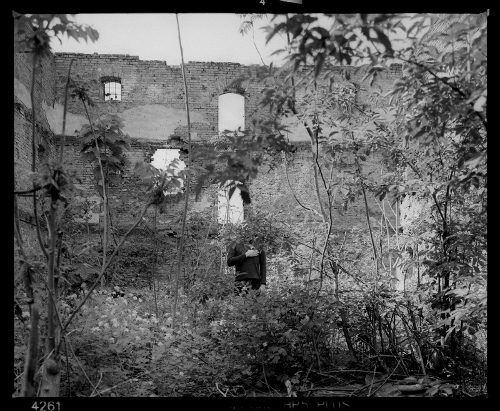
Knežević deals with two themes in his works – the social one, and the national one. “It is time…,” “Cemented,” and “5 Kunas” are some of the works where the author touches upon the social aspect, and he deals with the national themes in “euroskeptic,” “Hole in the law,” “Wrong direction”… His message is direct and clear and, as opposed to Matoković, he does not insist on symbolism. When it comes to Matoković, we can also talk about following the same thematic templates, however, he is trying to interconnect these two in the strongest possible manner. With the metamorphosis of the Croatian flag made up of PVC bags from retail chains present in Croatia, Matoković points to the consumerist acceptance of imposed values at the cost of losing immaterial values, which is in part due to the unsuccessful social and mental transitional transformation that began back in the 1980s. He depicts the irony of the process of transition as “Untitled”. The work consists of a sheet of paper showing the Croatian national Coat of Arms on one side, and the portrait of Josip Broz Tito on the other. Matoković found this sheet by chance on the wall of a classroom in an elementary school. With it, the author is indirectly saying: “A change has occurred, but it seems that everything has remained almost completely the same.” The aforementioned losing of values is also present in the work “Don’t say a thing, don’t react!” where the author simplifies the flag of the Republic of Croatia in a colorist manner, and chromatically negates it, leaving it completely white.
Herbert Marcuse says that “a certain low level of revolutionary potential suits the highest level of capitalist development in the most developed capitalist countries.” Knežević and Matoković visually tell us a story which almost perfectly takes its cue from Marcuse’s statement. The current state of our society is lethargic. Changes do not occur either according to the evolutionary, or the revolutionary model, and everything is subjected to a certain form of the reactionary approach. In the end, we are left with a question: Does art possess the strength to change the social patterns, and can it be of help on the path of disillusionment?
Igor Loinjak
Working hours: Wednesday to Friday 11am – 7pm Saturday and Sunday 10am – 6pm. Monday, Tuesday and holidays – closed 28 May, 11am – 10pmMEŠTROVIĆ PAVILION CLOSED DUE TO RENOVATION
INFORMATION FOR VISITORS


Web Hosting