TALK: Iza Tarasewicz (PL) with Leonidom Kovač (HR)
in cooperation with the discursive doctoral study program of the Academy of Fine Arts in Zagreb
25.6.2024 u 19:30
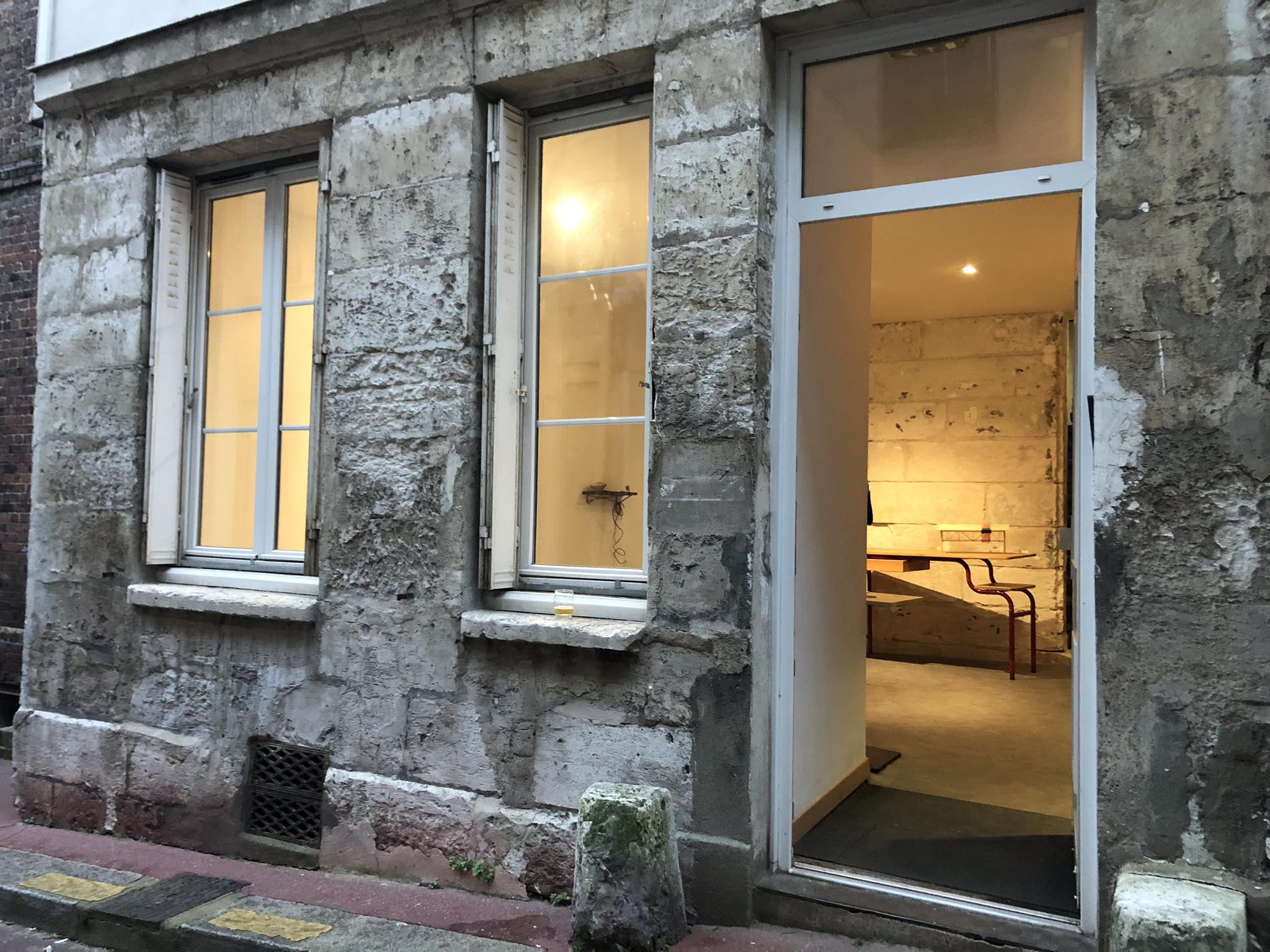
Galerija Putolovac Ilica 112
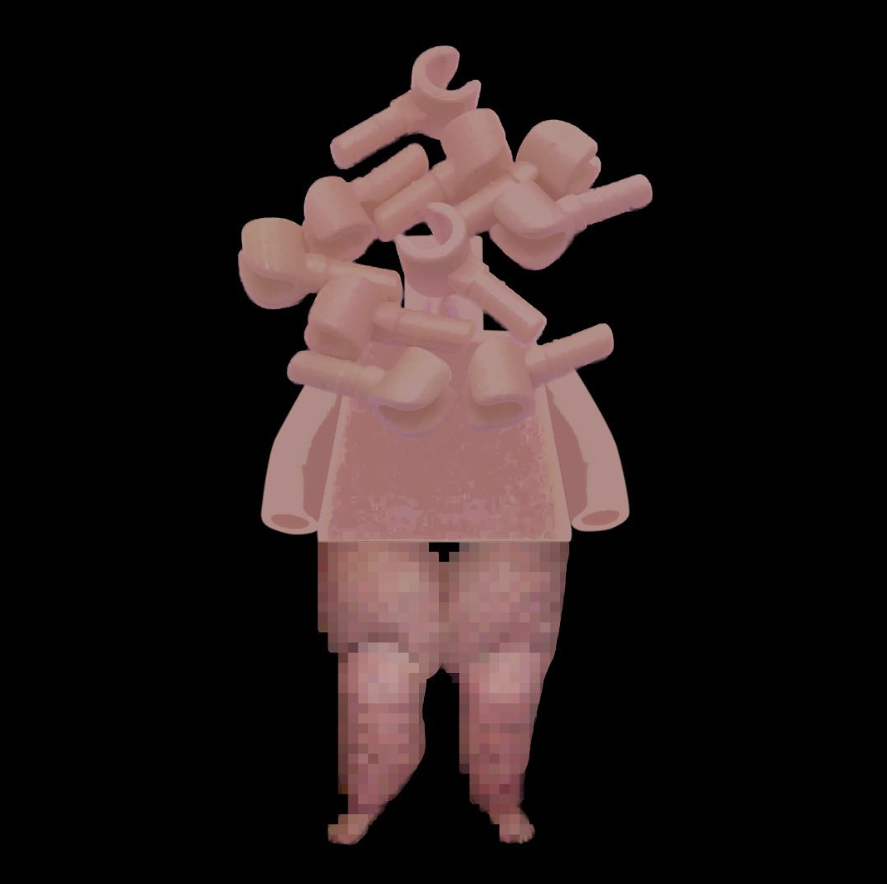
“I read somewhere in Bacon’s “every researcher of nature is caused to disbelieve what his mind most delights and attracts”… and this reflects my main journey… there is no central message, for me there is no centralization of ideas… everything is parallel and important, there is no device and no faulty elements, it is your type of UNITY, which we usually forget about, because this is our neurological structure, resulting from the evolution of our brain and the history of our ancestors. It was and equivalent to our primitive grandparents who tried at an independent price in a separate environment.”
Iza Tarasewicz
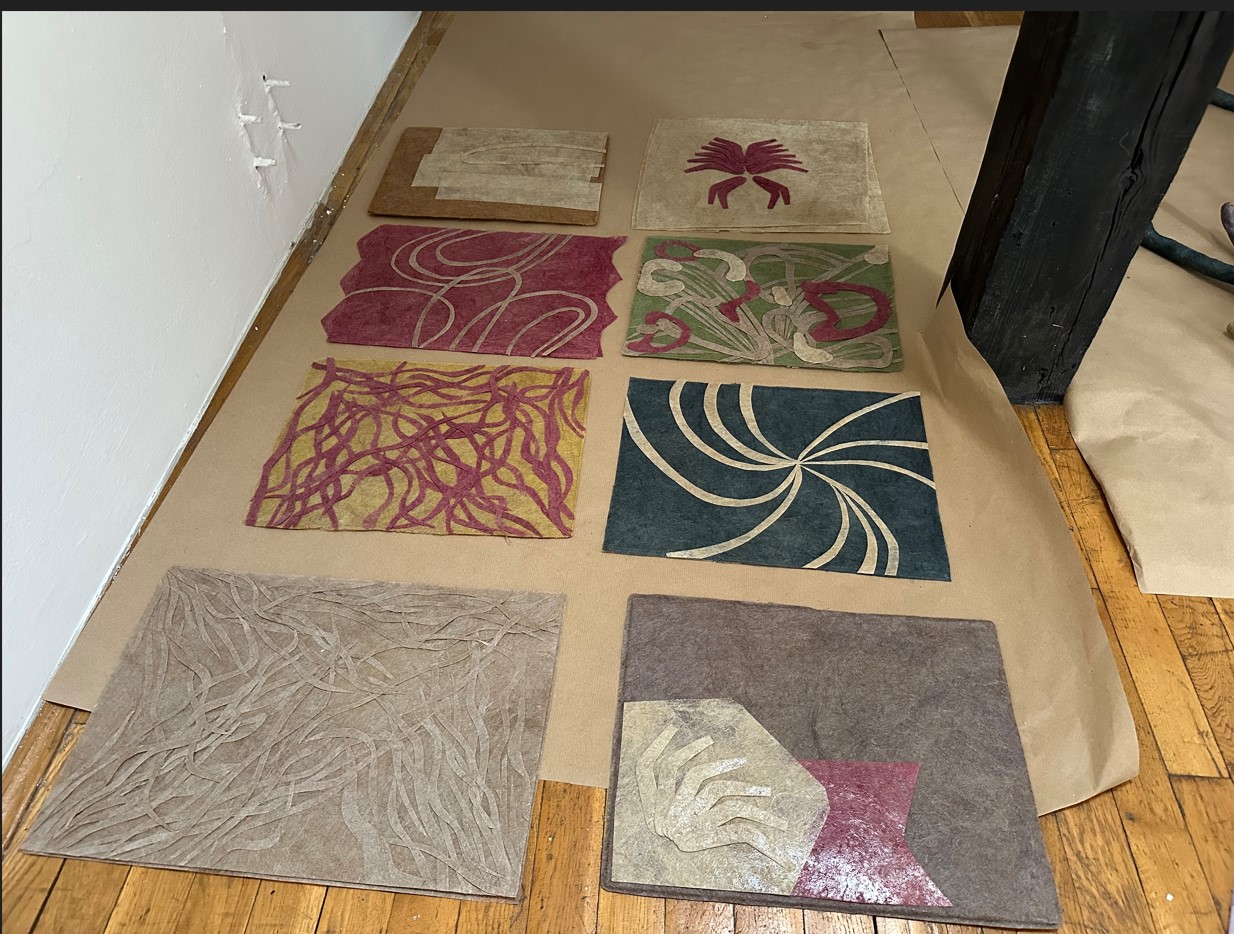
Iza Tarasewicz (b. 1981 in Białystok) graduated from the Faculty of Sculpture and Performing Arts at the Academy of Fine Arts in Poznań in 2008. She lives and works in Kolonia Koplany, a small village near Białystok where she grew up. Working with sculpture, installation, drawing and performance, her work has gained significant recognition in the country and abroad. She is the winner of the 2019 Bayerischen Kunstförderpreise award for fine arts and the 2015 VIEWS [Spojrzenia] award of the Deutsche Bank Foundation, in co-organization with the Zachęta National Art Gallery in Warsaw. In 2013, she was nominated for the Passportu Polityka prize for visual art. Her sculptural installations take the form of modular, flexible and mobile systems, which combine raw and modest functionalism with formal logic found in the natural world, scientific experiments and graphs and diagrams — figures of thought and diagrams of relationships that systematize knowledge and data and abstractly describe the interaction of phenomena. The artist finds inspiration for her work in classical Greek philosophy and quantum physics.
Leonida Kovač (HR) is an art historian and theoretician, curator, and professor at the Academy of Fine Arts, University of Zagreb. Since the mid-1980s, she has been intensively engaged in the feminist deconstruction of heteronormative discourses, with a focus on regimes of representation, that is, structural violence in the discourse (about) art and in visual culture. She conceived and realized about thirty author’s exhibitions, among which the exhibitions of Nan Hoover, Dube Sambolec, Katarzyna Kozyra, Orshi Drozdik, Dorothy Cross, Rita Duffy, Naste Rojc and Edita Schubert are particularly important. She was the trustee and curator of the Croatian pavilion at the Contemporary Art Biennale in São Paulo (2002) and at the Venice Biennale (2003), where she presented Ana Opalić’s series of self-portraits in the exhibition Patterns of Visibility. From 2002 to 2005, she was elected vice-president of the International Association of Art Critics – AICA.
The Artists for Artists Residency Network, a two-year project (2023-2024), aims to improve the mobility of contemporary visual artists and curators, while creating greater opportunities for women in the arts. The project takes place in four European partner countries – Romania, Germany, Croatia and Austria. The project focuses on the development of new international exchanges and transcultural dialogue and provides a number of new opportunities for art practitioners of all ages, in different artistic media, with a special emphasis on women in art and gender equality. The result of the project will be increased awareness of the importance of cultural mobility at local legislative levels, but also in the general public, especially in the current (post)crisis European context, strengthening EU affiliation and connection with contemporary visual art.
The project includes: 12 artist residencies in Zagreb (HR), Mulhouse (FR), Bucharest (RO) and in Săcel, Maramureș (RO), 4 curatorial residencies in Zagreb and Bucharest, 12 conferences in Zagreb, Bucharest and Vienna and 1 traveling international exhibition, which will first be shown to the public in Zagreb (HR), and then in Vienna (AT) and Bucharest (RO).
Within the project:
![]()
Project partners:

Co-funded by:
![]()

Co-funded by the European Union – CREA-CULT-2022-COOP. The views and opinions expressed are solely those of the authors and do not necessarily reflect the official views of the European Union or the European Education and Culture Executive Agency (EACEA). Neither the European Union nor the European Commission can be held responsible for them. [Project number: 101100309 ]
Project is co-financed by the Government Office for Cooperation with NGOs.
The views expressed in this announcement are the sole responsibility of HDLU and do not necessarily reflect the opinion of the Government Office for Cooperation with NGOs.

DESCRIPTION:
Karas Gallery is an exhibition space of the Croatian Association of Fine Artists (HDLU) with a long tradition of activity in the contemporary art scene. After many years of activity at Praška 4, since 2018, it has been operating at the address Kralja Zvonimira 58.
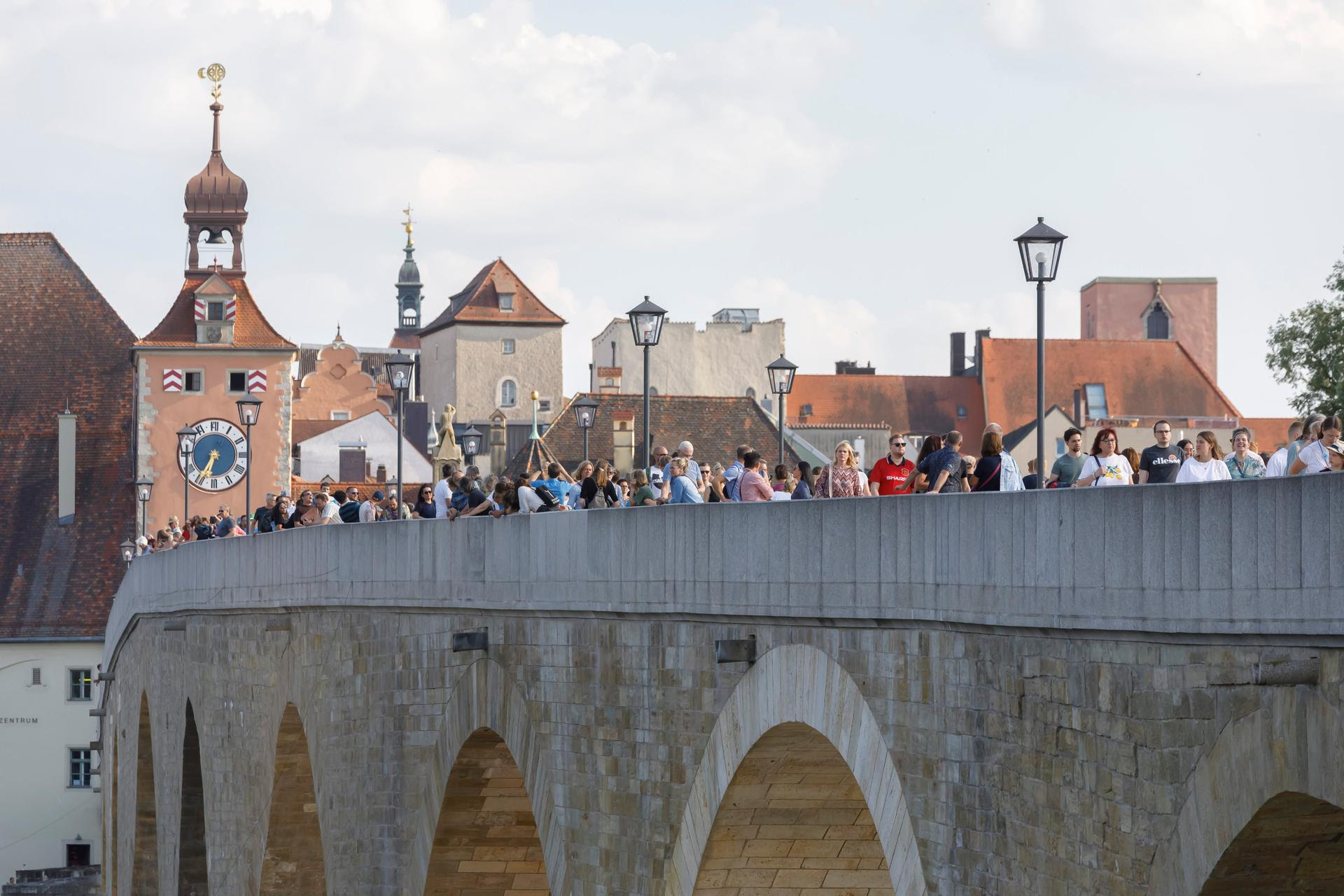
Recognizing the need for redefining and creating a new cultural identity for the neighborhood where Karas Gallery is located, within the EU project CreART 3.0, a collaborative artistic program titled KARAS + KVART is organized, envisioned in a collaborative and co-creation model between one local artist and one artist from the network. Artists will explore the neighborhood for 2 weeks, and the final result will be an artistic work or initiative in the public space of the gallery neighborhood in October. As part of KARAS+KVART 2024 project, Luana Lojić has been invited to participate, and an international artist – Karl Iaro from Regensburg was selected through the Open call.
Luana Lojić (1991) deals with applied cosmophilia and internet nomadism. From poetry for stones to live installations, videos, films, voiceovers, and live art addressing the relationship between humans and the systems, perceptions, and materialities surrounding them, her work seeks to understand natural processes beyond and within the concept of senses. She has received numerous awards for her work.
Karl Iaro (1994) studied industrial design in Regensburg with stays abroad (study/internship) in Barcelona and Porto. Light is his main fascination, which is why he is often called an artist of light.
Within the project:
![]()
Partners:

Co-funded by:
![]()

Co-funded by the European Union – CREA-CULT-2023-COOP. The views and opinions expressed are solely those of the authors and do not necessarily reflect the official views of the European Union or the European Education and Culture Executive Agency (EACEA). Neither the European Union nor the European Commission can be held responsible for them. [Project number: 101128499]
Project is co-financed by the Government Office for Cooperation with NGOs.
The views expressed in this announcement are the sole responsibility of HDLU and do not necessarily reflect the opinion of the Government Office for Cooperation with NGOs.
SHORT AIR WITHIN “FESTIVAL OPEN FORM. WILENSKA” LUBLIN (POLAND)
5-11 AUGUST

Lublin invites 2 artists from CreArt Network, within the framework of the Annual Festival. The artists will be supervised by Marta Ryczkowska – PhD in art history, university lecturer, contemporary art critic, curator of exhibitions and festivals, educator, animator of cultural activities. Participants will be provided with all conditions to be inspired by the space of the estate, and the projects will be developed taking into account the specificity of the place and local identity.
CONDITIONS: The artist will receive an artistic fee of 700 euros (after signing a contract in advance).The organizer will provide accommodation, a studio for creative work and the cost of materials. The artist will cover travel costs on his/her own.
DEADLINE: Applications must be sent by July 3, 2024, through the CreArt application and mail to creart3.0@lublin.eu
AiR IN CHALET LECOQ CLERMONT-FERRAND (FRANCE)
3 OCT-29 NOVEMBER

Clermont-Ferrand is organizing a two-month residency for 3 visual artists at Chalet Lecoq. It will select 2 artists from the CreArt network and 1 from Clermont-Ferrand. The Chalet Lecoq welcomes international artists in residence throughout the year. It offers a privileged setting, with a two-bedroom apartment and a fully equipped workspace. Both in the center of town and in an atypical location in the middle of a public garden, the Chalet Lecoq invites reflection on the relationship between nature and the urban space.
CONDITIONS
• residency grant: 3 000 € / artist for the two-month residency (1 500 € / month)
• production costs: 600 € / artist
• for European artists, reimbursement of round-trip travel expenses (up to 500 € )
• an end-of-residency presentation may be organized, in discussion with the artists hosted.
DEADLINE: Applications should be sent by 7th July through the CreArt intranet.
AIR IN GALERÍAS VA VALLADOLID (SPAIN)
21 OCT- 13 DECEMBER

Valladolid will select 3 artists to work on their artistic projects for 8 weeks in Galerías VA in Valladolid, between 21st October to 13th December 2024. The selection criteria will seek to represent the quality and diversity of the different visual arts. There is no age limitation. However, it is necessary to have a degree in an artistic field at the university level (or, alternatively, prove an equivalent ability through their artistic career).
CONDITIONS
Travel expenses to Valladolid for artists from other cities in the Network (round-trip plane ticket from their CreArt city -or from the closest one that communicates with Madrid- and train ticket between Madrid and Valladolid).
Artist fee of 1.500 € (NET amount)
Production costs (if needed) up to 600 €.
Accommodation in apartament close to Galerías VA, and one studio per artist.
Organization of Final Open Studio/exhibition
DEADLINE: Applications should be sent by 18th August.
Within the project:
![]()
Partners:

Co-funded by:
![]()

Co-funded by the European Union – CREA-CULT-2023-COOP. The views and opinions expressed are solely those of the authors and do not necessarily reflect the official views of the European Union or the European Education and Culture Executive Agency (EACEA). Neither the European Union nor the European Commission can be held responsible for them. [Project number: 101128499]
Project is co-financed by the Government Office for Cooperation with NGOs.
The views expressed in this announcement are the sole responsibility of HDLU and do not necessarily reflect the opinion of the Government Office for Cooperation with NGOs.

The last resident within the European project AFAR is artist Iza Tarasewicz (PL). She was born in 1981 in Białystok, Poland. Her sculptural installations take the form of modular, flexible, mobile, and reconfigurable display systems that combine a raw and modest functionalism with formal logics found in the natural world, scientific experimentation, and graphs and diagrams — figures of thought and charts of relation that systematize knowledge and data and abstractly describe the interaction of phenomena. The artist gets inspiration for her work from the atomism of classical Greek philosophy and from the reality-explanations of 20th-century quantum physics and chaos-theory. Her statues and object-assemblages that may be combined into installations are generated into systems filled with energy, formed from hardly identifiable organic and inorganic materials. She lives and works in Kolonia Koplany, Poland.
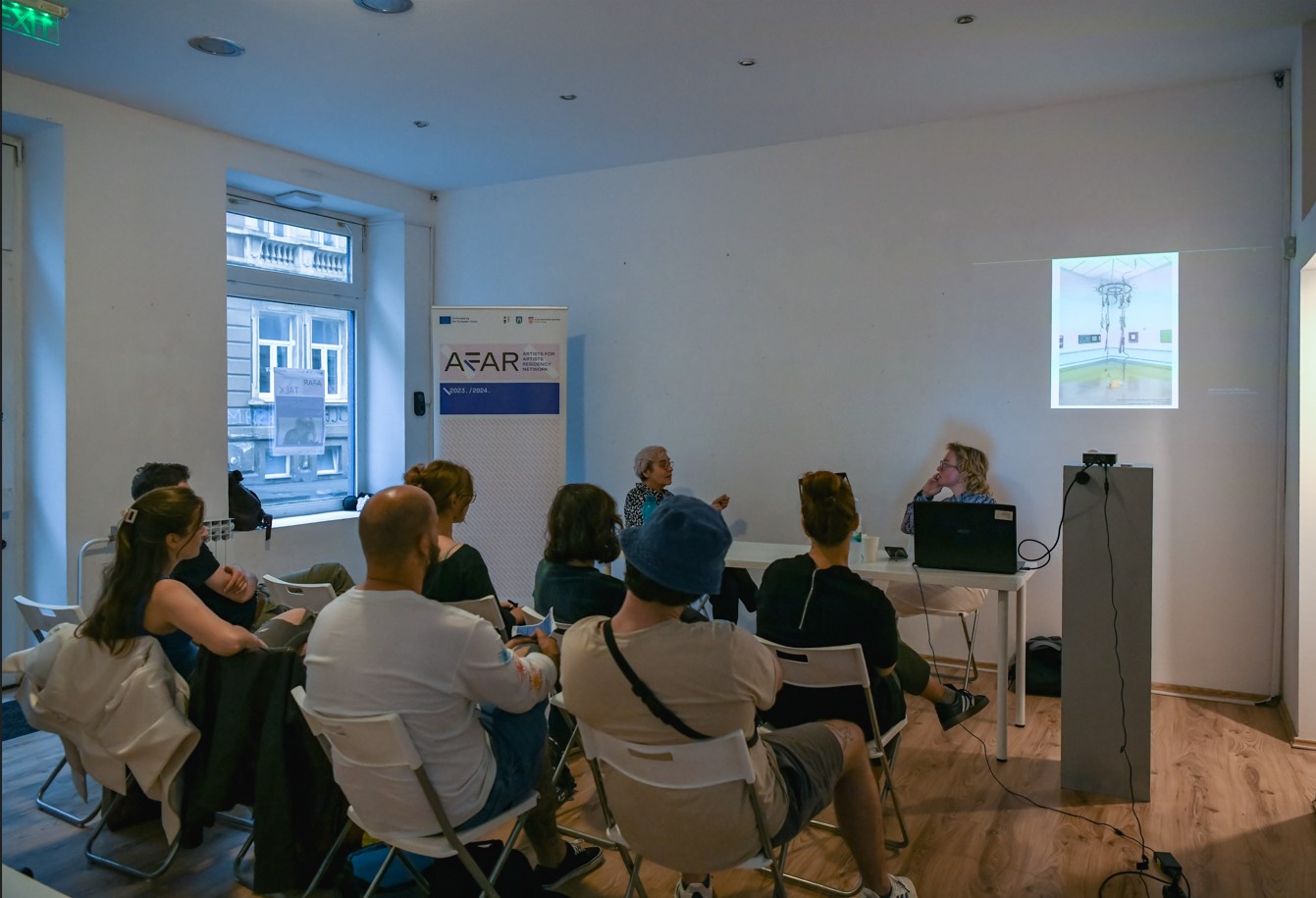
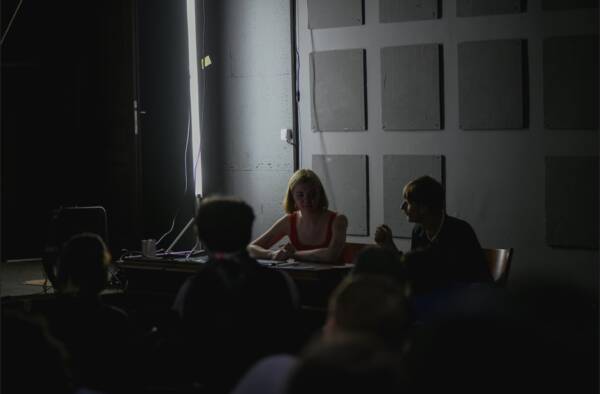
As part of the residency, Iza will familiarize herself with the local art scene through visits to studios and exhibitions and will create a new artistic work related to the main themes of the project: ecology, sustainability, heritage, and textile arts. This work will be exhibited at the final exhibitions in Zagreb, Vienna, and Bucharest. In addition to the artistic work, she will also give a lecture at the Putolovac Gallery, June 25, at 7:30 pm, followed by a discussion with Leonida Kovač (AFAR Talk), in cooperation with the discursive program of the doctoral study of Academy of Fine Arts in Zagreb
The Artists for Artists Residency Network, a two-year project (2023-2024), aims to improve the mobility of contemporary visual artists and curators, while creating greater opportunities for women in the arts. The project takes place in four European partner countries – Romania, Germany, Croatia and Austria. The project focuses on the development of new international exchanges and transcultural dialogue and provides a number of new opportunities for art practitioners of all ages, in different artistic media, with a special emphasis on women in art and gender equality. The result of the project will be increased awareness of the importance of cultural mobility at local legislative levels, but also in the general public, especially in the current (post)crisis European context, strengthening EU affiliation and connection with contemporary visual art.
The project includes: 12 artist residencies in Zagreb (HR), Mulhouse (FR), Bucharest (RO) and in Săcel, Maramureș (RO), 4 curatorial residencies in Zagreb and Bucharest, 12 conferences in Zagreb, Bucharest and Vienna and 1 traveling international exhibition, which will first be shown to the public in Zagreb (HR), and then in Vienna (AT) and Bucharest (RO).
Within the project:
![]()
Project partners:

Co-funded by:
![]()

Co-funded by the European Union – CREA-CULT-2022-COOP. The views and opinions expressed are solely those of the authors and do not necessarily reflect the official views of the European Union or the European Education and Culture Executive Agency (EACEA). Neither the European Union nor the European Commission can be held responsible for them. [Project number: 101100309 ]
Project is co-financed by the Government Office for Cooperation with NGOs.
The views expressed in this announcement are the sole responsibility of HDLU and do not necessarily reflect the opinion of the Government Office for Cooperation with NGOs.
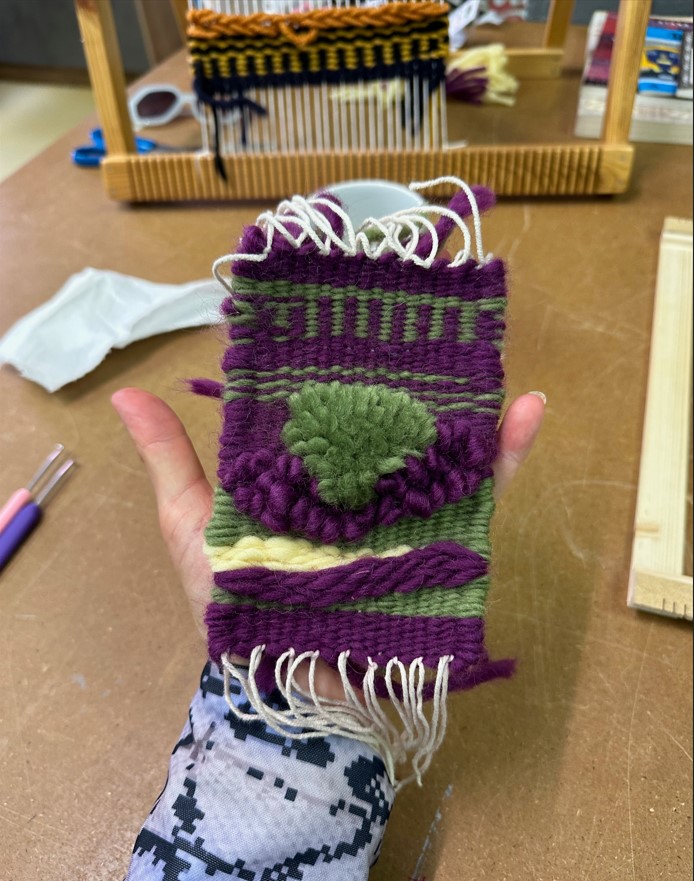
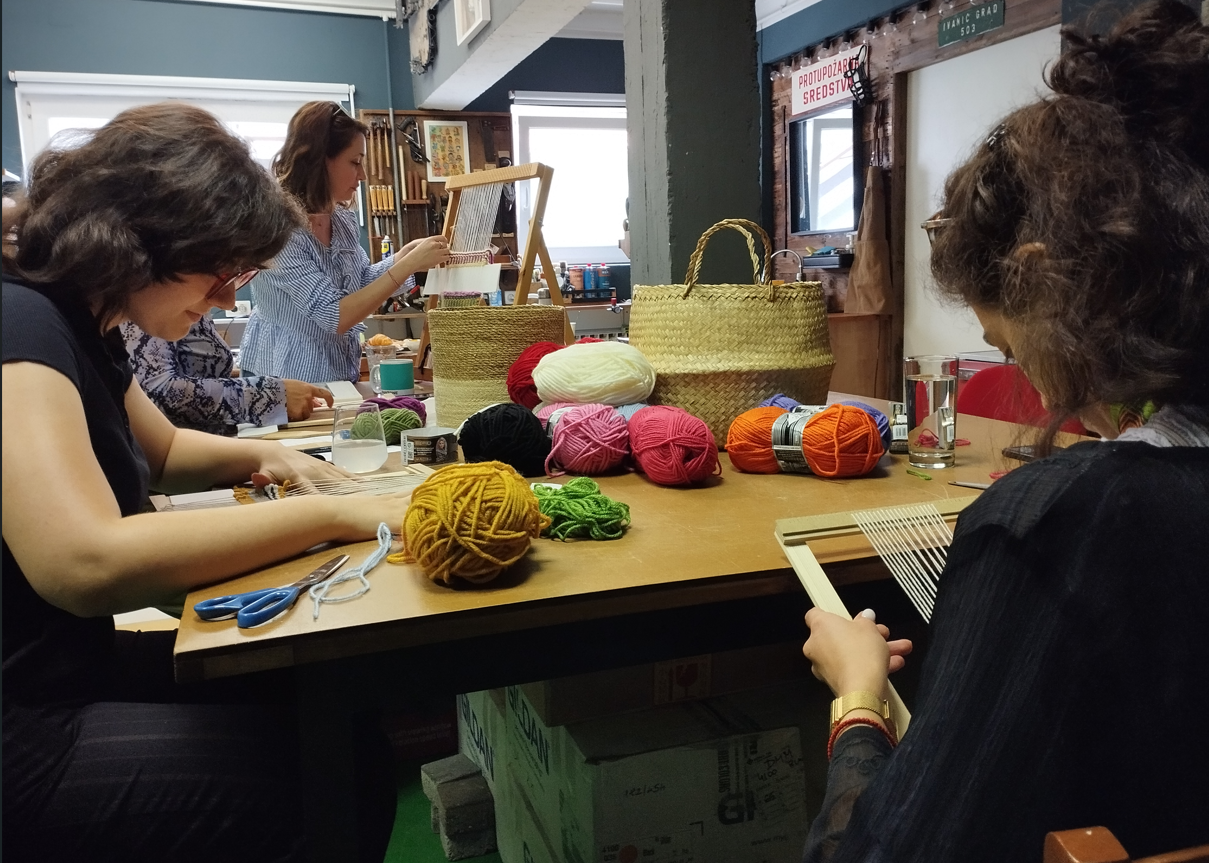
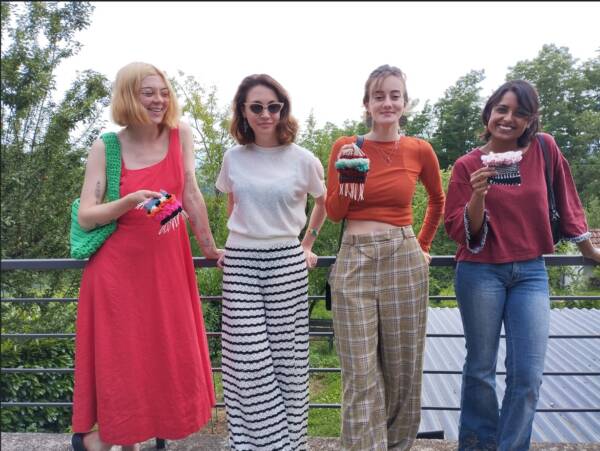
On Saturday, June 8, 2024, the “Weaving Techniques” workshop was held as part of the European project Artists for Artists Residency Network (AFAR).

The workshop was led by prof. Nikolina Knežević Hrgović, mag.art.edu.

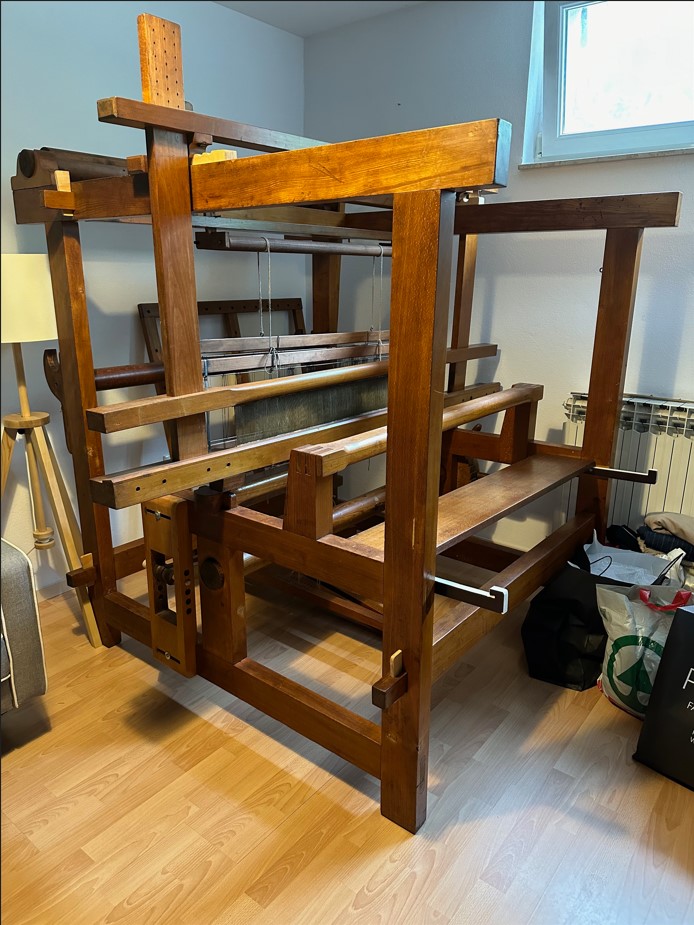
The workshop was designed with the goal of collaborating with local artists, establishing international connections, and encouraging their further work. Weaving is the process of interlacing at least two systems of threads at a right angle: the warp and the weft. This process results in flat or three-dimensional textile creations, depending on the weaving techniques we use. The application of hand weaving is very broad, ranging from clothing items, home textiles, decorative elements, spatial installations, etc. In the workshop “Weaving Techniques,” we delved into the secrets of this very old and esteemed craft. We learned about the history of weaving in Croatia, got to know the parts of the loom and weaving frame, and which materials and tools are used in hand weaving. Each participant worked on their own weaving frame and learned the processes of traditional techniques that contemporary weavers strive to maintain. We also mentioned some “newer” weaving techniques and how to connect tradition with contemporary artistic expression through the magic of threads.
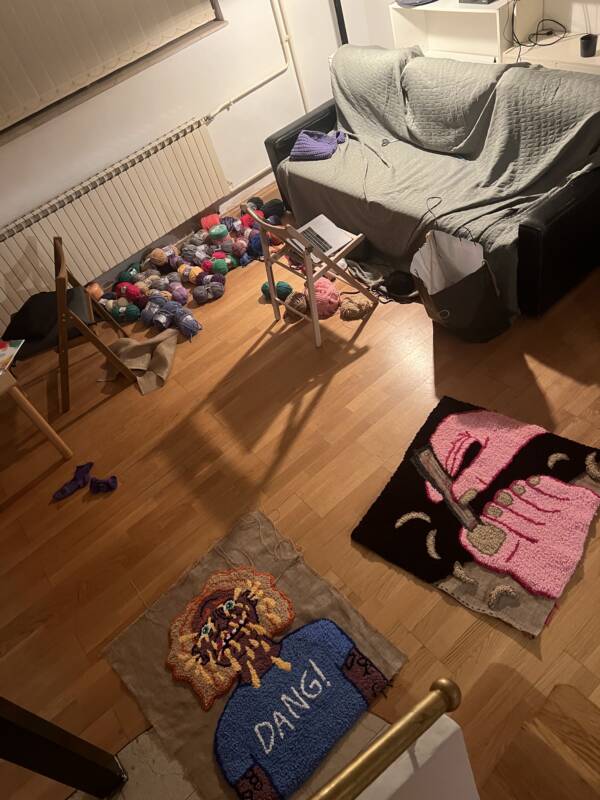
Additionally, we got acquainted with the work of artist Megan Dominescu and the rug hooking technique.

The Artists for Artists Residency Network, a two-year project (2023-2024), aims to improve the mobility of contemporary visual artists and curators, while creating greater opportunities for women in the arts. The project takes place in four European partner countries – Romania, Germany, Croatia and Austria. The project focuses on the development of new international exchanges and transcultural dialogue and provides a number of new opportunities for art practitioners of all ages, in different artistic media, with a special emphasis on women in art and gender equality. The result of the project will be increased awareness of the importance of cultural mobility at local legislative levels, but also in the general public, especially in the current (post)crisis European context, strengthening EU affiliation and connection with contemporary visual art.
The project includes: 12 artist residencies in Zagreb (HR), Mulhouse (FR), Bucharest (RO) and in Săcel, Maramureș (RO), 4 curatorial residencies in Zagreb and Bucharest, 12 conferences in Zagreb, Bucharest and Vienna and 1 traveling international exhibition, which will first be shown to the public in Zagreb (HR), and then in Vienna (AT) and Bucharest (RO).
Within the project:
![]()
Project partners:

Co-funded by:
![]()

Co-funded by the European Union – CREA-CULT-2022-COOP. The views and opinions expressed are solely those of the authors and do not necessarily reflect the official views of the European Union or the European Education and Culture Executive Agency (EACEA). Neither the European Union nor the European Commission can be held responsible for them. [Project number: 101100309 ]
Project is co-financed by the Government Office for Cooperation with NGOs.
The views expressed in this announcement are the sole responsibility of HDLU and do not necessarily reflect the opinion of the Government Office for Cooperation with NGOs.
We are bringing you photos from yesterday’s AFAR Talk with Megan Dominescu (RO) and Sven Jozić (HR): Slowly But Boldly Going Nowhere: A map of artistic practice and visual upbringing, as part of the European project Artists for Artists Residency Network (AFAR), aimed at improving the mobility of contemporary visual artists and curators, thus creating greater opportunities for women in the arts. This project takes place in four European partner countries – Romania, Germany, Croatia, and Austria. The Talk took place in cooperation with the Academy of Fine Arts in Zagreb, as part of the course Introduction to the Theory of Art, by associate professor Josip Zanki, Ph.D.

In conversation with Sven Jozić, Megan Dominescu explored the diverse references and drives behind an artistic practice and how seemingly contrasting ideas can merge to create a unified result. Humor was an essential element that was deconstructed and examined throughout the talk. The discussion revolved around her textile creations, comics, the brand Good Boy Security, her academic education, and the cultural differences between the USA, where she grew up, and Bucharest, where she lives.


Within the project:
![]()
Project partners:

Co-funded by:
![]()

Co-funded by the European Union – CREA-CULT-2022-COOP. The views and opinions expressed are solely those of the authors and do not necessarily reflect the official views of the European Union or the European Education and Culture Executive Agency (EACEA). Neither the European Union nor the European Commission can be held responsible for them. [Project number: 101100309 ]
Project is co-financed by the Government Office for Cooperation with NGOs.
The views expressed in this announcement are the sole responsibility of HDLU and do not necessarily reflect the opinion of the Government Office for Cooperation with NGOs.