
Category: Events
16 March 2016
(re)thinking Space&Place
GROUP EXHIBITION OF CROATIAN FINE ARTISTS IN GERMANY
Flottmann-Hallen, Herne, Germany
March 19 – May 8, 2016.
Opening: March 19 at 5:00pm
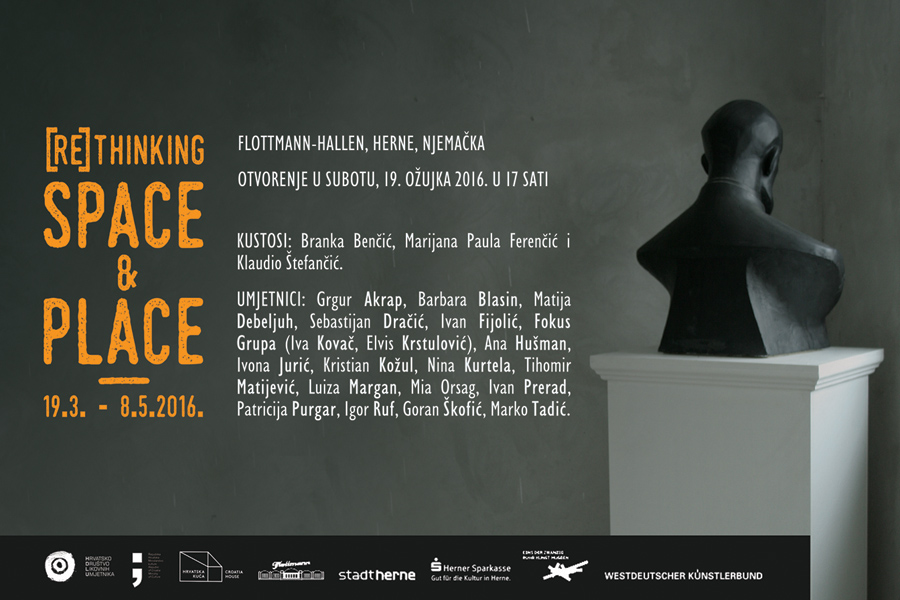
Tihomir Matijević – Grounded bust, 2008.
From March 19 – May 8, 2016 a group exhibition (re)thinking Space&Place, presenting 19 Croatian artists, is being held at the gallery space of Flottmann-Hallen in Herne, Germany. The curatorial concept was realized in collaboration with three prominent Croatian curators, who have worked on the concept through various artistic media; Branka Benčić through visual arts, Marijana Paula Ferenčić through painting and Klaudio Štefančić through sculpture.
The exhibition presents the following artists: Grgur Akrap, Barbara Blasin, Matija Debeljuh, Sebastijan Dračić, Ivan Fijolić, Fokus Grupa (Iva Kovač, Elvis Krstulović), Ana Hušman, Ivona Jurić, Kristian Kožul, Nina Kurtela, Tihomir Matijević, Luiza Margan, Mia Orsag, Ivan Prerad, Patricija Purgar, Igor Ruf, Goran Škofić, Marko Tadić.
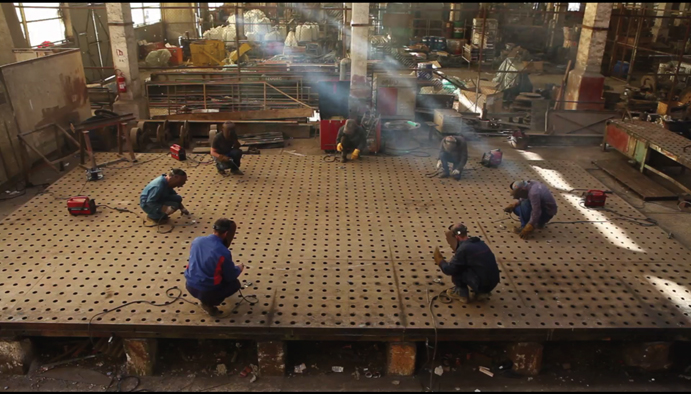
Goran Škofić – Sector, 2015.
As pointed out by Branka Benčić, the works of the selected artists are focused on the medium of video as a means of expression and the language of moving images. They take different positions on the forms of representation, issues of individual or cultural identity, space and architecture, and explore them by focusing their interest on different topics, artistic strategies and procedures – taking as a starting point monuments, strategies related to performance, body, self-representation, the question of language and cultural context, heritage, the issues of work, production and deindustrialisation, interest in the built or natural environment, by pointing to the fact that the image of a space is always a form of construction and matter of representation, whether it is about abandoned spaces, remnants of modernity, the landscape or artificial and fantastic space of animation.
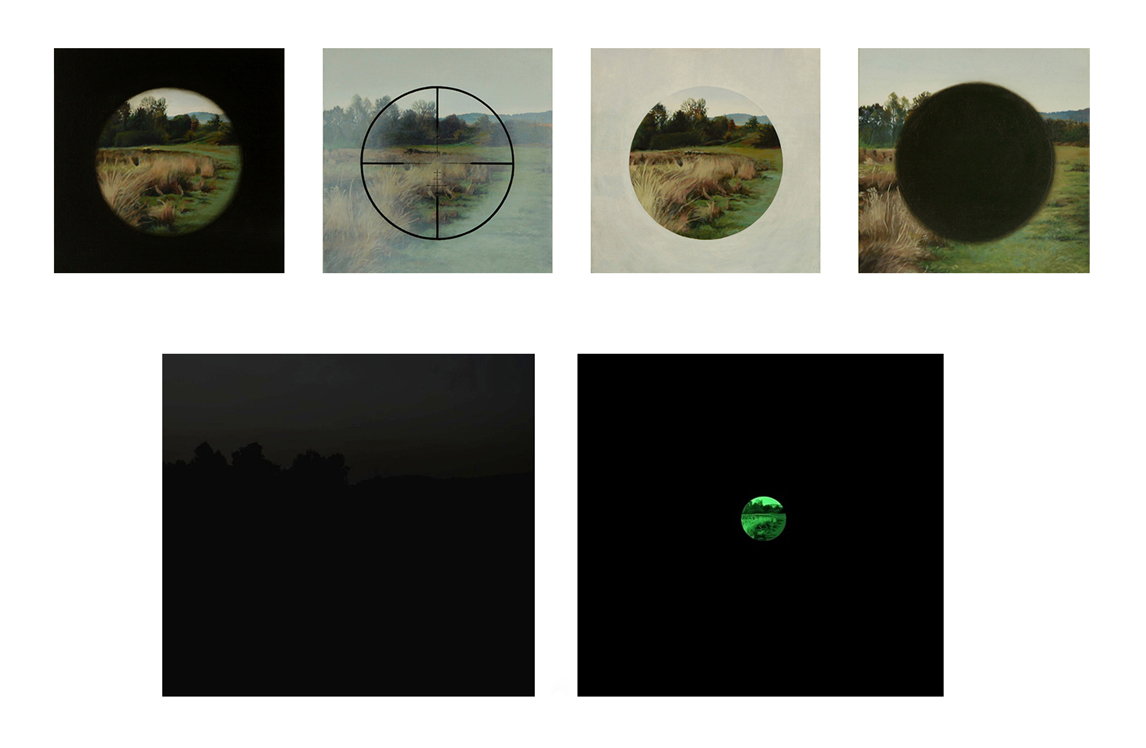
Patricija Purgar – Surcease of Target’s Activity, 2015.
– Light-gathering Ability, 2015.
On the other hand, Marijana Paula Ferenčić notes that the whole composed of fragments of painted views, just like a mosaic, connects and separates different subjective narratives created using a rational visual language, but also with artistic intuition. The world of two-dimensional exists thus in the illusion of the three-dimensional, forming the unity of view in all its emotional vastness and performative subtleties.
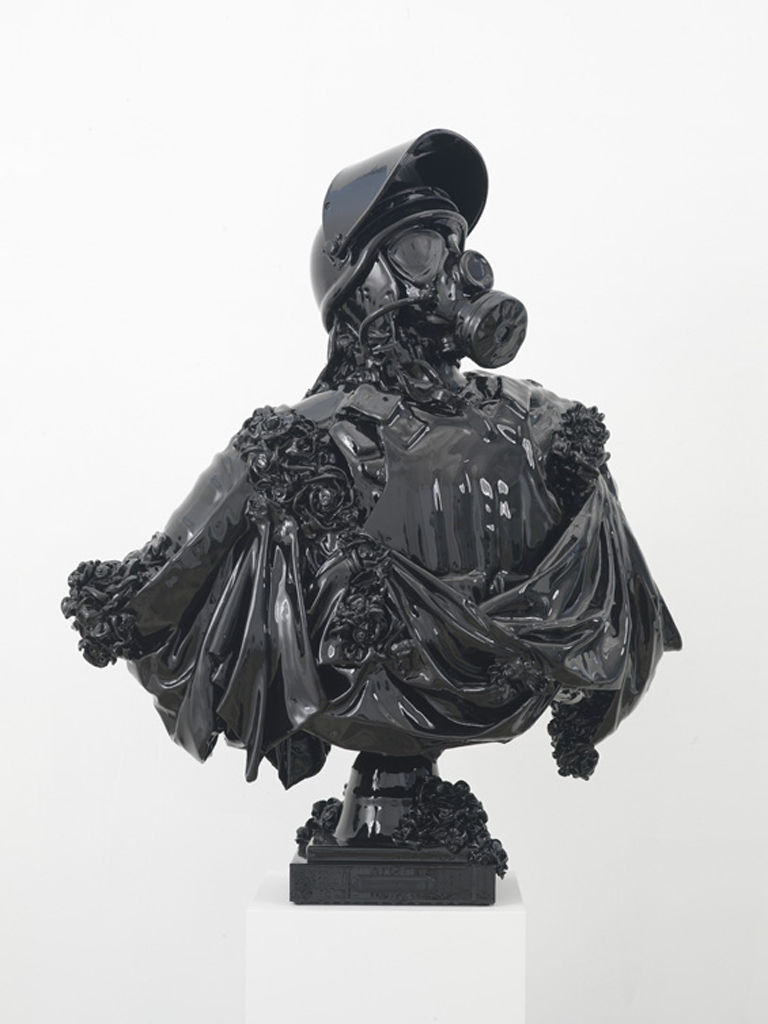
Kristian Kožul – Untitled, 2011.
Klaudio Štefančić concludes that the artistic value of public sculpture cannot be perceived without the analysis of social relations. It does not suffice anymore to interpret public sculpture within the framework of modernist concept of formal innovation. The selection of works in this exhibition is not based on importance of their volumes, masses or contours, planes and anatomies of the portrayed figures, etc., but on their potential place in a wider social context. However, public sculpture, in any form, is no longer a privileged medium of visual expression.
Opening of the exhibition will be held on March 19 and will be attended by the Consul General for Germany, Düsseldorf Mr. Zvonko Plećaš, Croatian curators Klaudio Štefančić and Branka Benčić, Croatian artists Kristian Kožul and Luiza Margan, president of HDLU PhD Josip Zanki, director of Flottmann-Hallen Gallery Mrs. Jutta Laurinat and chairmain of WKB Ekkehard Neumann.
The exhibition is the result of an international cooperation between the Croatian Association of the Fine Artists (HDLU) and the Westdeutscher Kunstlerbund (WKB), of which the previous was the exhibition of WKB in 2014. in the PM gallery at Croatian Association of the Fine Artists.
EXHIBITION CATALOG and detailed curatorial concept is available HERE.
Organisers:



Patrons:


EUROPEAN DAY OF ARTISTIC CREATIVITY:
PERFORMANCE SITE, CITY-MAKING
artistic interventions in public space and the international conference
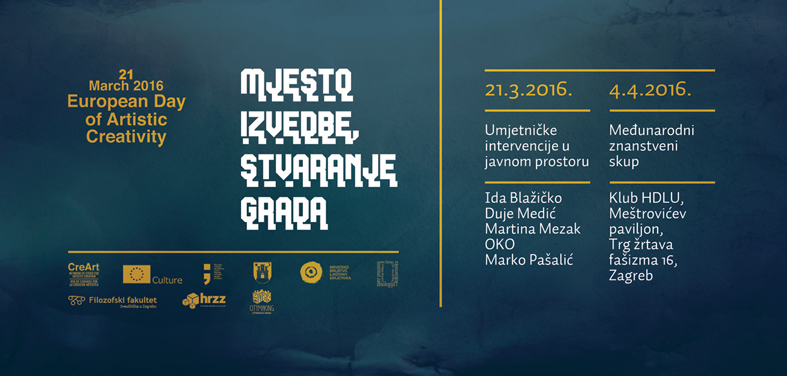
As part of the EU project CreArt, Croatian Association of Fine Artists from Zagreb (HDLU) is marking the European Day of Artistic Creativity by organizing a project Performance site, city-making. The project is implemented in cooperation with the Department of Ethnology and Cultural Anthropology, University of Zagreb and the Institute of Ethnology and Folklore in Zagreb as a part of the project City-making: space, culture and identity (HRZZ). The project is designed within two events: the presentation of artistic interventions in five locations in the city’s public space on March 21, and the international conference on April 4 2016 in the HDLU Club.
Five artists, Ida Blažičko, Duje Medić, Martina Mezak, Marko Pašalić and OKO are going to perform interventions at chosen locations in the city’s public space. Visits of the locations with an expert guide and the opportunity to talk to the artists will be arranged for the public on March 21. Five students from the Department for Ethnology and Cultural Anthropology of the Faculty of Humanities and Social Sciences at the University of Zagreb will be documenting the project on the locations chosen for artistic interventions.
Consequently, an international scientific conference Performance site and city-making is going to be held on April 4 in the seat of HDLU, with the goal of addressing the issue of sites and non-sites as platforms for creating the meaning of the city, but at the same time as generators of artistic interventions. The conference will be open to the public, and a detailed program will be announced by March 16, 2016.
The project is going to be documented through an accompanying book, which will include the papers presented at the scientific conference and the documentation of the artistic interventions in public space.
The purpose of the project is to combine artistic creation and scientific research as a possible means of encouraging new creative processes aimed at sensitization and transformation of public space as the archetype site for acting outside corporative models and dominant cultural industries.
The project is co-funded by the EU Culture Programme 2007 – 2013 as part of the EU project CreArt, by the Croatian Science Foundation as a part of the project City-making: space, culture and identity, and supported by Zagreb’s City Office for Education, Culture and Sports and the Ministry of Culture.
CreArt project in more detail
Creart is a network of public and private institutions established in European cities, with experience in cultural management and dedicated to the development of visual arts. The project was selected as part of the EU Culture Programme 2012 – 2017. Over the recent months, it has developed into a network of 13 partner cities and institutions, and as such represents the cultural diversity and richness of Europe. To represent the city of Zagreb, CAVA joined as partner at the end of 2013. The backbone of the project is to promote and encourage creativity and creation by supporting the creative industries through activities such as holding conferences on a regular basis, organizing residential programs, exhibitions, educational seminars and workshops, as well as monitoring the progress of individual cities. CreArt focuses on the research of culture in the medium- and medium-major sized European cities, affects change in the partner cities, monitors the successful implementation of plans, reports on and publishes the results, and transmits successful forms on the less successful cities.
More details:
http://www.creart-eu.org/presentation
City-making: space, culture and identity project in more detail
The project is aimed at untangling and comprehending the multiple, multi-layered and interdependent actors, factors and processes of contemporary transformations in the Croatian capital, Zagreb. Two dimensions of the project are singled out as crucial to the transformation of contemporary cities – the politics of public spaces and the politics of difference. Both constitute knots at which global political, economic and cultural flows meet and collide with local imaginaries, interests and developments, bringing about the restructuring of the city and its identity. The project also emphasizes the importance of including city dwellers in these processes, and investigates how they remake, recreate and reconstruct the given social, cultural and spatial landscape (cityscape), adding cultural meaning to it. The focus of the project, the concept of “city-making”, thus refers to a comprehensive construction and articulation of urban life. Art created in public space serves as one segment in creating the meaning of the city and its complexity.
The project is financed by Croatian Science Foundation (2014.-2018.).
More details about the project: www. citymaking.eu
The organizers:


With the support of:



29 February 2016
Josip Butković
COURTYARDS
Prsten Gallery
March 9 – April 10, 2016

Exhibition opening: Wednesday, March 9, 2016 at 7pm
29 February 2016
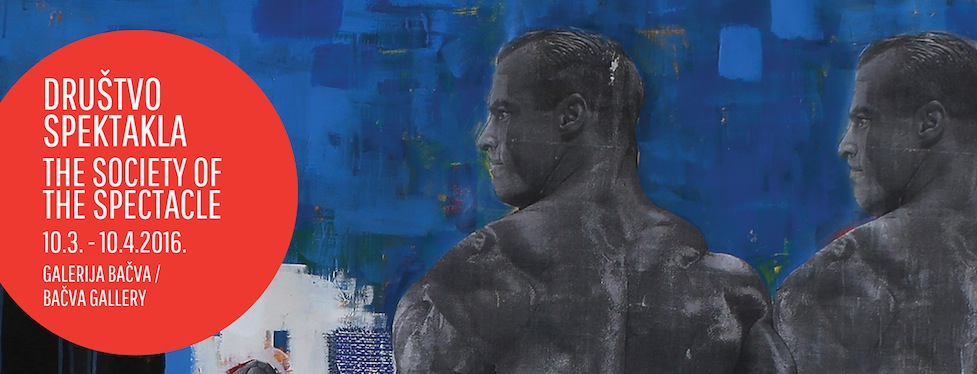
THE SOCIETY OF THE SPECTACLE
TO THE CRITICS OF SELF-SPECTACLIZATION
international group exhibition
March 10 – April 10, 2016
Home of Croatian Fine Artists – Meštrović Pavilion
Trg žrtava fašizma 16, Zagreb
Bačva Gallery
OPENING
Thursday, March 10 at 7pm
24 February 2016
ONES AND ZEROS
Sarah Lüdemann
Gallery PM
March 10- 20, 20016

Exhibition opening – March 10 at 7.30pm
“Such is the anti-oedipal strategy: if man is connected to the machines of the universe, if he is in tune with his desires, if he is “anchored”, “he ceases to worry about the fitness of things, about the behavior of his fellow-men, […]. If his roots are in the current of life […] [t]he life that’s in him will manifest itself in growth, and growth is an endless, eternal process. The process is everything.”
(Miller, Sexus)
22 February 2016
EXPORTING ZAGREB
GROUP EXHIBITION OF CROATIAN FINE ARTISTS IN POLAND
National Museum in Gdansk, Poland
February 20 to April 3, 2016.
Opening: February 20 at 6:00pm
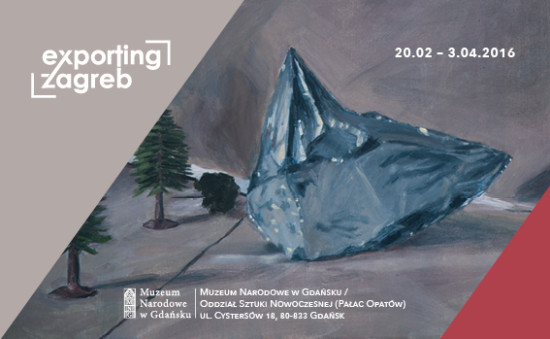 Rene Bachrach Krištofić, Reconstructing Dotrščina, 2014.
From February 20 to April 3, 2016. a group exhibition Exporting Zagreb, Constructing the Present Memory is being held at the National Museum in Gdansk, presenting 19 Croatian visual artists, under the curatorial concept of Polish curator Katarzyna Kosmala.
The exhibition presents the following artists: Gordana Bakić, Ana Bilankov, Siniša Bovcon, Ines Matijević Cakić, Sebastijan Dračić, Danko Friščić, Martina Grlić, Sanja Iveković, Helena Janečić, Rene Bachrach Krištofić, Andreja Kulunčić, Davor Mezak, Pavle Pavlović, Edita Schubert, Stjepan Šandrk, Igor Taritaš, Zlatan Vehabović, Davor Vrankić, Nataša Vuković.
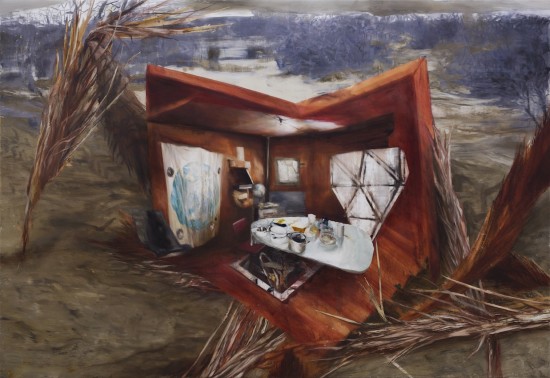
Zlatan Vehabović – Untitled 1, 2015.
With the aim to demonstrate the rich context and diverse cultural heritage of different parts of Croatia, curator Kosmala wanted to emphasize the formation of ‘new’ histories, while recognizing the region’s remarkable contribution to contemporary cultural and artistic creation. Through the title of the exhibition, Kosmala stresses the importance of recent history in the construction of memories on the present and the key points in the transformation of the practice that takes place today, contextualised back to the 1970s and 1980s, acknowledging technological innovation and visual language of transgression in pioneering works of Edita Schubert (1947-2001) as well as early video experimentation and social activism by Sanja Iveković. Several artists explore and comment on the politics of memory in the context of on-going negotiation with the Europeanization project vis a vis distancing from the Central-european historical grand narrative and cultural identity. Others enter into a more personalised dialogue with the private, exploring reticent spaces of remembrance, politicising the forgotten and the silenced, as well as analysing a construction of memory via a more autobiographical approach, or engaging private archives. The construction of memory and the related processes of rewriting, recalling, remembering, commemorating, exalting as well as forgetting, are ultimately realised by merging the personal with the collective lens.
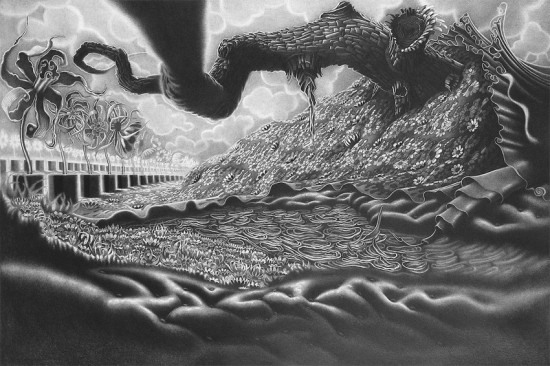
Davor Vrankić – Interior, 2008.
Opening of the exhibition was held on February 20. and was attended by the Croatian ambassador in Poland, E. PhD. Andrea Bekić and Croatian artists Gordana Bakić, Danko Friščić, Helena Janečić, Davor Mezak, Pavle Pavlović, Zlatan Vehabović.
Exporting Zagreb exhibition is the result of an international cooperation between the Croatian Association of the Fine Artists (HDLU) and the National Museum in Gdansk courtesy of curator Kosmala established within third Biennial of painting, when the Polish artists were presented to the audience in Zagreb with an exhibition Exporting Gdańsk.
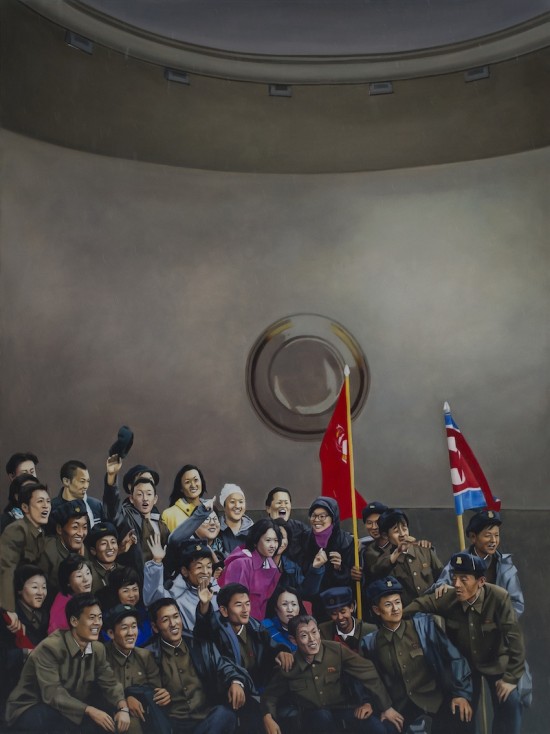
Stjepan Šandrk – The Spectacle (excursion), 2015.
Organisers:

Patrons:
02 February 2016
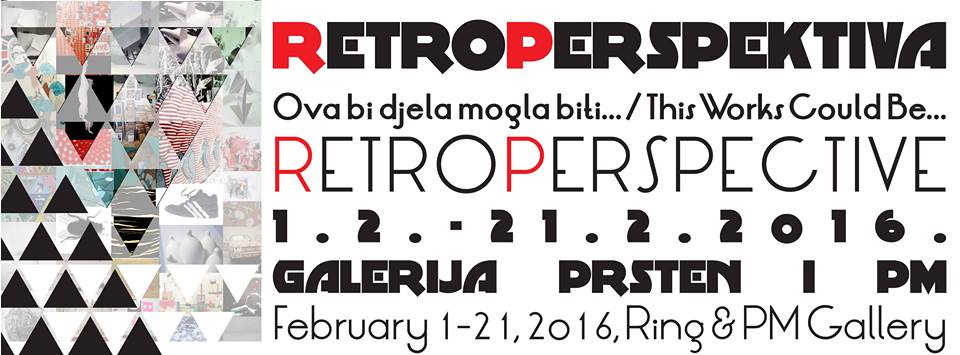
RETROPERSPECTIVE – These Works Could Be…
February 1 – 21, 2016
PM Gallery and Ring Gallery
EXHIBITORS: Grgur Akrap, Željko Badurina, Gordana Bakić, Snježana Ban, Gordana Bralić, Tomislav Buntak, Božena Končić Badurina, Iva Matija Bitanga, Jelena Bračun Filipović, Igor Čabraja, Iva Ćurić, Viktor Daldon, Ivan Fijolić, Ivana Franke, Ivana Gorički, Željka Gradski, Marko Grill, Tea Hatadi, Ana Hušman, Zdravka Ivandija Kirigin, Đorđe Jandrić, Igor Juran, Marija Knezić, Jasminka Končić, Ana Krolo, Ines Krasić, Daniel Kovač, Nina Kurtela, Tomislav Lončarić, Marija Lovrić, Hrvoje Majer, Ivica Malčić, Janko Matić, Miroslav Mirt, Maja Marković, Božica Dea Matasić, Margareta Milačić, Zoltan Novak, Petra Orbanić i Marija Plečko, Dan Philipp, Predrag Pavić, Terezija Pisković Barusić, Vesna Pokas, Iris Poljan, Lala Raščić, Bruno Razum, Davor Rogar, Berislav Šimičić, Natalija Škalić, Tanja Škrgatić, Josipa Štefanec, Anita Šurkić, Karla Šuler, Ivan Tudek, Zorana Unković, Iva Vraneković, Miriam Younis, Ana Zubak
In the vast multitude of contemporary art production nothing stands out for too long; it is like a work lives only for a moment, only to fall into oblivion a moment later. When things are so fast paced, some things manage to become a phenomenon, and some others, although valuable, inexplicably go unnoticed and remain incidental, forgotten in the end. These are, of course, some commonly adopted conclusions and mechanisms characteristic of the (contemporary) art system, which can remind us that it is sometimes necessary to resist the tendency and habit of fast consumption and oblivion, invite us to give a second look at those artistic values that deserve to be remembered, but slip by too quickly in this time of general relativism, dispersion and indifference.
In the present context it is important to look at individual and group artistic achievements of the generation of artists of the last decade and more, and exhibit together both the works that have become paradigmatic on the young art scene and the ones that passed unnoticed, but which “could be of historical importance.“[1]
We are, in fact, interested in what happens with the works after a length of time. Can “the historically suppressed contents be revised, revalued, though-out and become functional in the future, through the negation of the concept of linear development in time.“[2] In other words, will the exhibition of “forgotten“ works have a more important significance today than in the time when they were created? To what extent is it possible to expect a kind of catharsis, so to speak, or a revaluation, reaffirmation of the established values?
After all, what is of crucial importance for the recognition of an art phenomenon? Is it based on the current trends or an author’s identity, or on a somewhat bitter realization that “the fact that someone was given the opportunity to make an exhibition is more important than what will actually be shown at that exhibition.“[3] These are some of the considerations and fundamental issues that the exhibition wants to clarify and demonstrate, in order to provide at least partial answers, and possibly raise some new questions.
We believe that exhibited together, the selected works may come somewhat as a surprise. The exhibition includes works by several generations of artists who, among other things, share the same educational roots, i.e. they graduated from the Department of Art Education (Academy of Fine Arts in Zagreb). The works in question were created during their studies, in their formative period, the most sensitive period of searching for their own artistic identities. The period covered is not defined by a strictly limited time frame, but by preserved works, their availability, existing documentation, reconstruction, author’s willingness. Also, the specific importance, or characteristic of the proposed concept, is the inner perspective of the protagonists themselves – artists in the role of the curator, who have this experience.
Snježana Ban, Tea Hatadi, Ante Rašić
The exhibition is financially supported by the City Office for culture, Education and Sports Zagreb and by The Ministry of Culture of the Republic Croatia.
WORKING HOURS
Tuesday to Friday 11am – 7pm
Saturday and Sunday 10am – 6pm
Mondays and holidays – closed
Dom hrvatskih likovnih umjetnika
Trg žrtava fašizma 16
10000 Zagreb
[1] Paraphrasing the famous title of Braco Dimitrijević’s photographic works.
[2] Branko Franceschi, from the foreword to Željko Kipke’s exhibition, explaining retrofuturism in his work.
[3] From Goran Trbuljak’s famous work.
MEŠTROVIĆ PAVILION CLOSED DUE TO RENOVATION
INFORMATION FOR VISITORS


Web Hosting


