
Category: Events
24 July 2018
MARTINA MEZAK
METROPOLIS
Bačva Gallery, Home of HDLU
August 2 – August 26, 2018

Opening of the exhibition: Thursday, August 2 at 8pm at the Home of HDLU
Exhibition Metropolis, by Martina Mezak will be opened on Thursday, August 2 at 8pm at the Home of HDLU (Trg žrtava fašizma 16).
“(…) In the 20th century psychology the focus is on the division of personality and its functioning on a conscious and subconscious level, as well as on the intertwining of these two levels that impact the current manifestation of personality. Through the prism of Freud’s and Jung’s theory of personality this work explores and shows the complexity of being in its existence, in its relation to itself and its surroundings.
The installation was named after Fritz Lang’s cult expressionist film Metropolis from 1923, in which the mediator (Superego-unconscious-ideals) discovers that the city (Ego-conscious), functions and exists thanks to the invisible oppressed workers in the underground (Id-unconscious-instincts).”
Martina Mezak
Filmed & Edited: Martina Mezak
Sound: Bojan Gagić
Media and technical support: Božidar Katić, Silvestar Vnučec
Organizer:

Supported by:

WORKING HOURS:
Wednesday to Friday: 11.00 AM – 7.00 PM
Saturday and Sunday: 10.00 AM – 18.00 PM
Closed on Mondays, Tuesdays and holidays (August 15).
The exhibition will remain open until August 26, 2018
13 July 2018
Igor Lekšić
DRAWINGS
July 17 -22, 2018.
PM Gallery

DRAWINGS solo exhibition of Igor Lekšić opens on Tuesday, July 17, 2018 at 8pm at the PM Gallery of the Home of the Croatian Association of Artists.
Igor Lekšić’s drawings on paper draw on the long tradition and continuity of the development of geometric abstraction in the history of visual arts, from Malevich’s Suprematism, Mondrian’s neoplasticism, Theo van Doesburg, Max Bill, Victor Vasarely, Richard Paul Lohse, all the way to Croatian artists gathered around the Exat 51 group, especially Ivan Picelj, as well as Juraj Dobrović, Julije Knifer and others.
Over the years, Lekšić has experimented with various forms of geometric abstraction; ranging from monochrome geometric solids in space to an earlier series of drawings of modular structures, of pronounced colours and smaller dimensions, from which the exhibited Drawings emerged. The exhibition features works of larger dimensions created between 2016 and 2018. The artist does not give names to individual works, but unifies them under a common name of Drawings, by which he emphasizes their nature and drawing medium. He created them by meticulously drawing horizontal and vertical line strokes using fluorescent felt tip pens (marker pens) on paper, in a precise scale and relationships, and at regular intervals, following an organized spatial-raster grid. A uniform pressure of the pen on the paper and suggestion of perfectionism of machine printing resulted in the absence of any narration, description and subjectivity in the work. Closed construction prevents any verbal involvement with the visual structure of the work, the result of which is silence. Long ago, this was defined by the American theorist Rosalind E. Krauss in her analysis of the notion of structural grid (Malevich, Mondrian).
What is important for Igor Lekšić’s geometric abstraction is the artist’s authentic methodological approach where the issue of elaboration of a visual image refers to the structural composition of the grid. The artist bases his theory of geometric abstraction on the idea of using mathematically elaborate method by which he explores the differences between the resulting permutations. Drawings arise from a pre-defined working methodology, whereas the basic idea is the existence of a non-exhaustive number of visual changes arising from a pre-defined and controlled implementation process.
There are two basic and central ideas to constructing the form. First, there is a previously elaborated, mathematically precise, rhythmically structured framework, which functions as a structural and optical unit. The exactness of Drawings arises from the predefined parameters of the grid, which are repeated from drawing to drawing like a matrix, replicating the same pattern of spatial grid. On the other hand, the optical shift is emphasized by the choice and change of colours. In terms of composition, each drawing is divided into three horizontal segments in which the parts of transparent rectangular structural grid differ in colour, luminosity and density of linear strokes. At the same time these segments are the central bearers of optical perceptive relations. When referring to his work, the artist emphasizes his concentration on performance, as well as precision that excludes spontaneity and chance, especially because “paper“ does not tolerate “mistakes and corrections“.
Nadežda Elezović
Suported by:


GALLERIES OPENING HOURS
Wednesday to Friday: 11.00 AM – 7.00 PM
Saturday and Sunday: 10.00 AM – 18.00 PM
Closed on Mondays, Tuesdays and holidays
Dom HDLU
Trg žrtava fašizma 16
10000 Zagreb
Croatian Association of Fine Artists would like to thank all the participants for a large number (73) of high quality applications and participation on the competition for exhibition program in 2019.
HDLU Artistic council consisting of Branka Benčić, Tomislav Buntak, Ivan Fijolić, Kristian Kožul, Marijana Stanić, Jelena Bando and Josip Zanki have selected the following exhibition to be included in the programme proposal for 2019:
Program of Gallery PRSTEN:
FONDACIJA BRUMEN – HENRYK TOMASZEWSKI
solo exhibition
IGOR LOINJAK, DOMAGOJ SUŠAC – PROSTORI KRAJOBRAZA
group exhibition
EKKEHARD NEUMANN – DIFFERENT ECHOES
group exhibition
Program of Gallery BAČVA:
MARIJANA STANIĆ – MLADENKA
group exhibition
RENATA POLJAK – YET ANOTHER DEPARTURE
solo exhibition
WOMANHOOD – MAKING OF
group exhibition
KREŠIMIR KATUŠIĆ – SPONA
solo exhibition
SAŠA ŽIVKOVIĆ – PROJEKT GRAY FIELD
samostalna izložba
VITOLD KOŠIR – INVERZIJA
solo exhibition
Program of Gallery PM:
DOBROVIĆ ZVONIMR – SHUNGA – EROTIKA I SNOVI EDO PERIODA
group exhibition
JELINČIĆ DARIJA – ESCAPE
solo exhibition
MARCEL BAČIĆ – CRTOVLJA
solo exhibition
TEA HATADI – IN LOOP
solo exhibition
FILIP IVANA
samostalna izložba
NIKOLA ŠERVENTIĆ – TRI SATA
solo exhibition
RADOJČIĆ EMILIJA – NEW ENERGY
solo exhibition
Program of Gallery KARAS:
IVAN OŠTARČEVIĆ – NESTRPLJIVOST (FRUSTRACIJA)
solo exhibition
NATAŠA VUKOVIĆ – DISTORZIJA SLIKE
solo exhibition
NINA KURTELA, MAŠA MILOVAC, PETRA MRŠA, MEJRA MUJČIĆ, PETRA ZLONOGA – ČEMU TIJELO
educational program
DANILO STOJANOVIĆ – I WAS MOVED BY THE WINDS OF THE PAST
solo exhibition
PETAR VRANJKOVIĆ – WHANAU (OBITELJ)
solo exhibition
LUISE KLOOS – ARTISTS AND MENTORS
group exhibition
ZORAN KAKŠA – INTERVIEW WITH MYSELF
solo exhibition
IVAN TUDEK – THE EMOTIONAL NONVERBAL COMICS STRIPS -SUMANUTA UMANJENOST
solo exhibition
MARIJA MATIĆ – Award exhibition (34th Youth Salon) – Approved by the Managing board of HDLU
solo exhibition
MIA ORSAG – GLOBUSI (radni naziv)
solo exhibition
MARIO KOLARIĆ – ZAPISI
solo exhibition
DOMAGOJ ROGINA – MONOLITI
solo exhibition
PROGRAM IN MORE THAN ONE GALLERY (HOME OF HDLU)
Managing board of HDLU selected the following concept, in accordance with the competition: 54th Zagreb salon of visual arts. Curators: Branka Benčić and Tevža Logar. Name of the concept: BEZ ANESTEZIJE / WITHOUT ANESTHESIA (Bačva and Prsten Gallery)
INTERNATIONAL COOPERATION
Managing board of HDLU selected the following INTERNATIONAL COOPERATIONS:
ŠVICARSKA, Shed im Eisenwerk: U PLANINAMA
YICCA 2019 – International competition for artists
Europian exhibition (CreArt, EU project)
LEIPZIG – Dekonstrukcija slike
Thank you for participating and congratulations to all selected applicants and artists!
NOTICE:
Selected applicants will be contacted to provide more information within the next 2 weeks due to the purpose of preparing applications for funding.
Results of the competition are not binding for the HDLU. Project realization depends on secured funding for the project. HDLU submits applications for funding in September 2018. All the selected applicants are encouraged to apply for additional funding (production, accommodation, transport of the works and daily allowances…) in their own countries. Selected applicants will receive the final confirmation for the exhibition once the public funding results are announced.
KRISTIAN KOŽUL
FORENSIC FOLKLORE: THE ARCHIPELAGO
Bačva Gallery, Home of HDLU
July 5 – July 22, 2018
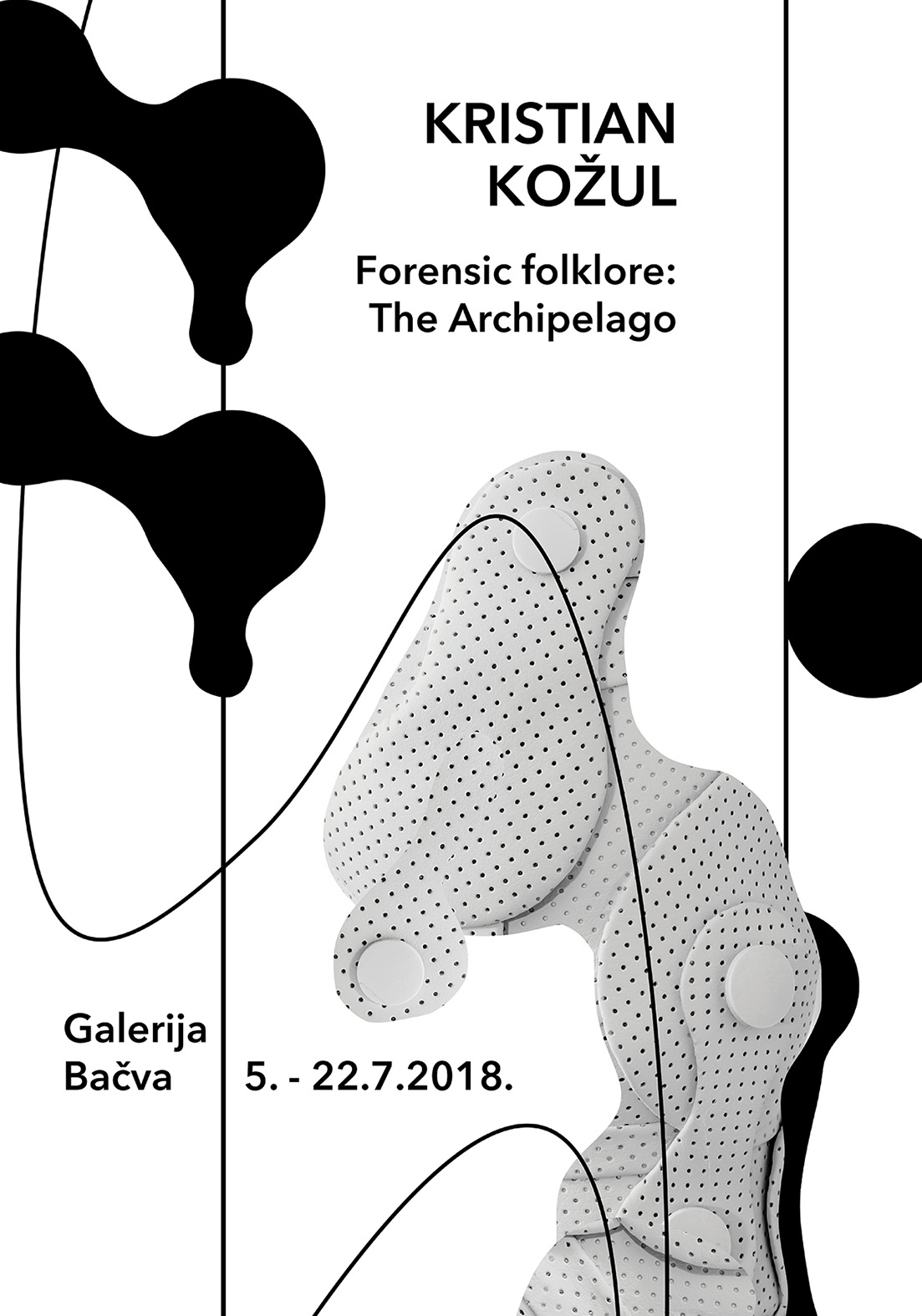
Opening of the exhibition: Thursday, July 5 at 8pm at the Home of HDLU
Exhibition Forensic folklore: The Archipelago, by Kristian Kožul will be opened on Thursday, July 5 at 8pm at the Home of HDLU (Trg žrtava fašizma 16).
The exhibition in the Bačva Gallery is a continuation of a series of works started at Gallery Galženica with the exhibition “Forensic Perpetuality”. Works in the exhibition further elaborate forensic fantasy as an integral part of modern folklore. The setup will include a hybrid installation consisting of independent “clusters” of objects, creating a nonlinear narrative in the circular space of the Bačva Gallery.
Organizer:
Supported by:
WORKING HOURS:
Wednesday to Friday: 11.00 AM – 7.00 PM
Saturday and Sunday: 10.00 AM – 18.00 PM
Closed on Mondays, Tuesdays and holidays.
The exhibition will remain open until July 22, 2018
LUKA STOJNIĆ
NEVIDLJIVOST / ONZICHTBAARHEID
Karas Gallery
July 3 – July 15, 2018
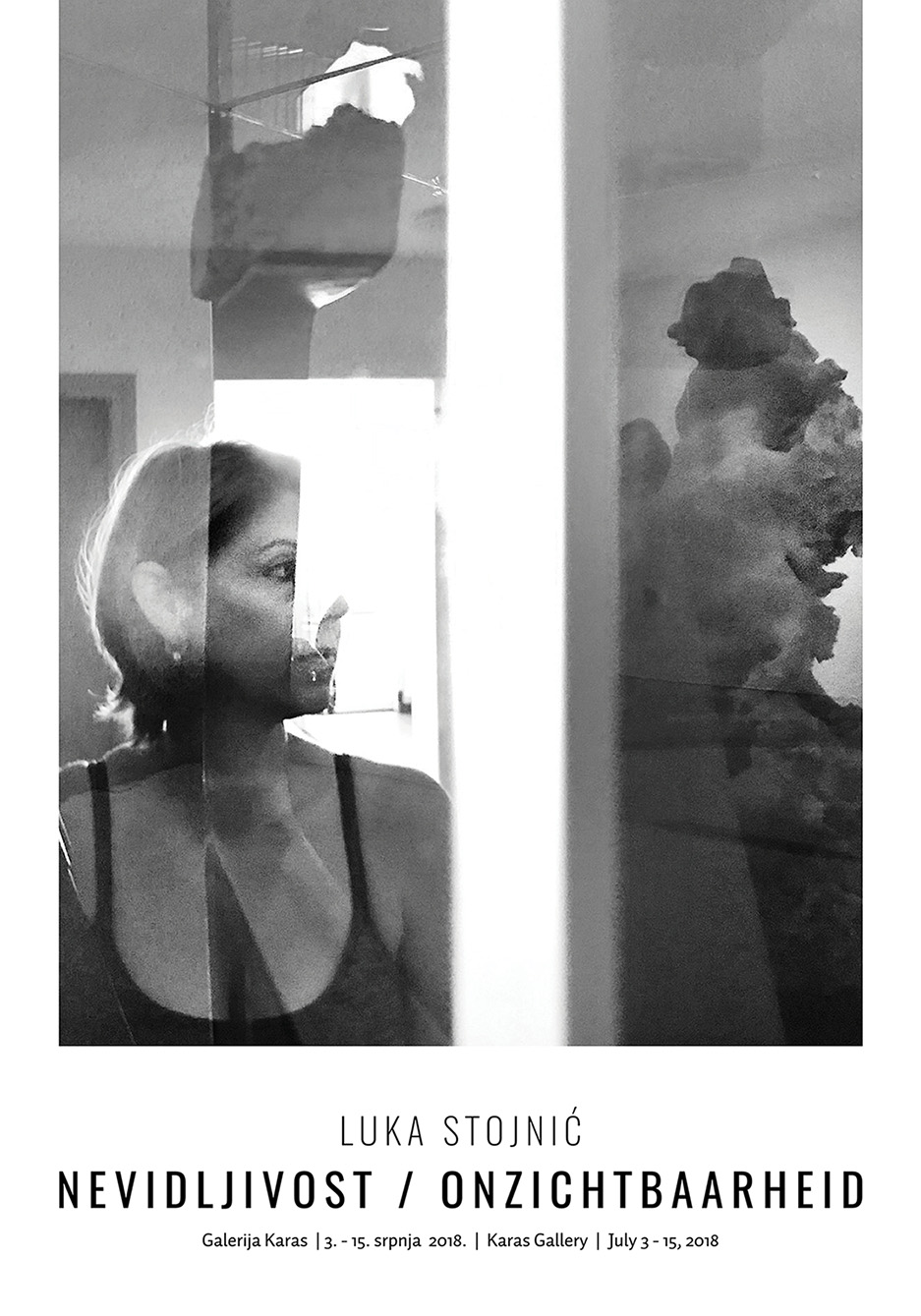
Opening of the exhibition: Tuesday, July 3 at 7pm at the Karas Gallery
Exhibition NEVIDLJIVOST / ONZICHTBAARHEID, by Luka Stojnić will be opened on Tuesday, July 3 at 7pm at the Karas Gallery (Zvonimirova 58).
“What lies beyond the horizon as promise for a better tomorrow? What God can we expect to find when descending all the way back to Byzantium, only to learn about his disappearance by (re)presentation?
At the intersection between hope and dismay, Luka Stojnic is offering us a new possibility for re-connecting with the nature (of things) on our own terms, by outlining an in-between space. A possibility for understanding and transformation not remote neither simulated, but available here and now, residing in the interval between the manifestation of the unconsciousness as an emotional act, and the perpetuation of the illusion of understanding as a (self)reflection.
Between the future (horizon as emotion) and the past (history as image proliferation), the only productive option left for grasping the world seems to be acknowledging and embracing the NOW as the real realm – the best place to learn how we can live a fulfilled and meaningful life with ourselves. All we have to do is just to taste a banana.”
From preface, written by Serban Cornea, Copenhagen – Zagreb 2018

Supported by:


Working hours:
Wednesday and Friday: 9am to 3pm | Thursday: 3pm to 7pm | Saturday and Sunday: 9am to 12am
Mondays, Tuesdays and holidays: closed.
The exhibition will remain open until July 13, 2018
30 May 2018
MARIJA ANČIĆ
Traps
Karas Gallery
June 5 – June 17, 2018

Opening of the exhibition: Tuesday, June 5 at 7pm at the Karas Gallery
Exhibition Traps, by Marija Ančić will be opened on Tuesday, June 5 at 7pm at the Karas Gallery (Zvonimirova 58).
“In my work, I deal with personal issues, my own problems and the question of identity. I try to express negative emotions: fear, anxiety, lack of confidence, etc. through drawings or animation – GIF. GIF is an interesting medium because its main feature is the infinite repetition – the loop, and the states I’m talking about are also running in circles, in repeated cycles. In addition, GIF is a format that is present in modern communication because it transmits emotions quickly and easily. In that I recognized a medium for reflection and exploration. So I take one action and animate it to form a loop. The endless repetition at first glance makes this frightening and morbid act absurd, giving it a humorous aspect. These actions are exaggerated and overdramatic, as I try to illustrate this elusive moment of fear, which is terrible and paralyzing at one moment, and already funny in the next. At the same time this repetition turns act into a state, my characters exist in these impossible and permanent spaces and somehow persist, survive.
The trap is, in it’s nature, a catching and capturing device, whether it is a hidden trap, bait, or a fraud, the victim does not know that it fell into it until it is too late. My traps are exaggerated caricatures like traps from cartoons, movies and pop culture (a huge bear trap, a secret door in the floor and muck) and they represent the feeling of anxiety, insecurity, imprisonment, alienation. The effect created by the loop is a surreal situation in which the character is in the trap forever, without the possibility to get out of it, however, it is aware of the traps and its dangers and successfully avoids it. The trap is in a similar position because despite the infinite attempts, it fails to fulfill its function. The trap and the character reached a stalemate, an unusual symbiosis.”
Marija Ančić
ABOUT THE ARTIST
Marija Ančić was born in Sarajevo. She graduated Conservation-Restoration from Academy of Arts in Split, in 2005 and Sculpture in 2010. Besides four solo exhibitions, she participated on different group exhibitions and festivals in Croatia and abroad. She was the finalist of Radoslav Putar Award in 2016. She lives and works in Zagreb.
Karas Gallery program is financially supported by The Croatian Association of Visual Artists (HDLU).
Working hours:
Wednesday and Friday: 9am to 3pm | Thursday: 3pm to 7pm | Saturday and Sunday: 9am to 12am
Mondays, Tuesdays and holidays: closed.
The exhibition will remain open until June 17, 2018
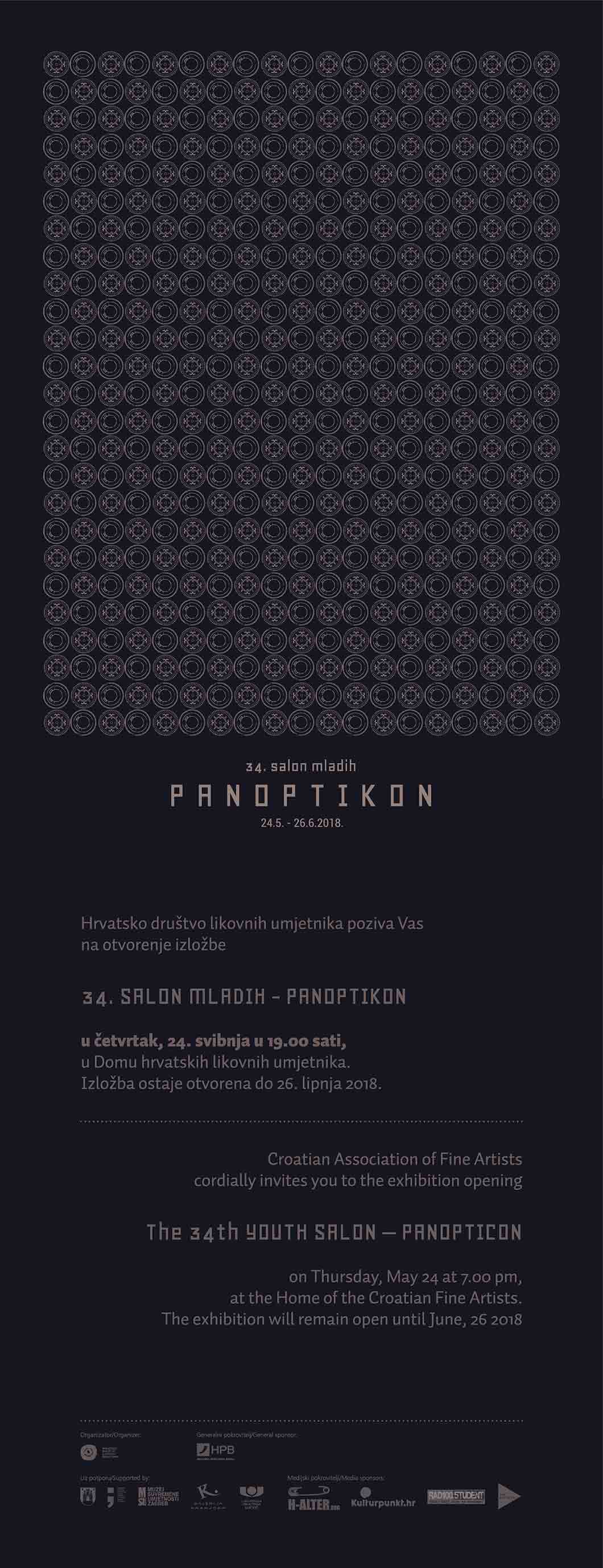
Opening, May 24, 2018, at 7pm (Home of HDLU)
The 34th YOUTH SALON – PANOPTICON, developed around the concept by Mirna Rul, will open on Thursday, May 24, 2018, at 7.00 PM in the Home of Croatian Fine Artists on Trg žrtava fašizma 16.
The exhibition will remain open until June 26, 2018.
We prepared rich side program at the opening as well as music (from 20:30) performed by Martina Gucić (Mapalma), a producer and DJ from Zagreb.
She is a DJ and producer from Zagreb making beats since 2010. She has performed with Cakes da Killa, Palmistry and Elysiu Crampton; her mixes could be heard on popular NTS Radio (for Classical Trax) and Rinse FM (for MAJIA radio). She has also made one of the first mixers for the SISTER collective. She defined her recognizable sound on a debut EP, released at the end of 2017 for the Vienna label Ashida Park. Her “Nightcap” EP could be described, in the widest sense, as an experimental club music inspired by grime, r&b, baile funk, dancehall, ballroom and reggaeton.
https://soundcloud.com/mapalma
More about the concept of 34th Youth Salon read here.
SIDE PROGRAM
24.5.2018. 12:00 (Galerija Šira, Preradovićeva 13, Zagreb)
Opening of the exhibition Venientes – those to come
25.5. Reli po galerijama 17:00 / 17:30
exhibition tour with the curator of the Salon, Mirna Rul
5.6. 2018. 18:00 (Club HDLU)
lecture by Tihana Puc – Youth Salon Cartography: award-winning Artists Network
In the Club HDLU, for the entire duration of the Salon, you can see the interactive installation Youth Salon Cartography: award-winning Artists Network – a continuous project of collecting data about female and male artists who were awarded between 1968 and 2016 at the Youth Salon, and is visualized as a network, enabling remote reading of the Youth Salon and exploring the way artists are connected and shared through time and institutional space.
Concept: Tihana Puc
Visualization and Technical Performance: Mihael Giba
8.6. 2018. 18:00 (Club HDLU)
talk with Beti Žerovc: Is art just for privileged ones?
12.6. 2018. 18:00 (Club HDLU)
round table organized by Institut za povijest umjetnosti* – 50 Years of Youth Salon
head of the round table: Ivana Mance
*as part of the 150th anniversary of HDLU
15.6.2018. 18:00
exhibition tour with the curator of the Salon, Mirna Rul*
*as part of Zagreb Design District Festival
20.6. 2018. 18:00 (Club HDLU)
discussion panel Big Data and the Art world
head of panel discussion: Lena Disopra
20.6. 2018. 19:00 (MSU, Avenija Dubrovnik 17, Zagreb)
Opening of the solo exhibition Time Capsule, by Miran Šabić, winner of the MSU prize at the last Youth Salon. The exhibition remains open until July, 11 2018.
26.6.2018. 18:00
Catalogue promotion and awards ceremony.
TICKETS:
20 kn citizens
10 kn students and retirees
10 kn groups (over 5 persons, fare per person)
10 kn for regular members of: ULUPUH, HDD, UHA, ORIS, HULU Split, HDLU Osijek, HDLU Rijeka, HDLU Dubrovnik, HDLU Istra, HDLU Varaždin, upon presentation of valid documents.
Free for regular members of Croatian Association of Artists, AICA, ICOM, Croatian Society of Art Historians and Croatian Journalists’ Association, as well as the students of the Academy of Fine Arts and Art History at the Faculty of Humanities and Social Sciences, upon presentation of valid documents.
Tickets are sold at the Croatian Association of Artists box office, during the opening hours of the exhibition.
For further inquiries regarding the tickets, please contact hdlu@hdlu.hr.
WORKING HOURS:
Wednesday to Friday: 11.00 AM – 7.00 PM
Saturday and Sunday: 10.00 AM – 18.00 PM
Closed on Mondays, Tuesdays and holidays (May, 31 and June, 22).
MEŠTROVIĆ PAVILION CLOSED DUE TO RENOVATION
INFORMATION FOR VISITORS


Web Hosting


