
Category: Events
CONFERENCE
Visita Interiora Terrae: Myth and Alchemy as an Art Practice

The science conference within the project Visita Interiora Terrae: Myth and Alchemy as an Art Practice will be held in the large lecture hall of the Academy of Fine Arts, University of Zagreb on Thursday, September 2, 2021, starting at 17.00.
Hrvoje Čargonja, Rodrigo Fernández de Gortari, Maja Flajsig and Josip Zanki, Ana Ortiz Sánchez Renero and Miguel Vassallo will exhibit their works.
The conference will be held in English.
27 August 2021
Prostoria 10
Home of HDLU (Meštrović Pavilion)
September 25 – October 8, 2021
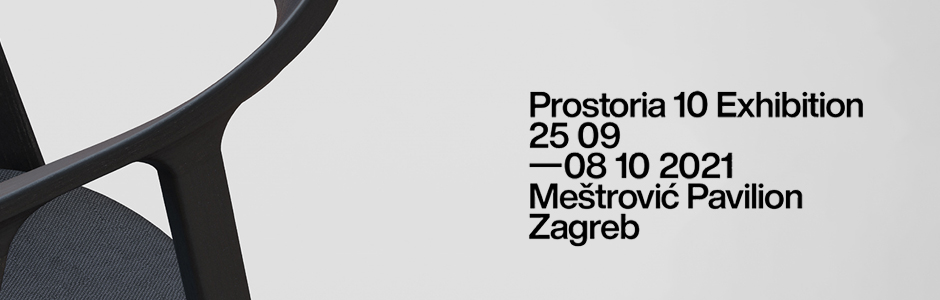
The exhibition Prostoria 10 marks the 10th anniversary of the well-known international furniture design brand with a strong manufacturing culture – Prostoria and opens its doors on September 25 at the Home of HDLU (Meštrović Pavilion). As an additional exhibition program, a temporary spatial installation “Prostoria Net”, designed by Numen/ForUse is being prepared and will be placed in front of Meštrović pavilion during the exhibition.
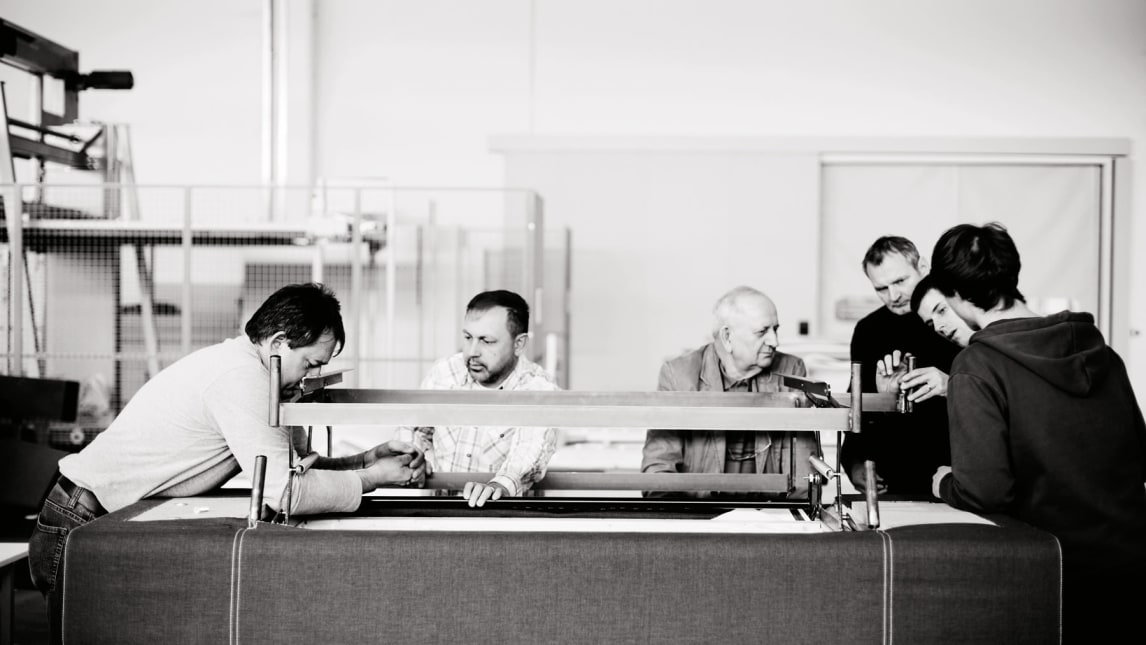
Openness to development and change, perseverance, and a spirit of research, guided by the creation of new values, is a continuous process in Prostoria, which has matured into its legacy. This exhibition will present what it is made of, and visitors will have the opportunity to experience the brand itself much deeper. Namely, ten years ago, Prostoria developed from a hall for upholstered furniture in Zagorje into an industrial center for the production of all furniture elements, which goes from one place to public and residential interiors all over the world. The premise of product development in Prostoria is the so-called research-based design. The fact that this brand invests 10% of its annual budget in the segment of research, development and design shows how much importance is attached to the authenticity and quality of products.
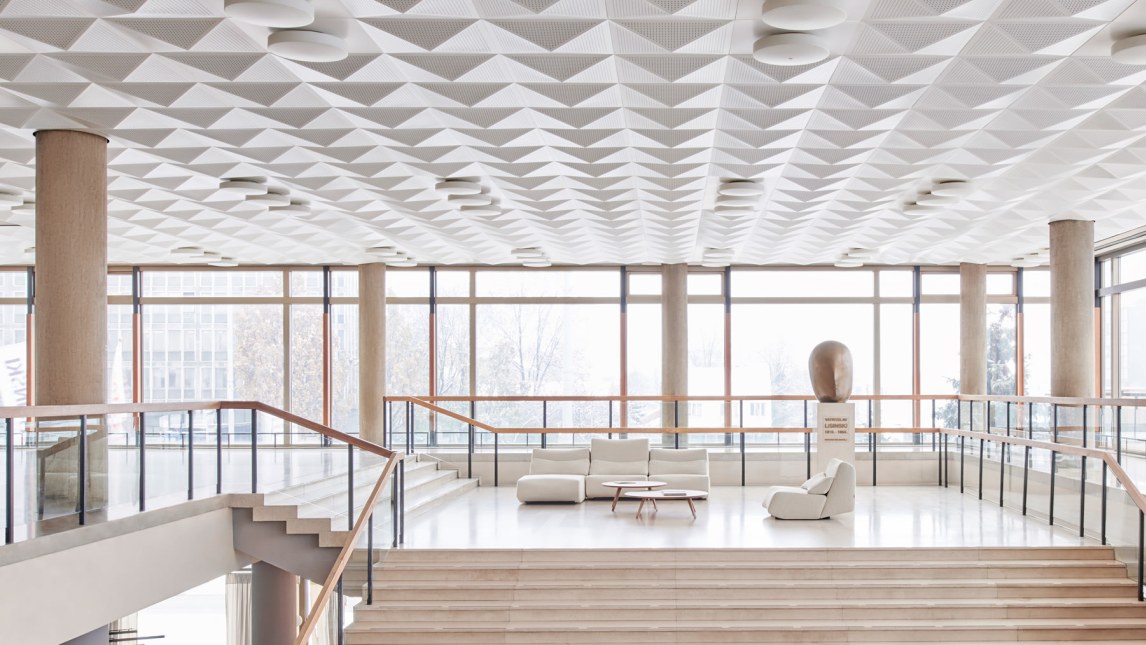
Art Direction: Bureau architects. Photo: Marko Mihaljević.
It is important to point out that in a regional historical-geographical context, Prostoria emerged without an industry leader, only to embody it on its own over time. It grew on the ruins of the once numerous Croatian industrial furniture production, defeated in the transition from social ownership of Yugoslavia to capitalism based on competition.
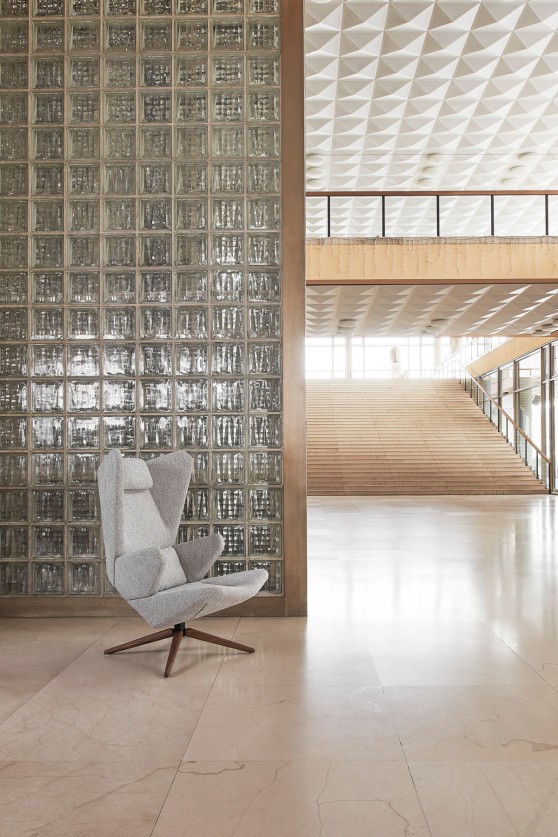
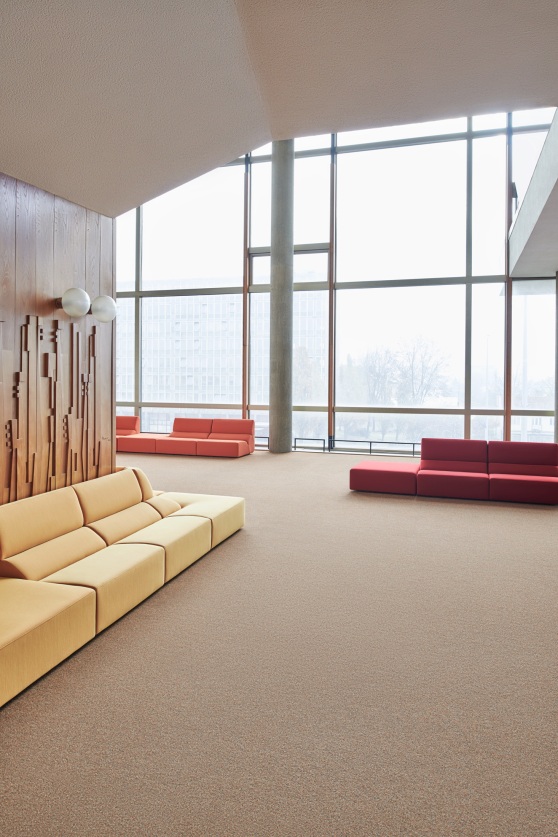
Art Direction: Bureau architects. Photo: Marko Mihaljević.
The exhibition will also present for the first time the photographic project “Revisiting Architecture” by which Prostoria explores the roots of its design in the legacy of modernist Zagreb architecture – the Vatroslav Lisinki Concert Hall, Kockica, the City of Zagreb, and the Zagreb Public University. Namely, few places in the world have such a firmly rooted tradition of modernist architecture as is the case in Zagreb. It is a legacy that is the foundation and inspiration of the product design language Prostoria. “Revisiting Architecture” illustrates how selected products formally or textually refer to the environments in which they are photographed, sometimes emphasizing their origin, and other times their modernity. As a reflection of functional minimalism, Prostoria’s products deeply defined the contemporary Croatian culture of living. It has become an unavoidable inspiration for decorating private and public interiors, and at the same time, a rare design-oriented business leader in Croatia. Prostoria furniture is now available in over 60 countries and 1,000 premium selling spots worldwide.
PRESS CONTACT: Tatjana Bartaković, tbartakovic@prostoria.eu, + 385 99 815 2605
Exhibition opening hours:
Tuesday – Friday: 10 – 21
Saturday – Sunday: 10 am – 6 pm
Exhibition entrance is free of charge.
The exhibition remains open until October 8.
19 August 2021
Nikola Vrljić
The Siege of Oz
Bačva Gallery (Meštrović pavilion)
August 27-September 16, 2021
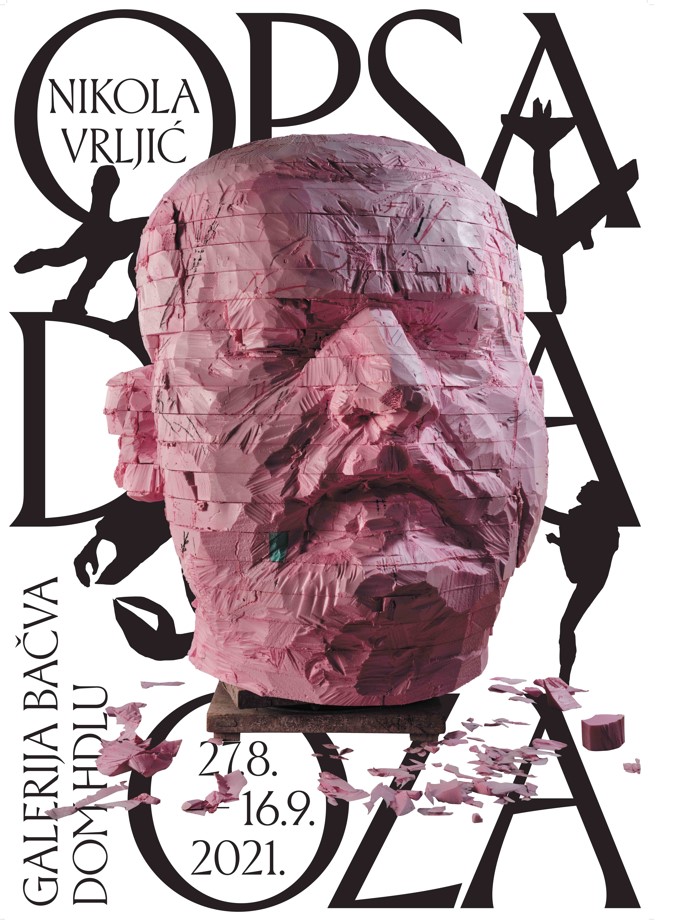
The opening of the exhibition by NIKOLA VRLJIĆ, THE SIEGE OF OZ will be on Friday, August 27 at 8pm, in Bačva Gallery, Home of HDLU (Meštrović pavilion).
“In his current body of work The Siege of Oz, Nikola Vrljić, all the while with an intriguing distinction, is conceptually and formally continuing in the direction already set by his previous exhibition Cirkus!. Now, as it was then, the narrative is based on semantically only loosely related sculptures which, even if they remain associatively disconnected, function very well as stand-alone works of art. This approach allows the artist to keep organically building on this narrative, currently exhibited in Galerija Bačva, for the upcoming exhibition stages. […] In terms of content, Vrljić remains his generation’s most prominent representative of figurative sculpture, equally convincing when dealing with male, female or bestial motifs. […] For, Vrljić has won the acclaim of all those who had previously feared that competency in the traditional sculptural craft had vanished from the local arts scene. And indeed, already at the very onset of his career Vrljić had made a significant contribution to naturalism in Croatian sculpture. This is just as true of the robust, firmly erect, belligerent male characters as of the willowy bestial figures. […] I would say that it is exactly with material that Vrljić’s current deconstruction of traditional sculpting begins, a deconstruction that allows him to bridge the gap between the traditional and the contemporary form of expression. Vrljić creates his recent works in polystyrene sheets, stacking them up to the desired height, and then shaping them by cutting them into the desired form. […] Going back to the semantic layers of Vrljić’s work, as previously, his proclivity for the grotesque in both content and form is well pronounced. We could say that the chosen theme of The Siege of Oz, which sounds like a reckoning with the society of the spectacle, works in favour of his tendency to take a cynical commentary as a starting point in his interpretation of reality.”
from the preface written by Branko Franceschi
ABOUT THE ARTIST:
Nikola Vrljić was born in Zagreb in 1980. In the year 2007 he graduated from the Sculpture department at the Academy of Fine Arts in Zagreb. Since 2003 he has exhibited in 22 solo shows. Some of the recent ones are Citizens at Poola Gallery (2021, Pula), The Gathering at Antun Augustinčić Gallery (2019, Klanjec), Runaways at Josip Račić Gallery (2018, Zagreb). He has won multiple awards in different competitions for monuments and public works and is the author of a dozen public sculptures in Croatia. He is a member of HZSU and HDLU. He lives and works in Zagreb.
EXHIBITION WORKING HOURS:
Wednesday – Friday: 11am – 7pm h
Saturday and Sunday 10am – 6pm h
Mondays, Tuesdays and holidays closed
Exhibition will be opened until September 16, 2021.
ANDREA RESNER
Rhymes of the White Crow: The Epilogue
Prsten Gallery
August 27 – September 16, 2021

Exhibition opening: August 27, at 8PM
Preface – MYTH AND IDENTITY, Jasmina Šarić
Andrea Resner Biography
Organizer:

Supported by:

Working hours:
Wednesday – Friday: 3 pm – 8 pm | Saturday: 10 am to 1 pm
Sundays, Mondays, Tuesdays
Ismar Čirkinagić (Bosnia and Herzegovina / Denmark)
The House in a Forest on a Coast
Bačva Gallery, Home of HDLU (Meštrović pavilion)
July 22-August 22, 2021

The opening of the exhibition by ISMAR ČIRKINAGIĆ, THE HOUSE IN A FOREST ON A COAST will be on Thursday, July 22 at 8pm, in Bačva Gallery, Home of HDLU (Meštrović pavilion).
“The House in a Forest on a Coast is a total installation composed of elements in various media of art. Horizontally, there is a representation of a house foundation covering the floor, whereas a large-scale representation of sails on a ship is vertically stretched out towards the ceiling, amid which a sound piece auditorily unites the two aces by veiling over all the exhibited components and resonating in the space between them. […] According to the artist, this systematic display of debris is a “re-enactment” of the Obsessive-Compulsive Disorder (OCD) routine, which often appears as a consequence of Post-Traumatic Stress Disorder (PTSD). Just as the debris convey memories about places that no longer exist in their original form, the clothes convey memories of bodies and persons who were once wearing them. The sails are, namely, sewn from the clothes that belonged to people who died as victims of violence with political backgrounds, such as armed conflicts, terrorist attacks and forced migration.
[…] The result is an artistic organisation of mnemonic elements from different geographical and historical contexts on display next to one another, which invites the viewer to interpret the exhibition from the transcultural perspective of humankind, rather than from specific national orientations. [The artist’s] desire is to show the universality of the human experience by focusing on similarities rather than differences among humans. […] Oneness with humanity is thus the key to unlocking The House in a Forest on a Coast. “
from the preface, written by the curator Tijana Mišković
ABOUT THE ARTIST:
Ismar Čirkinagić was born in 1973 in Prijedor, Bosnia and Herzegovina, which was a part of the Socijalist Federal Republic of Yugoslavia. He came to Denmark in 1992, following the breakdown of the country and the brutal campaign of ethnic cleansing in his region of Northwestern Bosnia and Herzegovina. In 1997 Čirkinagić enrolled at the Copenhagen Art School and remained there until 2000 when he was admitted to The Royal Danish Academy of Fine Arts. Most of his artistic practice is thematically related to the socio-political themes and mainly produced in the form of a conceptual installation consisting of videos, photos, texts, and object-based elements. In recent years he has had exhibitions in museums and kunsthalle in Denmark and internationally. Čirkinagić’s artworks can today be found in several Danish public collections.
EXHIBITION WORKING HOURS:
Wednesday – Friday: 11am – 7pm h
Saturday and Sunday 10am – 6pm h
Mondays, Tuesdays and holidays closed
Exhibition will be opened until August 22, 2021.
Special thanks to:
Afghanistan: Guilda Chahverdi, Mohsin Taasha and Jawad Zawulistani from Afghanistan Human Rights and Democracy Organization, The Royal Danish Embassy in Afghanistan
Croatia: Udruga Kamensko
Egypt: Embassy of Denmark in Egypt, Khaled Ramadan and Yara Mekawei
El Salvador, Guatemala, Honduras: Marcela Turati from Quinto Elemento Lab, Analorena Delgadillo, Marisol Méndez, Alicia Moncada Acosta (Glenda Pineda, Eva Ramírez, Cecilia del Carmen Avalos Guillen) from La fundación para la justicia y el estado democrático de derecho.
Israel/Palestine: Parents Circle – Families Forum
Northern Irland: MAC and Paul ‘Donzo’ Donnelly from Dead Centre Tours
Serbia: Meris Mušanović and Ivana Zanić from Humanitarian Law Center
Syria: Zenia Bredmose Henriksen Ab Yonus and Hosam Aldeen Ghathwan
Uganda: Ndugwa Hassan from UMYDF
Ukraine: Embassy of Denmark to Ukraine, Georgia and Armenia, Iryna Polikarchuk from ARTSVIT
04 May 2021
Exhibition MURTIĆ 100 – an exhibition in honor of the 100th anniversary of the birth of Edo Murtić
The great Croatian and world renowned abstract painter
Home of HDLU, May, 25.- July, 18, 2021.
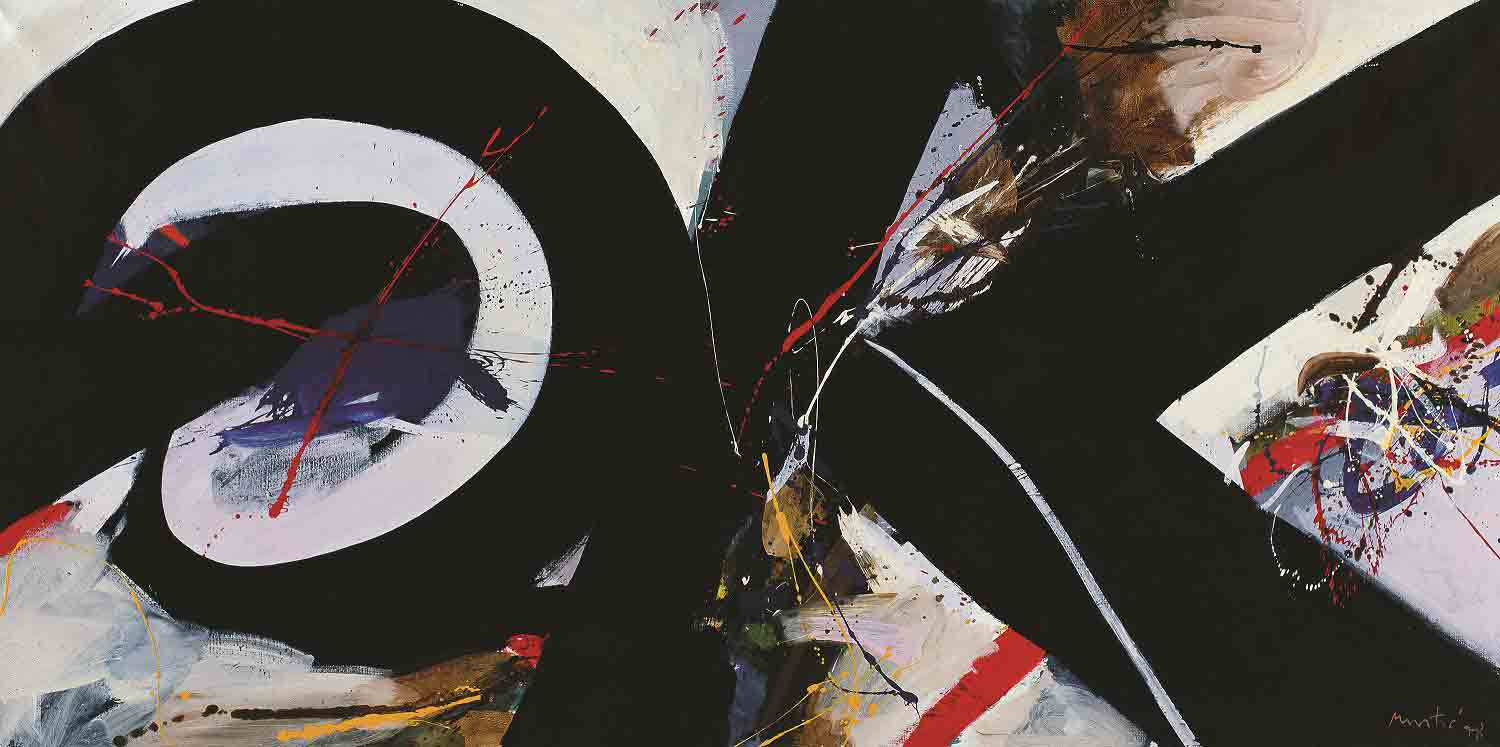
Meštrović pavilion, the Home of HDLU, will soon open its doors for another exhibition that will once again surprise, delight, and inspire visitors with its opus. The great Croatian abstract painter Edo Murtić will beautify spring and summer in Zagreb with a series of events organized in his honor.
Murtić 100 is a project that marks the 100th anniversary of the birth of Edo Murtić, the undisputed giant in Croatian modern art who left his mark not only in Croatia but also in the world. The exhibition opens on May 25 and by July 18, visitors will be able to view more than 100 amazing works of this modern painting icon. In addition to the work of the great Edo Murtić, the project includes a number of other events – the international symposium Gesture and Freedom, which will be held in Zagreb and Rovinj in June 2021, the exhibition New Abstract Art in Lauba – the House for People and Art from June, 1 till June 10, 2021, and a series of accompanying events (reinterpretations of Murtić through street art at several locations in Zagreb, workshops for children and adults, guided tours, customized guided tours for children with accompanying work materials, tactile image to bring art closer to blind and partially sighted people etc.).
It is a great pleasure and happiness to participate in the celebration of the hundredth anniversary of Edo Murtić’s birth with a large exhibition of his works. Edo Murtić changes the perception of who an artist is in society and pushes the boundaries of the meaning of a work of art in public space. I am especially pleased that through this project, in cooperation with the Tourist Board of the City of Zagreb, new ways of developing a long-term strategy of recognizing Zagreb as a tourist destination will be developed. Artist Edo Murtić is an ideal starting point for such an initiative. I personally love the energy, love, and luxurious talent of Edo Murtić. – on the occasion of the announcement of the exhibition, Tomislav Buntak, President of HDLU and Dean of the Academy of Fine Arts in Zagreb
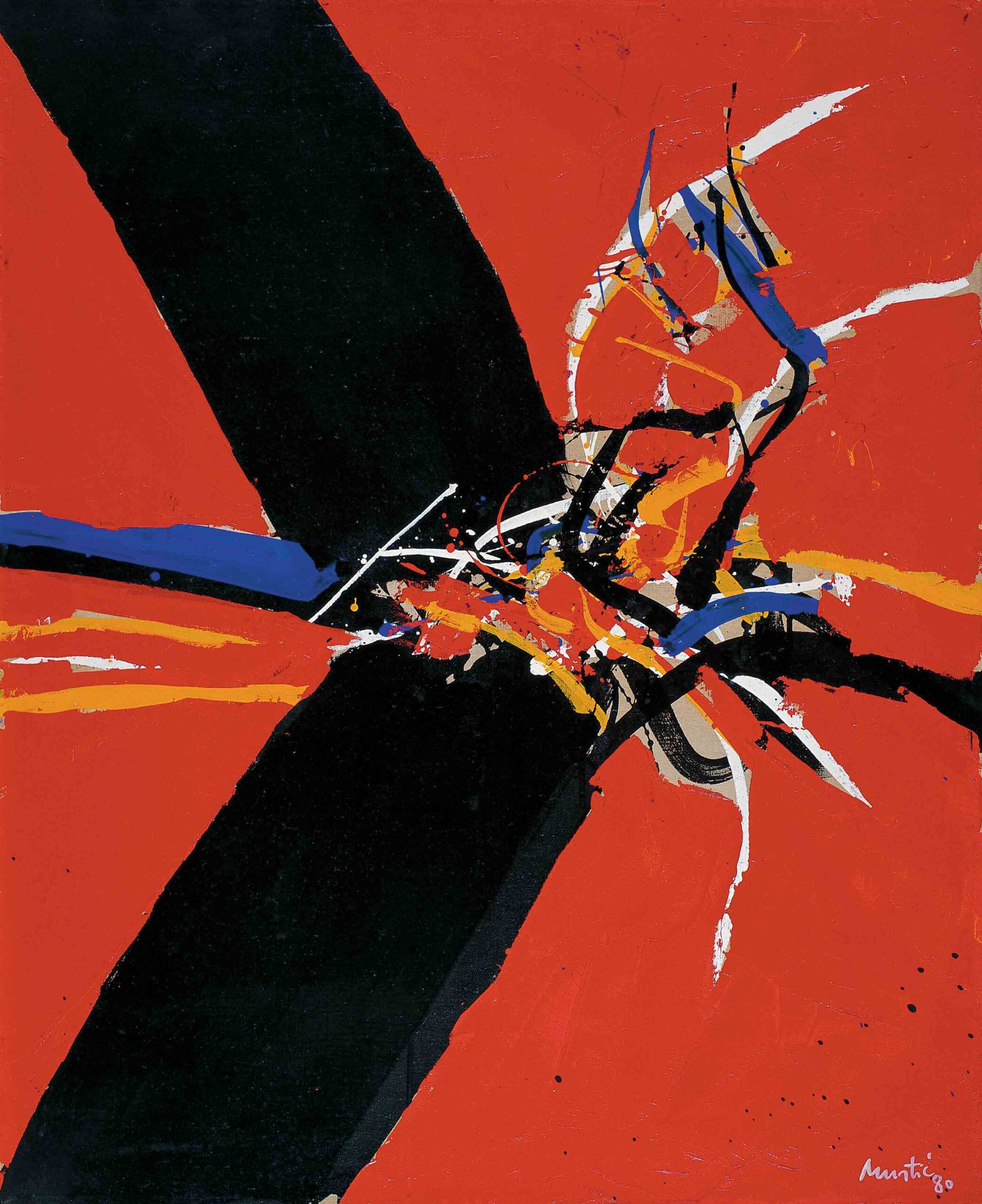
Edo Murtić, with his painting opus and strong artistic personality, marked and formed the cultural life of Croatia and the region in the second half of the 20th century. He attended the Academy of Fine Arts in Zagreb and the school of Petar Dobrović in Belgrade. He held his first solo exhibition in Zagreb in 1935. Murtić’s early figurative painting, thanks to a continuous evolution inspired by study trips to France, Italy, and the USA, and contacts with the world’s leading post-war artists, gradually transformed into a special variation of abstract painting with expressive gestures, lyrical charge, and strong colorism. With his unique and recognizable painting style, he created one of the most influential opuses of high modernism in Southeast Europe. His exhibitions in 1953 in Zagreb and Belgrade were among the first solo exhibitions in the socialist world to present elements of abstract art. Edo Murtić has realized more than three hundred solo and as many group exhibitions on all continents, including notable performances at the Venice Biennial. His works are present in most representative public and private collections around the world.
In addition to a rich oeuvre, Murtić’s work includes theatrical sets, murals, mosaics, enamels, sculptures, and ceramics. He is the winner of many major domestic and foreign awards and recognitions. He lived and worked in Zagreb and Vrsar.
The Murtić 100 exhibition at the Home of HDLU (Meštrović Pavilion) will be set up under the artistic direction of Branko Franceschi, director of the National Museum of Modern Art. A special feature of the exhibition is the diversity of the artist’s work presented through chronological and thematic units, designed for individual spaces, and the curator added: Edo Murtić, with his variation of gestural abstraction, was a leading figure of regional high modernism in Croatia and Yugoslavia.
The Bačva Gallery will present works that are remembered in the collective memory as paradigmatic works of art of certain sections of high modernism, and the emphasis will be on the dynamic colorism as a fundamental determinant of Murtić’s creative approach. In the PM Gallery, the curator sets Murtić’s activist cycles – dedicated to anti-war themes, which directly indicate Murtić’s importance as a prominent and influential cultural actor, an unwavering advocate of democratic and libertarian principles, while in the Prsten Gallery other artist cycles, performed in other art disciplines, will be presented – gouache, monumental compositions in ceramics, enamel and mosaic, as well as landscapes and city views, which marked all six decades of his work.
The exhibition is accompanied by art workshops for 4 age groups: 5-8 years, 10-15 years, 15+ years, and 55+ years.
Other cultural and artistic activities have been organized within the project that celebrates 100 years since the birth of Edo Murtić, and you can see the announcements of the events on the website murtic100.hr
Tickets for the exhibition will be available at the box office of the Meštrović Pavilion and online through the ENTRIO system.
The working hours of the exhibition are every day from 11 am to 9 pm.

15 October 2020
DOMAGOJ BURILOVIĆ
TERRAFORMING
Karas Gallery, Kralja Zvonimira 58
October 22 – November 3, 2020
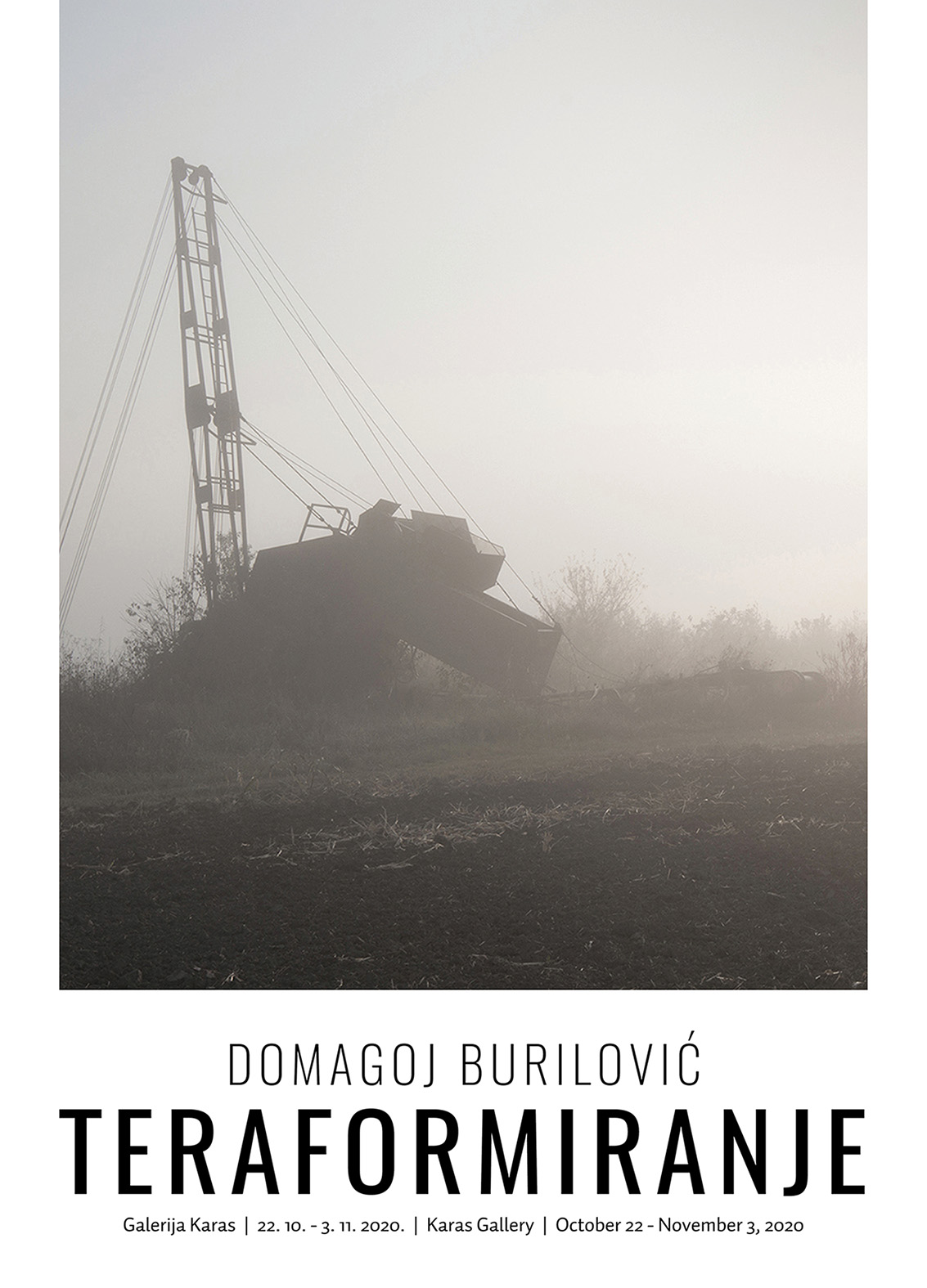 Following all recommendations of the National Civil Protection Headquarters, exhibition TERRAFORMING, by Domagoj Burilović, will be opened on Thursday, October 22 at 7 pm at the Karas Gallery (Kralja Zvonimira 58).
Terraforming is the hypothetical process of modifying a celestial body to make it as similar to the Earth as possible. In the 14 photographs of Slavonia, taken by Domagoj Burilović and exhibited in his solo exhibition at the Karas Gallery, mystical landscapes and alien, deserted lands emerge before us. They show something else as well, certainly something visible, but also something invisible: something like a trace. (Wittgenstein). Life has dematerialized before our eyes, but it has left invisible traces that make us or at least should make us question the real existential problems, the problem of the survival of an entire region. Golden Slavonia, the belly of Croatia, a historically rich region to which the people from other parts of Croatia used to move, leaving the sea view behind in search of fertile soil. The region that meets all the preconditions to become the richest, and not one of the two poorest regions in Croatia. Domagoj hints at these traces in the seemingly invisible, interrogates, exclaims….
This series is in line with Domagoj’s interest in social and political issues, serious topics and transience and history – both of an individual (Post Factum exhibition) and of an entire region, in this case, his native Slavonia.
From preface, written by Nika Šimičić
ABOUT THE ARTIST
Domagoj Burilović
Born in 1987 in Vinkovci. He graduated in painting in 2012 at the Academy of Arts in Split.
He is engaged in conceptual art photography. Through artistic work he deals with social and political topics.
Selected group exhibitions: 2019 HT Award – Museum of Contemporary Art, Zagreb, 2019 Triennial of Extended Media, Belgrade, 2017. Photodays finalists – Museum of Arts and Crafts, Zagreb, 2016 3rd Biennial of Croatian Young Photography, Zadar, 2013. Split Salon, Split, 2012. Triennial of Croatian Sculpture, 2012. Galić Gallery, Split,…
Solo exhibitions: 2020. Galić Salon, 2019. PIK Gallery, Rab, 2019. Photon Gallery, Ljubljana, 2018. Museum of Arts and Crafts, Zagreb, 2018. Italian Community of Rovinj, Rovinj, 2013. Rovinj Homeland Museum, Rovinj, 2012. Art Gallery, Split, 2007. Multicultural Center, Županja.
Awards: 2017: Grand Prix Rovinj Photodays, 2017. 1st place for the artistic concept Rovinj Photodays, 2017. 2nd place at the Vinkovci Photography Salon, 2012, Award for the young artist, Rovinj Homeland Museum, Rovinj.
Work “Post Factum” included in the collection of the Museum of Arts and Crafts.
Organizer:

Supported by:

Working hours:
Wednesday – Friday: 3 pm – 8 pm | Saturday: 10 am to 1 pm
Sundays, Mondays, Tuesdays and holidays: closed.
The exhibition will remain open until November 3, 2020
*Remark*
At the entrance to the Gallery there is a bottle with a disinfectant for visitors, which are obliged to disinfect their hands when entering the Gallery.
The security guard at the entrance to the Gallery will have a protective mask and gloves and control the number of visitors. The Gallery can hold up to 5 people at a time.
Visitors are required to maintain a distance of 2 meters.
Touching the exhibits is not allowed.
Doorknobs and any other surfaces that are frequently touched by visitors will be regularly disinfected.
MEŠTROVIĆ PAVILION CLOSED DUE TO RENOVATION
INFORMATION FOR VISITORS


Web Hosting


